Take Home Messages
- Trial: C4Milk dryland break crop strategies
- Location: Mitiamo
- Crop year rainfall (Nov–Oct): 413mm
- GSR (Apr-Oct): 202mm
- Soil type: Clay (0–70cm) and silty clay loam (70–100cm)
- Paddock history: Oaten Hay
Study Aim
The C4Milk project aims to develop an understanding of the collective impact intense cropping rotations have on the sustainability and profitability of dairy farms. The project, which began in 2024, aims to do this by evaluating crop-on-crop effects in forage production systems over a multi-year trial. The project was developed based on the findings of previous Murray Dairy projects, which tracked changes for inland dairy farm systems and the increased use of grain crops for fodder. C4Milk is a three-year partnership between Murray Dairy, Queensland Department of Agriculture and Fisheries Dairy Group, Dairy Australia, and the Gardiner Foundation.
Forage cropping systems are essential in inland dairy regions, and agronomic decisions are often overlooked to prioritise cow nutrition. Over time, concerns have been raised due to the lack of break crops and rotations potentially being detrimental to farming system sustainability. There also has been minimal research on the importance of break crops in managing environmental and production risks overall in forage cropping systems. This research aims to explore the effects of break crops in forage production systems and assess whether break crops enhance forage cropping by improving the productivity, profitability, and sustainability of dairy farms.
Future of the Trial
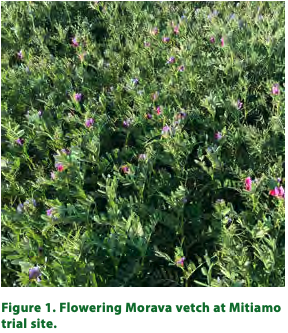
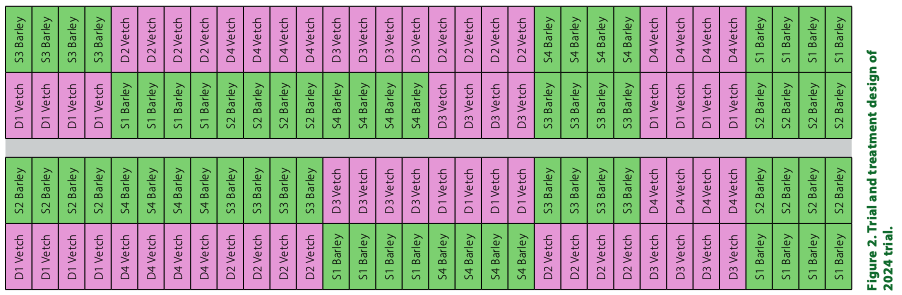
The BCG trial site at Mitiamo, Victoria, will determine crop-to-crop effects in a dryland forage production system. This trial aims to provide valuable information relating to the impact of crop rotations and different management strategies on quality and yield. This includes aspects such as plant health, nutrient management, weed control, yields, and harvest times.
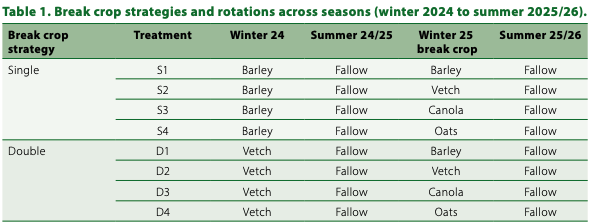
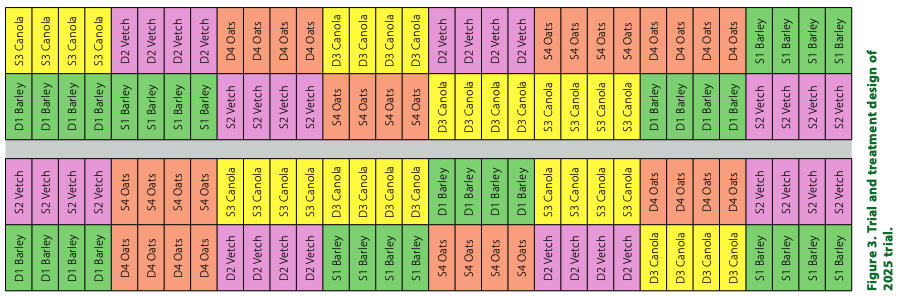
2024 has been a set-up year for the project, and as such there have been no recorded effects from using break crops. BCG will gather valuable information after the break crop strategies have been applied in 2025. The trial itself has single and double-break crop strategies (Table 1). Break crops include barley, vetch, canola, and oats.
Winter cereal crops have increased in popularity among dairy farmers due to the crop’s resilience and versatility. They are a good silage option and can help clean up weeds in paddocks, and allow for earlier sowing of summer crops. Due to perennial grasses not always being as persistent in low rainfall areas, dairy farming systems have been forced to look elsewhere. Replacing perennial grasses with winter cereals has demonstrated significant potential. Crops such as barley can be grazed during the winter before being harvested for fodder. Additionally, winter cereals can provide feed earlier than some annual grasses such as ryegrass, which is typically used in pasture production, because they are more tolerant of dry conditions, making them more adaptable to early sowing.
Paddock Details
Location: Mitiamo
Crop year rainfall (Nov–Oct): 470mm
GSR (Apr–Oct): 182mm
Soil type: See table 1 below
Paddock history: Oaten hay (2023)
References
Bureau of Meteorology, 06 Jan 2025, ‘Daily rainfall – West Prairie’. <https://reg.bom.gov.au/jsp/ncc/cdio/weatherData/av?p_nccObsCode=136&p_display_type=dailyDataFile&p_startYear=&p_c=&p_stn_num=080130>
Gardiner Foundation, 2024, ‘C4Milk Project’. <https://www.gardinerfoundation.com.au/c4milkproject/>
Murray Dairy, 14 Sep 2023, ‘Fodder for the Future: New research’. <https://www.dairyaustralia.com.au/murray-dairy/news-repository/2023/09/14/fodder-for-the-future-new-research>
Murray Dairy, 2024, ‘Winter Crops’. <https://www.dairyaustralia.com.au/feeding-and-farm-systems/crops/winter-crops>
Murray Dairy, 24 April 2024, ‘Murray Dairy leads C4Milk project’. <https://www.dairyaustralia.com.au/murray-dairy/news-repository/2024/04/24/murray-dairy-leads-c4milk-project>
Acknowledgements
This research was funded by Gardiner Foundation, Dairy Australia, Murray Dairy, and Queensland Department of Agriculture and Fisheries as part of the ‘C4Milk Project’.
Thank you to Yvette Williams, Murray Dairy, for providing a technical review of this article.
BCG sincerely thanks Adam Gould for generously hosting the trial site at Mitiamo and for support throughout the project.