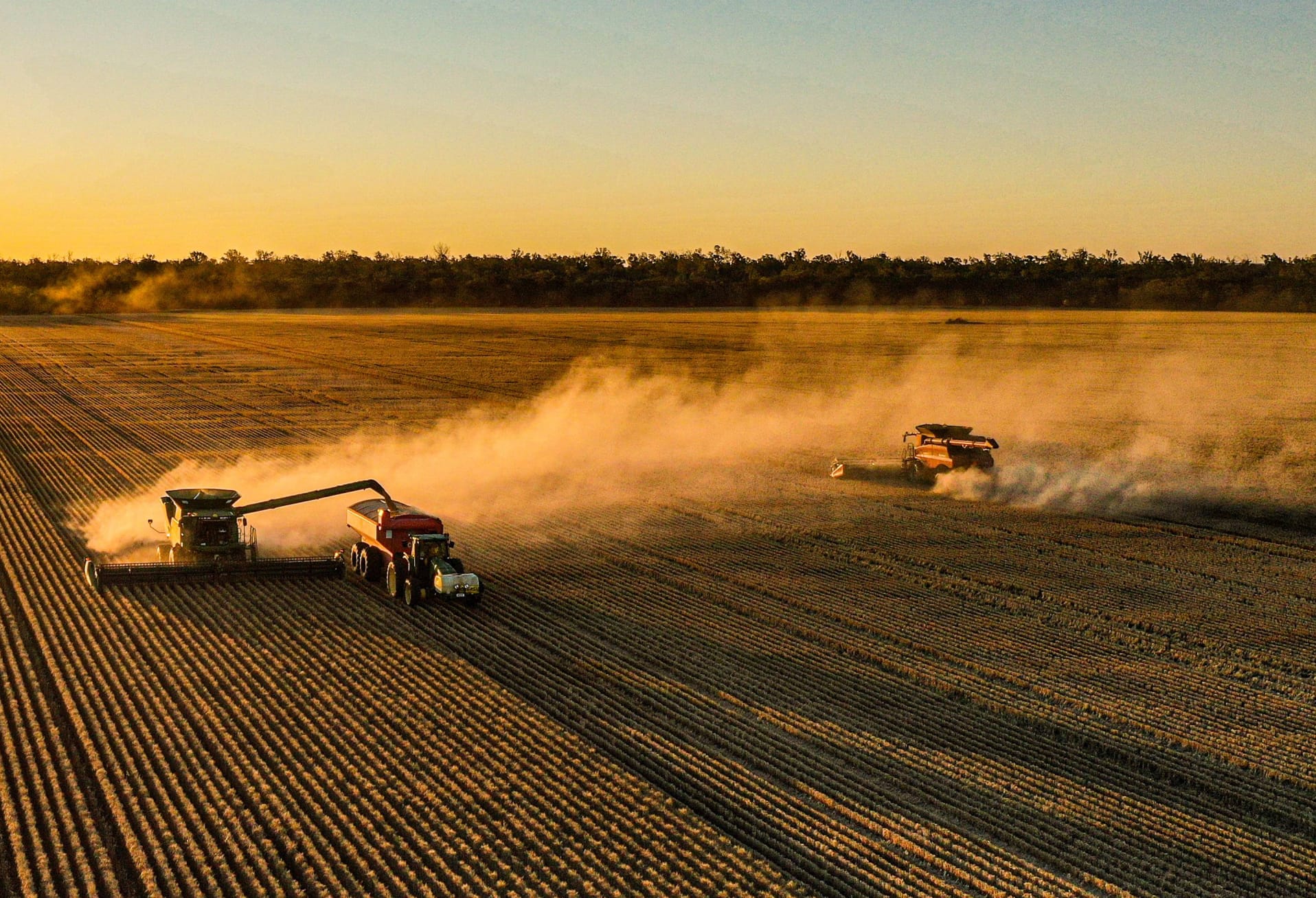


For the first time in many years there has been very high stubble loads, and serious consideration on how to best manage them is encouraged. Farmers are likely to have issues during sowing time with the core challenges being to effectively get the seeder through the crop residue as well as pre-emergent herbicide efficacy.
Additionally, retained stubble provides a valuable carbon source for microbial activity which can lead to associated benefits such as nutrient availability. Burning stubble will result in a rapid loss of nutrients into the atmosphere.
By understanding how much stubble you have in your paddocks you can start to estimate the amount of time required for organic matter to break down to humus, and the amount of nitrogen (N) that is tied up as organic matter.
To calculate your stubble load in each paddock, multiply your grain yield by 1.5, this will give you estimated tonnes per hectare of stubble.
At the recent GRDC updates in Bendigo, CSIRO researcher Tony Swan explained that the ultimate aim for stubble is to increase the humus and nutrient factor of soils.
“Humus is so nutrient rich and the stubble residues are relatively nutrient poor, so only a small proportion of the total carbon in the crop residues can be converted into humus,” Mr Swan said.
For organic matter to be broken down into humus it needs to reach a carbon N ratio between 10:1 and 20:1. A typical wheat stubble has a carbon N ratio of 80:1, with canola stubble having an even higher ratio. This means that extra N needs to be added to the system for effective breakdown.
IPNI researcher Rob Norton also presented at the event and explained that for every tonne of stubble, you require an extra 15kg N/t for crop growth.
Of the total nitrogen a farmer plans to apply to a cereal crop, 30% of that is required to get the crop to GS30. Considering the high yields of 2016, this is estimated to be about 20-30kg N/ha from sowing to GS30. Remember, N will be immobilised by organic matter and microbes, there will be less available for crops early in the season.
The position of stubble influences the rate at which it is immobilised into the soil. Slashed stubble, which is closer to the soil surface, can break down quicker.
More information about stubble management can be found on The Stubble Project: Victoria and Tasmania website. This has been funded through the GRDC ‘Maintaining profitable farming systems in retained stubble’ project, BWD00024.