
The benefits of soil sampling have again been highlighted through the 2019 BCG soil sampling program that has comprised of more than 150 Wimmera and Mallee paddocks, so far.
The long-standing BCG soil sampling program began in February, and this year has included some additional analyses, including soil carbon, thanks to a National Landcare Program investment aimed at engaging local farmers to establish an assessible soil carbon and land management interaction baseline data source of 150 sites across the Mallee.
The purpose is to provide local context and deliver specific information to farmers so they can adopt modern land management practices to improve their sustainability and profitability.
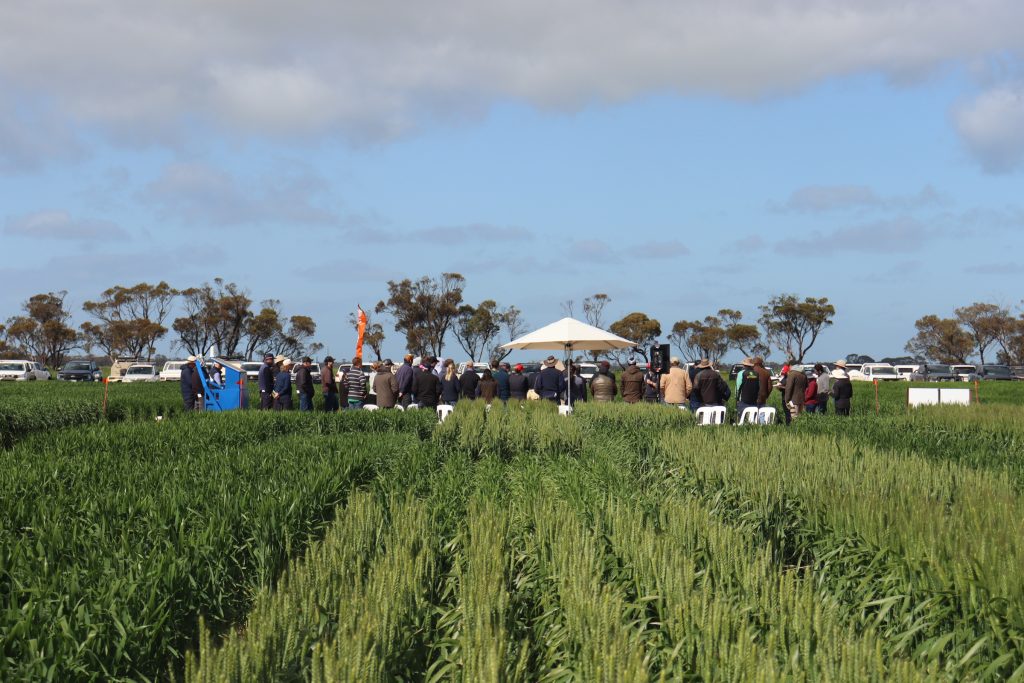
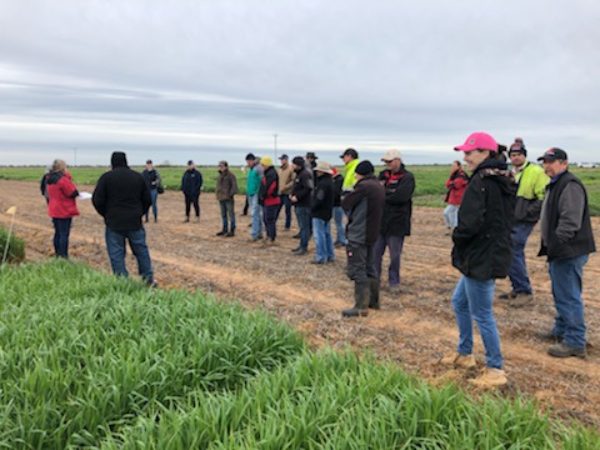
Complementing the soil sampling program was a workshop held in Sea Lake on March 13 where growers were presented Mallee soil testing results including the current soil status and production capability of Mallee soils, what soil and production practices influence a change in soil characteristics and why and how decision support tools can enhance decision making to ensure soils remain productive and sustainable.
BCG Research Agronomist, Kate Maddern, presented at the workshop and said her key messages included those that reiterated the importance of having data (soil samples) to use decision support tools such as Soil Water Express and Yield Prophet®.
“To be sustainable, you need to ensure that you are replacing what the crop took out of the soil last year and providing enough for this year’s crop,”
Ms Maddern continued “Soil constraints can limit the amount of water that is available to the crop, such as boron, bulk density, sodicity, EC and pH. Understanding these can help to make informed decisions about rotations.
The amount of nitrogen, phosphorus, moisture and other nutrients in the soil will depend upon soil type, crop rotations and rainfall, which will be different from paddock to paddock. Therefore, it is important to conduct soil tests to make informed nutrition and rotation decisions before sowing and in-season.
Given the significant rainfall event in December, the boundary between the areas that received significant rainfall and those that didn’t is quite noticeable.
“It has been really heartening to undertake soil sampling and find decent amounts of stored sub-soil moisture in the areas that received large amounts of rain in December.”
“A paddock sampled at Hopetoun (cereal in 2018) had 17 per cent soil moisture from 10 to 100cm, compared to a paddock at Merrinee (lentils in 2018) which had less than 5 per cent soil moisture from 10 to 100cm.”
Further results showed a paddock at Rainbow had 42mg/kg (lentils in 2018) of nitrate nitrogen, while at Walpeup (barley in 2018) there is 9.7mg/kg of nitrate nitrogen.”
Phosphorus is another element grower’s need to be mindful of.
“At Ultima (lentils in 2018) the paddock had a Cowell P of 31mg/kg, while the paddock at Walpeup (barley in 2018) had a Cowell P of 17mg/ka.”
Soil carbon varied across the Mallee, but was generally low, where one site at Rainbow had an organic carbon of 0.18 per cent, which is quite low.”
This project is supported by Mallee Catchment Management Authority, through funding from the Australian Government’s National Landcare Program.
Growers are still able to book their paddocks in for soil sampling however, the service will be concluding shortly, so don’t delay. For further information call the BCG office on 03 5492 2787 or Kate Maddern on 0458 950 394.