Take Home Messages
- Avoiding highly susceptible varieties is a valuable component of an integrated disease management strategy.
- Making in-crop fungicide decisions that factor in seasonal conditions, variety susceptibility and disease levels in a paddock can reduce fungicide inputs in low-risk situations.
- In low disease pressure seasons, minimal fungicide use, combined with resistant varieties, can reduce costs without compromising profitability and reduce risks associated with fungicide resistance.
Aim
This study aimed to enhance cereal disease management in the North Central region by:
- Assessing how various wheat and barley varieties with differing disease resistance ratings performed during the 2024 season.
- Identifying the most effective timings for fungicide application to control disease.
- Evaluating the effectiveness and economic viability of different fungicide options for disease control.
Background
In the North Central region, the need for in-crop disease management in cereal crops is influenced by seasonal conditions, crop variety, and paddock history. Effective disease management strategies are essential for minimising yield losses during seasons with high disease pressure, while avoiding unnecessary fungicide applications in low-pressure years to reduce costs, without compromising profitability. Poorly timed or excessive fungicide applications can lead to significant yield penalties in high-risk seasons or unnecessary expenses when disease pressure is low.
Cereal crops in the North Central region are commonly affected by multiple foliar diseases. Septoria tritici blotch and stripe rust are prevalent in wheat, while barley is frequently impacted by spot form of net blotch (SFNB) and net form of net blotch (NFNB).
Trials conducted during 2023, the first year of this two-year GRDC project, were disrupted by kangaroo grazing. Incorporating feedback from local growers, the 2024 trials aimed to assess disease impacts and yield losses in cereal varieties with different resistance levels. These trials also evaluated various fungicide timings and product options, offering practical insights to enhance disease management strategies for growers in the North Central.
Paddock Details
Location: Mitiamo
Crop year rainfall (Nov–Oct): 467mm
GSR (Apr–Oct): 202mm
Soil type: 0–70cm clay, 70–100cm silty clay loam
Paddock history: Oats
Trial Details
Crop type/s: Wheat and barley
Treatments: Refer to Tables 2, 3, and 4
Target plant density: 130 plants/m²
Seeding equipment: Knife points, press wheels, 30cm row spacing
Sowing date: 23 May 2024
Replicates: Four
Harvest date: 5 December 2024
Trial Inputs
Nutrition, weeds and insects were managed as per best practice.
Method
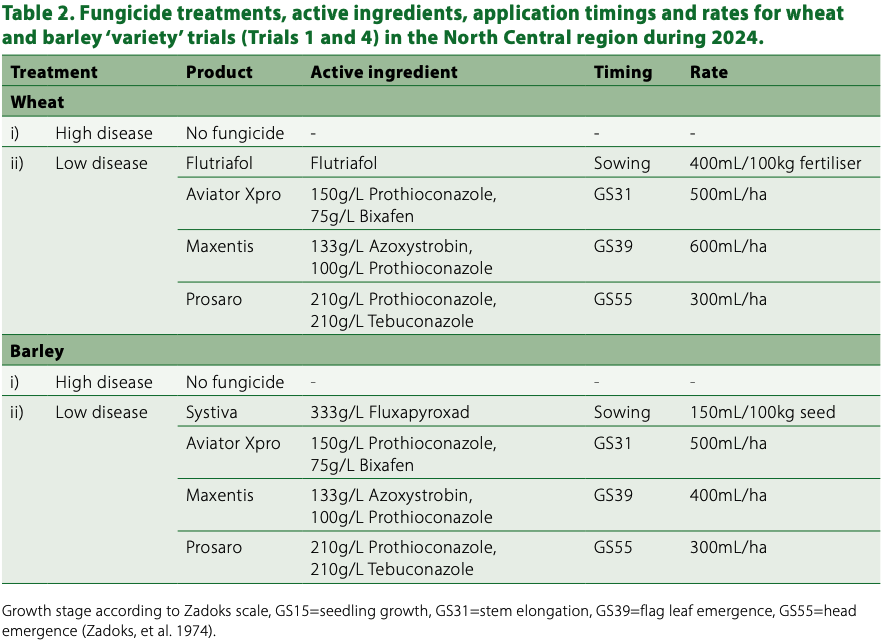
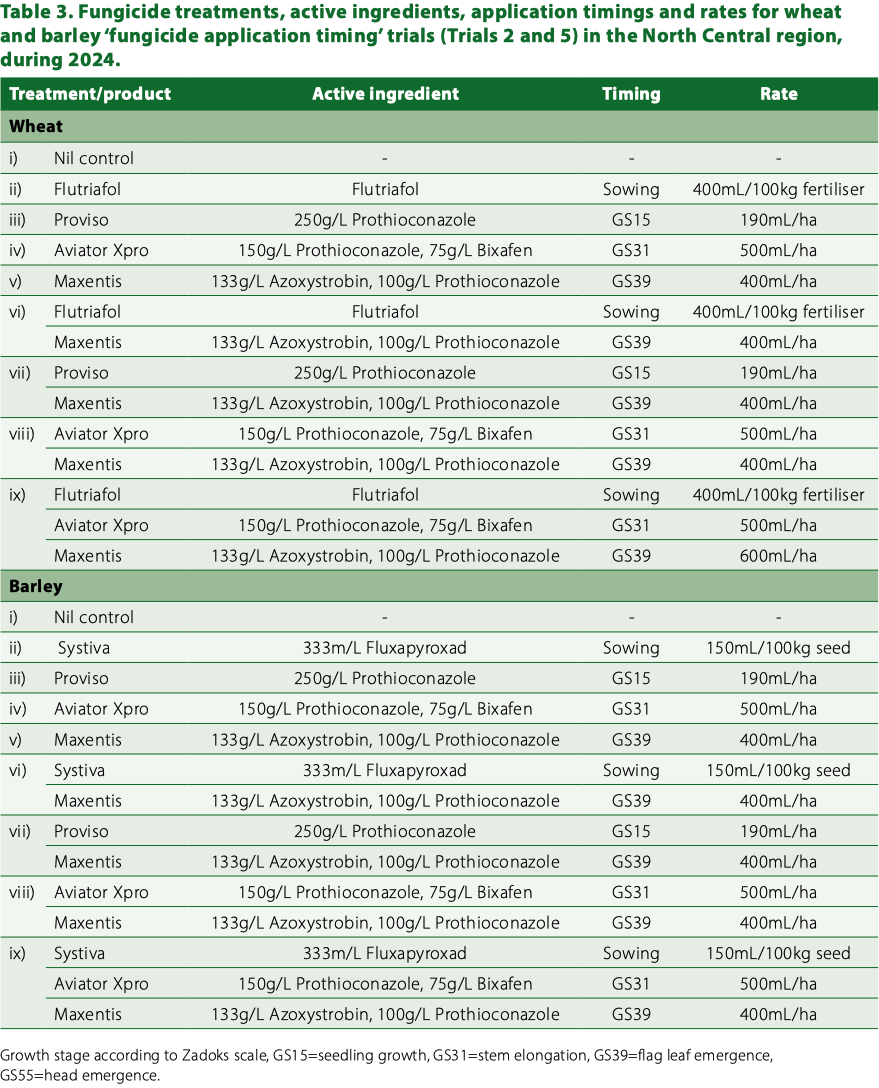
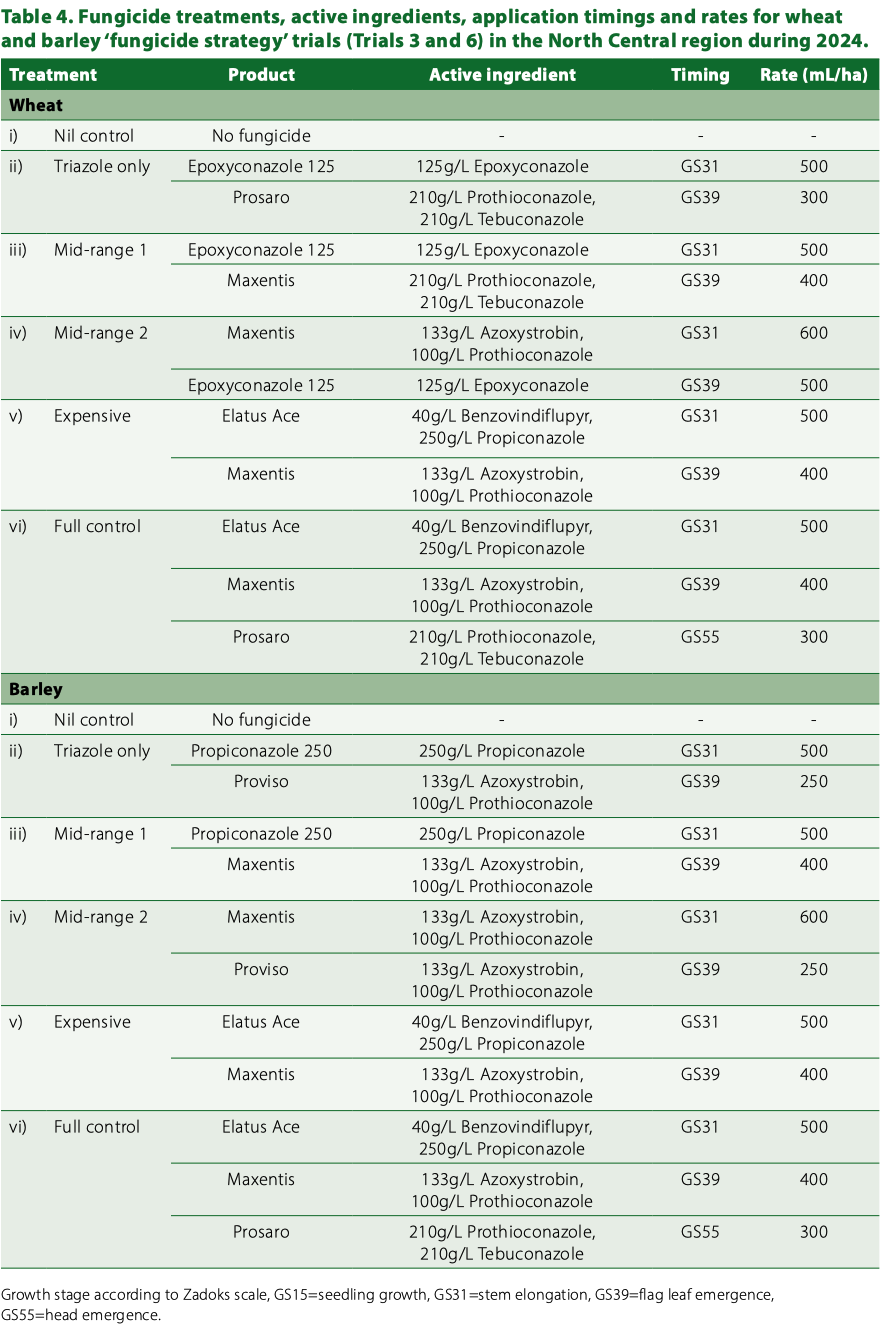
Six trials were set up at Mitiamo, in the North Central region, with three each dedicated to wheat and barley. The trials investigated different varieties, fungicide timings, and fungicide options. Varieties of wheat and barley with varying resistance ratings were sown (Table 1, Trials 1 and 4) and treated with either a high (nil control) or low (full control) disease treatment (Table 2). Trials with wheat varieties Scepter and LRPB Matador (Trials 2 and 3) and barley varieties Maximus CL and RGT Planet (Trials 5 and 6), examined different fungicide timing applications (Table 3) and fungicide options (Table 4).
All trials were set up using randomised complete block designs with four replicates. Assessments included disease severity, establishment counts, and yield parameters. Disease severity was visually assessed by estimating the percentage of leaf area affected by disease on eight occasions during the season, from GS15 to GS55. These severity estimates were then used to calculate the Area Under the Disease Progression Curve (AUDPC), providing a cumulative measure of disease severity over time (Brown and Keane, 1997).

Results & Interpretation
Seasonal conditions and diseases present
Mitiamo received 202mm (Decile 4) of rainfall during the growing season, leading to dry seasonal
conditions and overall low disease pressure. Despite the dry conditions, Septoria and stripe rust were observed in wheat, while barley was mostly affected by spot form of net blotch (SFNB) and some net form of net blotch (NFNB).
Trial 1:
Wheat varieties with and without disease
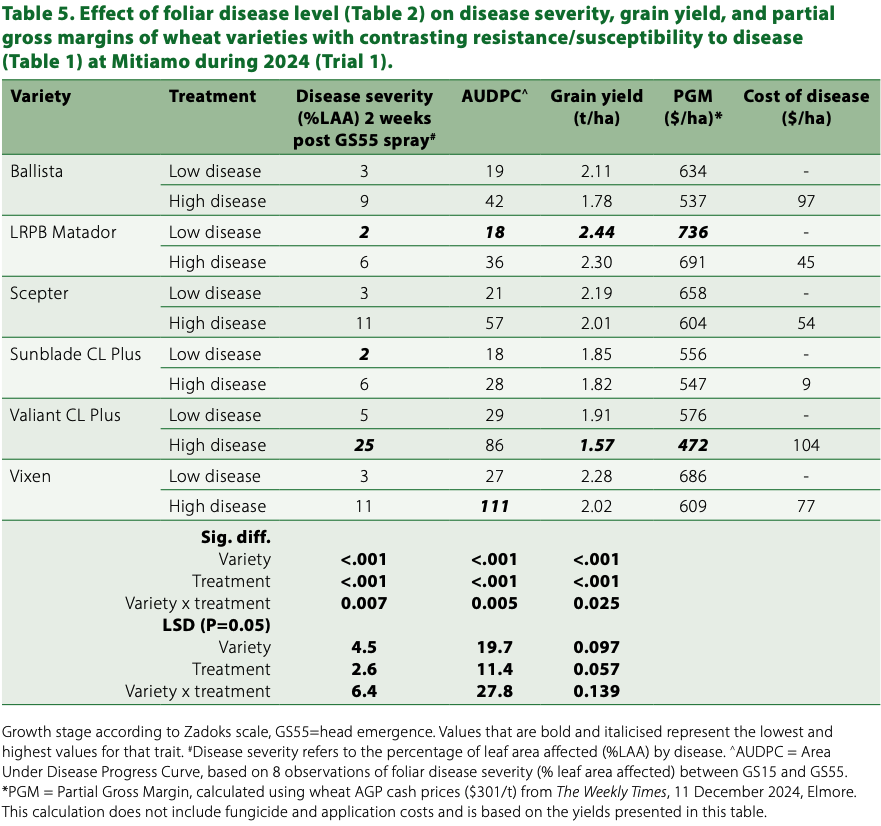
Significant variation was observed in disease severity (both post GS55 and AUDPC) between varieties and treatments (Table 5). Low disease treatments consistently had lower disease (p<.001) and AUDPC (p<.001) compared to high disease treatments, with the largest differences observed in highly susceptible varieties such as Valiant CL Plus and Vixen. Valiant CL Plus exhibited a high AUDPC (86) and disease severity (25 per cent) under high disease treatments, resulting in a substantial cost of disease ($104/ha) (Table 5). In contrast, Sunblade CL Plus, which is less commonly grown in this region and has a moderate resistance rating (MRMS), showed low AUDPC and minimal cost of disease, indicating strong alignment with its resistance profile. These findings reinforce the importance of variety choice in building strategies for disease suppression, even in dry seasons.
Disease effects and yield
Statistically significant differences in yield were observed between low and high disease treatments across varieties (p<.001), indicating that disease negatively impacted grain yield (Table 5). The extent of yield loss varied by variety, with the highest losses recorded in Valiant CL Plus (18 per cent) and Ballista (16 per cent), with the lowest in Sunblade CL Plus (2 per cent) and LRPB Matador (6 per cent) (Table 5). A clear relationship emerged between the disease ratings of varieties and their yield response to disease, with more resistant varieties, such as Sunblade CL Plus and LRPB Matador, showing smaller yield losses. In contrast, highly susceptible varieties like Valiant CL Plus experienced the greatest yield penalties due to disease.
Trial 2: Wheat under various fungicide applications and timings
This trial involved two wheat varieties, Scepter and LRPB Matador, treated with various fungicide application timings (Table 3). These varieties were selected for their resistance ratings. Since statistical analysis showed no significant variety effect, the data from both varieties was combined for analysis.
Disease presence across treatments
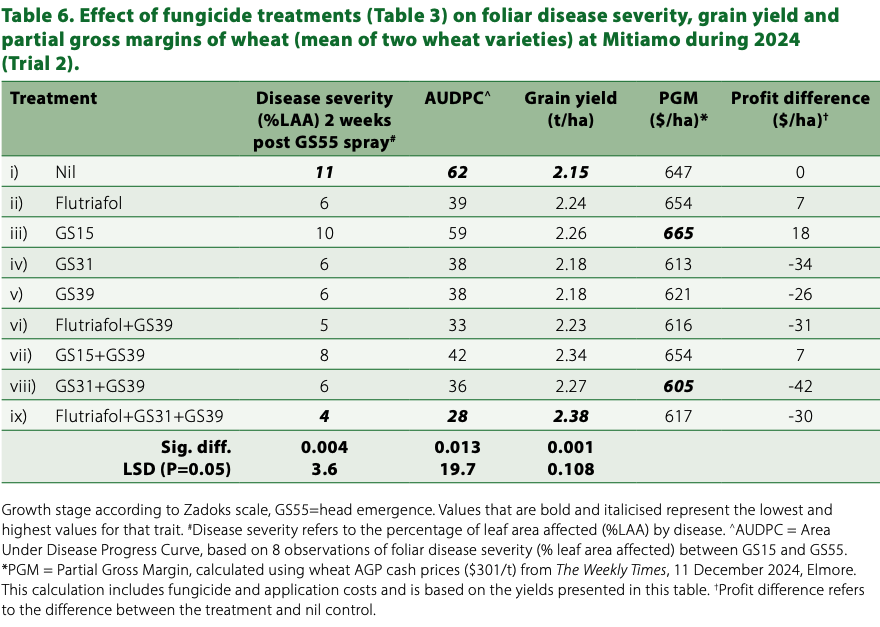
Fungicide application treatments significantly reduced disease severity, with the most intensive treatment, Flutriafol+GS31+GS39 (Treatment ix), achieving the lowest disease severity at 4 per cent (p=0.004) and an AUDPC of 28 (p=0.013) (Table 6). Both stripe rust and Septoria were observed across all treatments. Early signs of Septoria appeared two weeks after the GS31 spray, with both stripe rust and Septoria becoming more prominent two weeks post-GS39. By GS55 and beyond, stripe rust was present in all plots, underscoring its widespread nature. Treatments involving multiple fungicide applications, particularly those including GS39, demonstrated greater efficacy in suppressing disease compared to single-application treatments or the Nil control (Treatment i).
Yield and fungicide timing
Fungicide treatments significantly impacted grain yield (p=0.001) (Table 6). The highest yield, 2.38t/ha, was achieved with Flutriafol+GS31+GS39 (Treatment ix), representing an 11 per cent yield increase compared to the Nil control (Treatment i) (2.15t/ha). Other multiple-application treatments, such as GS15+GS39 (Treatment vii) at 2.34t/ha and GS31+GS39 (Treatment viii) at 2.27t/ha, also resulted in notable yield improvements. However, despite these yield gains, many fungicide treatments led to reduced PGMs due to higher input costs. For instance, while Flutriafol+GS31+GS39 (Treatment ix) produced the highest yield, its PGM was $617/ha, $30/ha lower than the Nil control (Treatment i) ($647/ha) (Table 6). These findings highlight that in years of low disease pressure, intensive fungicide strategies may not deliver positive economic returns, emphasising the importance of balancing yield gains with the associated costs of fungicide applications.
Trial 3: Wheat fungicide strategy
This trial involved two wheat varieties, Scepter and LRPB Matador, treated with various fungicide strategies (Table 4). These varieties were selected for their resistance ratings. Since statistical analysis showed no significant variety effect, the data from both varieties was combined for analysis.
Disease severity
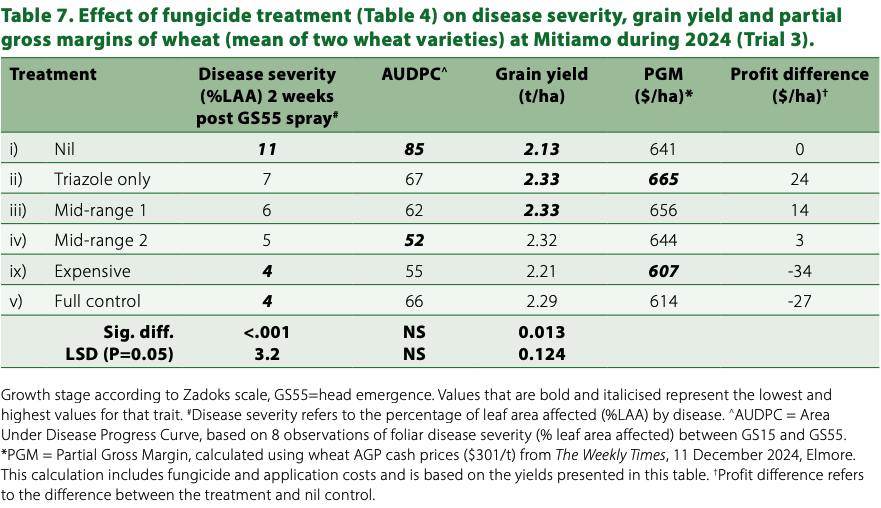
Fungicide treatments significantly reduced disease severity (p<.001), with all fungicide strategies outperforming the Nil control (Treatment i) (Table 7). The Nil control also had the highest AUDPC value, however this was not significant.
Grain yield and economic outcomes
Fungicide treatments significantly impacted yield (p=0.013), with the highest yield observed in the Triazole-only (Treatment ii) and Mid-range 1 (Treatment iii) strategies, both producing 2.33t/ha, compared to the Nil (Treatment i), which yielded 2.13t/ha (Table 7). Regarding economic performance, Triazole-only (Treatment ii) provided the highest PGM of $665/ha, followed by Mid‑range 1 (Treatment iii) ($656/ha). Conversely, the Expensive (Treatment ix) and Full-control (Treatment v) strategies had the lowest PGMs, at $607/ha and $614/ha (Table 7). These findings emphasise that in seasons with low disease pressure, expensive fungicide regimens do not necessarily result in positive economic outcomes. Targeted and cost-effective fungicide applications, such as Triazole only (Treatment ii) and Mid-range (Treatments iii and iv) strategies, may be more beneficial under such conditions.
Trial 4: Barley varieties with and without disease
Disease presence
SFNB was the predominant disease observed in the trial, however, disease severity and AUDPC values remained low across treatments due to the dry conditions, which restricted disease progression. For instance, Titan AX recorded an AUDPC of 90 under the low disease treatment, compared to 108 under the high disease treatment, with similarly minor differences observed for other varieties (Table 8). These findings indicate limited rainfall had a greater influence on disease progression than varietal resistance.
Disease effects and yield
Barley exhibited lower overall disease severity than wheat, and there were no significant disease impacts on yield in any variety (Table 8). As a result, disease control measures were not warranted in a season like 2024. Although significant treatment effects were observed for disease severity (p=0.002) in all varieties except Combat, these differences did not affect yield, indicating the low disease levels were not yield-limiting. While resistance ratings generally aligned with observed disease levels, their influence was less pronounced under the dry conditions of 2024. These findings reinforce the idea that in low-pressure seasons, growers can prioritise variety selection and reduce fungicide applications, thereby minimising costs without compromising yields.

Trial 5: Barley under various fungicide applications and timings
This trial involved two barley varieties, Maximus CL and RGT Planet, treated with various fungicide application timings (Table 3). These varieties were selected for their resistance ratings. Since statistical analysis showed no significant variety effect, the data from both varieties was combined for analysis.
Yield and fungicide timing
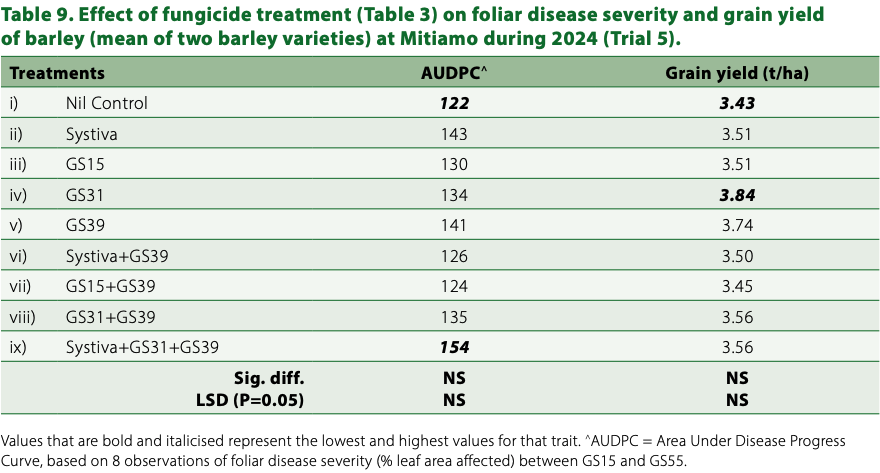
Disease development in this trial was limited, with no significant treatment effects observed on disease severity (AUDPC) or grain yield (Table 9). These findings suggest that during dry seasons with low disease pressure, in-crop fungicide applications are not warranted.
Trial 6: Barley fungicide strategy
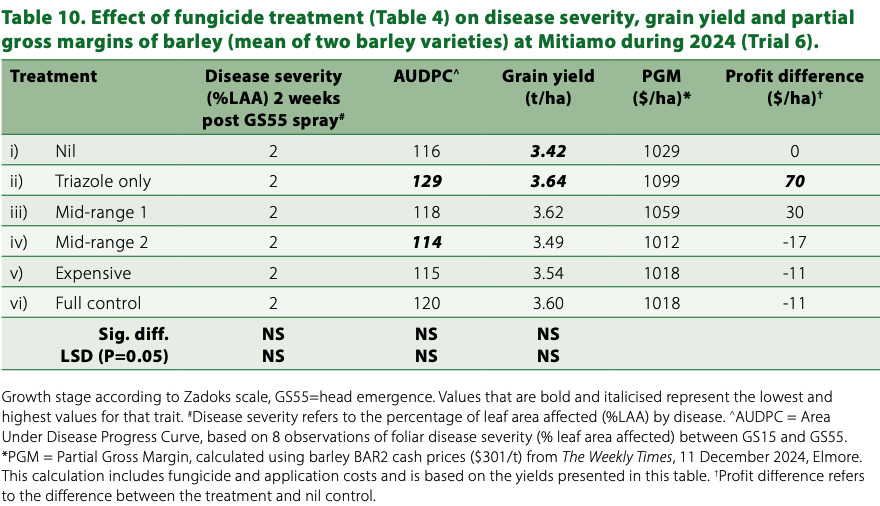
This trial involved two barley varieties, Maximus CL and RGT Planet, treated with various fungicide strategies (Table 4). These varieties were chosen for their resistance ratings. Since statistical analysis showed no significant variety effect, the data from both varieties was combined for analysis.
Disease severity
No significant differences were observed in disease severity and AUDPC in the fungicide treatments, with all strategies maintaining a consistently low disease severity of 2 per cent at two weeks post-GS55 spray (Table 10).
Grain yield and economic outcomes
Grain yield differences were also not significant, ranging from 3.42t/ha in the Nil control (Treatment i) to 3.64t/ha in the Triazole-only (Treatment ii) strategy (Table 10). These results suggest that in a low disease pressure season, intensive fungicide regimes offer limited economic benefit. Instead, minimal fungicide strategies, such as Triazole-only (Treatment ii), were more cost-effective, highlighting the importance of tailoring fungicide use to seasonal conditions
Commercial Practice and On Farm Profitability
Effective disease management remains crucial, even in dry seasons like 2024, as it highlights the economic risks of unnecessary fungicide applications. These trials demonstrated that under low disease pressure, intensive fungicide strategies are often unwarranted as they add to production costs without improving profitability. A strategic, minimal fungicide approach, tailored to disease levels as determined through crop monitoring, can effectively maintain yields while reducing input costs. Avoiding highly susceptible varieties also emerged as a key strategy, significantly reducing disease risk even under dry conditions.
Fungicide applications improved wheat yields, however the additional input costs often outweighed the financial benefits, emphasising the need to balance fungicide expenditure against potential gains. Barley trials showed even less justification for intensive fungicide use, with negligible disease and yield differences across treatments.
Variety selection was shown to play a pivotal role in disease suppression and economic performance. Resistant varieties consistently exhibited lower disease severity and smaller yield losses, reinforcing the value of selecting less susceptible cultivars as part of an integrated disease management strategy. Studies on disease management have consistently demonstrated the advantages of avoiding highly susceptible cultivars to reduce disease severity and prevent yield losses (McLean and Hollaway, 2018; Cook et al., 2024).
Reducing fungicide reliance is also vital for managing resistance in key diseases, such as Septoria and net blotches. Overuse of fungicides accelerates resistance development, threatening the long‑term effectiveness of these tools. The Australian Fungicide Resistance Extension Network (AFREN) emphasises the importance of reducing fungicide use where possible. For more information, go to the website .
Overall, strategic and adaptable disease management is essential for optimising profitability. While intensive fungicide regimes provided little economic benefit in 2024, ongoing research across varying seasonal conditions will help further refine best-practice guidelines for wheat and barley growers in the North Central region.
References
Brown J.F., and Keane P., 1997, Plant Pathogens and Plant Diseases, ‘Assessment of disease and effects on yield’ pp 315–329.
Cook M.J., Edwards J., Rodoni B., McLean M.S., Santa I.M., and Hollaway G.J., 2024, PhytoFrontiers, ‘Grain yield and quality losses caused by tan spot in wheat cultivars in Australia’ pp 223–235.
GRDC, 2024, NVT Disease Ratings, <https://nvt.grdc.com.au/nvt-disease-ratings> (Accessed 19 September 2024).
McLean M.S., and Hollaway G.J., 2018, Australasian Plant Pathology, ‘Suppression of scald and improvements in grain yield and quality of barley in response to fungicides and host-plant resistance’ pp 13–21.
Zadoks J.C., Chang, T.T., and Konzak C.F., 1974, Weed Research, ‘A decimal code for the growth stages of cereals’ pp 415–421.
Acknowledgements
The research undertaken as part of this project is made possible by the significant contributions of growers through both trial cooperation and the GRDC (BWD2303-002RTX); the authors would like to thank them for their continued support. BCG would like to acknowledge and thank Thomas Jones for his involvement, James Considine, from Nutrien Ag Berriwillock, and Rik Maatman, from Nutrien Ag Birchip, for their advice on product pricing and selection used in this trial, as well as Danny Conlan, from Dodgshun Medlin, and Matt Bissett, from Exceed Ag, for providing supplementary product pricing information. BCG sincerely thanks Adam Gould for generously hosting the trial site at Mitiamo and for their support throughout the project.