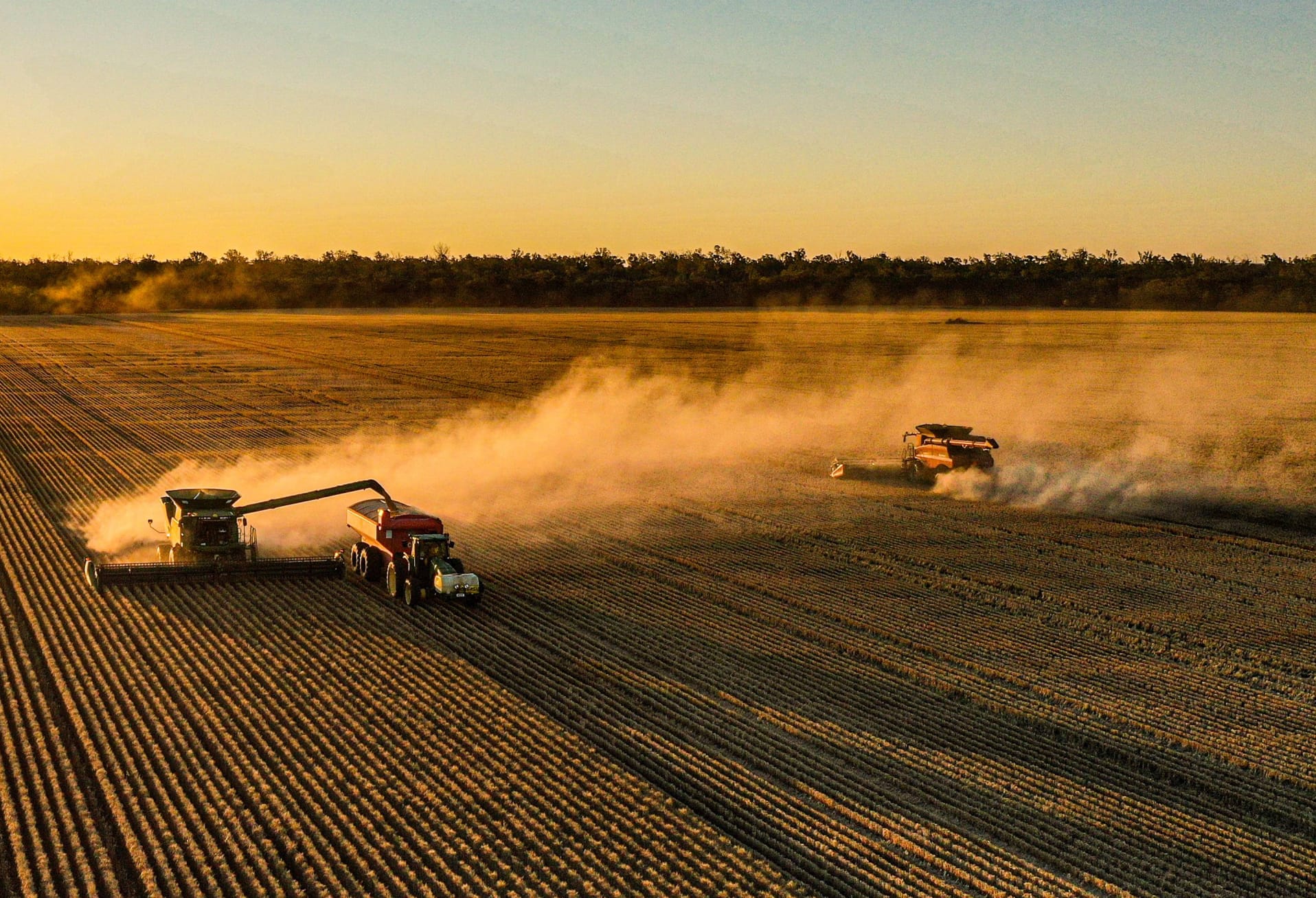
The 2024 cropping season provided challenges for decision making, but also presented valuable production opportunities, thanks to sound research principles, advances in technology, and the sharing of knowledge and experience among growers.
The 2023 season ended on a rewarding note for many, paving the way for a productive start to the year. Whilst significant summer rainfall set the stage for an intensive summer weed control program, it also provided an excellent foundation for cropping programs.
Good subsoil moisture from summer rainfall gave growers the confidence to proceed with a typical cropping rotation. As seeding began, patchy rainfall during April, May, and June led to staggered emergence, with some seed sitting in dry soil for three weeks or more. Early sown crops such as vetch and barley were planted with little to no moisture in the seedbed, while sporadic thunderstorms provided relief in isolated areas. Regardless, growers pushed on with optimism, sowing wheat, canola, and lentils with confidence in the season thanks to good subsoil moisture and targeted management strategies.
There was a silver lining to the dry conditions, which allowed for uninterrupted sowing, perhaps minimising fatigue. However, crop emergence – particularly in canola – was affected, highlighting the challenges of managing crops in variable conditions.
Widespread rain in June rejuvenated crops and brought new decisions into focus, including weed control strategies, nitrogen management, and livestock feed options. Though economic pressures from rising interest rates, increasing production costs, and volatility in global trade added complexity to farm business decisions, including capital investments, growers leaned on their strategic acumen to make informed choices.
Heading into the cooler months, growers were hopeful of a favourable finish to the season.
Early-July climate outlooks offered little certainty, with equal chances of a dry or wet spring. In August, early frosts exacerbated the dry conditions, underscoring the importance of adaptability. Weather forecasts pointed to a dry spring, influenced by a weak La Nina.
Insights shared at the BCG Main Field Day on 11 September at Nullawil inspired growers to refine their management practices. There were discussions around the impact of the dry start to the season, including ‘Can my crop catch up?’ and ‘What will my weed burden look like after dry sowing?’.
In the hyper-yielding cereals session, BCG senior research manager Dr Yolanda Plowman and University of Melbourne Professor James Hunt discussed how late emergence could affect critical grain fill and flowering periods, increasing the risk of combined drought and heat stress.
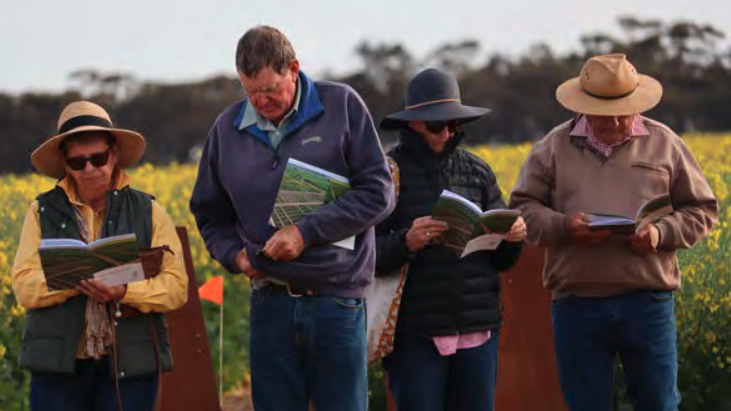
DPIRD WA economist Dr Ross Kingwell shared insights from a decade-long study of 250 farms. He highlighted that successful farmers weren’t those who worked the longest hours, but those who prioritised strategic planning, strong social networks, and personal development.
The season’s challenges culminated in September with unusually severe frost events across the Mallee and surrounding regions. Lentils, wheat, and barley sustained significant damage in many areas, prompting some growers to pivot toward hay production. The dry weather supported efficient hay curing and baling, while irrigation and livestock producers adjusted their strategies to maintain productivity.
Late season rainfall in October and November marked a significant shift in weather patterns. While this stalled harvest and introduced new challenges, such as seed quality concerns and flystrike, some areas benefited from the much needed moisture.
Harvest outcomes varied across the region, but the season reinforced the critical role of summer weed control and moisture conservation in setting up future success. Advances in no-till farming, precision machinery, and agronomic expertise once again demonstrated their value in ensuring crop emergence, even under challenging conditions.