

BCG has welcomed French student Sebastien Sester who is undertaking a six month practice-orientated internship in agronomic and farming systems research as part of his Masters of Science at Wageningen University in the Netherlands.
As part of his work experience Sebastien is providing fortnightly updates to his course supervisor. These updates also provide a valuable international perspective to BCG and our members.
By Sebastien Sester
May 11-27, 2016
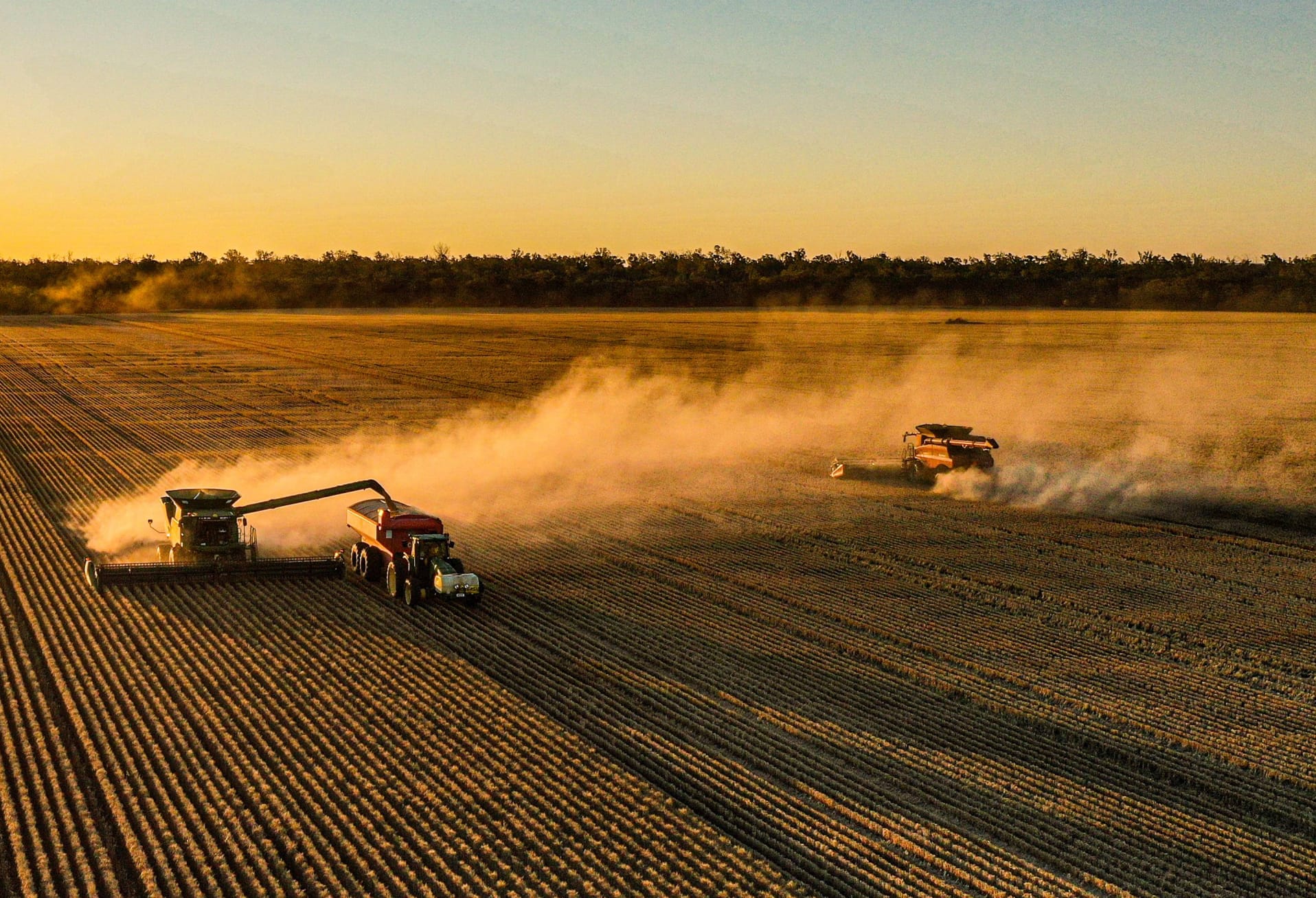
BCG is currently fully into the sowing season and over the past fortnight I have spent a lot of time in the field carrying out trial sowing activities.
Since the last update (May 11), Birchip received another 15mm of rain. Early-sown crops are already established, benefitting from good soil moisture and applied or residual nitrogen.
Recent rain events delayed sowing of late crops, because farmers could not enter paddocks in wet conditions. Sowing in wet conditions is not possible, as mud gets stuck on the tynes of the seeder. This does not allow seeds to be well covered by soil, resulting in poor germination. Moreover, wet conditions increase soil compaction and the chances of getting bogged with heavy machinery.
Nevertheless, tynes are usually preferred to discs, as they perform better in local soils: indeed discs do not put back enough soil on top of the seed. In addition, tyne-seeders have a lower initial investment and have lower maintenance costs compared to disc-seeders. Another reason why farmers use tynes instead of discs is that they disturb the top layer of the soil, providing a good tilth for chemicals.
Farmers practicing zero-tillage would still go for discs, as they minimise soil disturbance. It seems that both types of seeder have their drawbacks and advantages, so it is up to the farmer to choose one or the other. If cost of machinery were lower, farmers would probably have both types of seeder sitting in their sheds.
Surprisingly, the landscape around Birchip changed quite a bit over the last weeks. Paddocks that were predominantly dry, bare or covered with stubble are now green thanks to emerging crops. It went from being almost desert-like landscapes to dark-green and fertile lands by now. I find it quite impressive that farmers manage to grow crops in this part of the country.
Now that the climate forecast for the rest of the season looks relatively good, other concerns keep farmers worried. Indeed, some farmers who sell their products to the dairy industry are particularly worried about prices (most of the barley grown here is for feed). Like in the EU, the actual situation of the dairy industry is very bad, mainly because of extremely low milk prices. These low prices are the consequence of a reduction in demand from China and Russia on the one hand, and an increased production in Europe since the end of the milk quotas on the other hand.
When the trials are sown, upcoming works will be early crop assessments including establishment counts, biomass cuts, weed population counts, spraying and fertiliser application.
Time flies as I am now not far from being half way through my internship.
May 1-11, 2016
Rain has finally come to Birchip and around the Mallee, with about 30mm over the last two weeks. High local variation in precipitation was observed. Since farm sizes are very big (> 5000ha) some farmers ended up with high moisture paddocks, while other paddocks hardly received any rain. This is another challenge for farmers, as heterogeneity on the farm is increased, making management-related decisions even harder.
In Birchip, like in almost every town in rural areas of Victoria, agriculture is the main activity. The small community is very dependent on agriculture, because it provides work and income to entire families. Indeed the majority of its inhabitants are farmers, work on someone’s farm or carry out farming-related activities. These include contractors, tractor/truck drivers, shepherds, shearers etc… Others provide services to farmers: selling/repairing machineries and equipment, selling fertilisers/chemicals and advising farmers. Of course BCG is a big employer in town too, hiring about 20 people.
Having met a few farmers, I think that farming is a family business. Most farms are run by relatives, who hire additional external workers if needed. Most of current farmers took over their parent’s farm, and run it together with them or in association with other relatives. Many women are involved in farming too.
A similar trend to Europe is also seen here: over the past decades, the number of farmers declined and farm sizes increased. Many farmers bought their neighbour’s land, in order to increase the cropping acreage.
Nowadays, thanks to technology and bigger machinery, a worker on his own can achieve what four workers would achieve 50 years ago. But such machinery has a tremendous costs, forcing farmers to buy even more land to pay it off, or to lend money from the bank. As a consequence, farmers have debts and are tied to banks for years.
Unlike in Europe, land price here is not very high ($500/acre), but return on one acre is rather low too. This means that farmers have to purchase big pieces of land (500 ha or more) in order to increase their income.
Local communities are very dependent on agriculture, and agriculture is very dependent on rain. Recent rain events did have a positive impact on people around here. Farmers tend to be relieved and somewhat more optimistic about this growing season. Before rained occurred, all growers were in full speed sowing in order to have as many paddocks as possible sown before the rain.
I have realised that farmers are relatively flexible with their rotations, since which crop to sow depends on the amount of rainfall, and that rainfall is highly variable. Some farmers can change their cropping plans a few weeks before sowing. There are of course some limiting factors: market outlooks, previous crops, soil types, chemical residues, and so on.
Sowing is in full swing at BCG too, with as many as 52 trials out of 116 are already sown. Preparing trials, sowing and some early crop assessments will be my main activities in the coming two weeks.
The second time of sowing in the barley phenology trial is in the ground, and early varieties have already emerged. The first time of sowing is looking good, but there are only minor differences up to now. Next to this, I will be involved in a trial aiming to improve barley competition against weeds by looking at different row-spacing and sowing directions (which is very similar to my thesis work at WUR). More information will follow soon.
More of Sebastien’s reports can be found here.