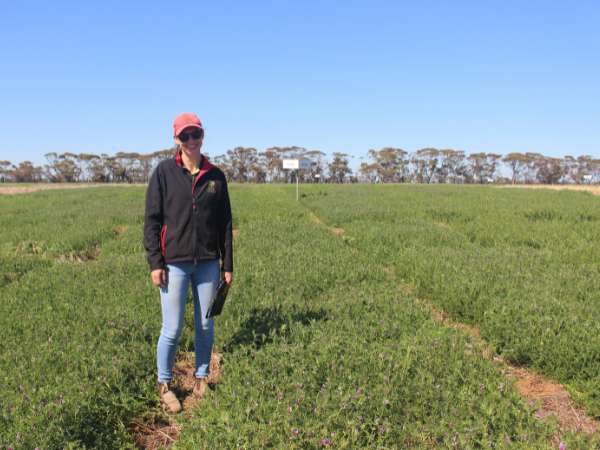


Two consecutive decile 2 seasons at Kinnabulla in the Victorian southern Mallee have provided a tough, but useful, test for farming system design, highlighting where rotation choices still matter and where the season simply takes control.
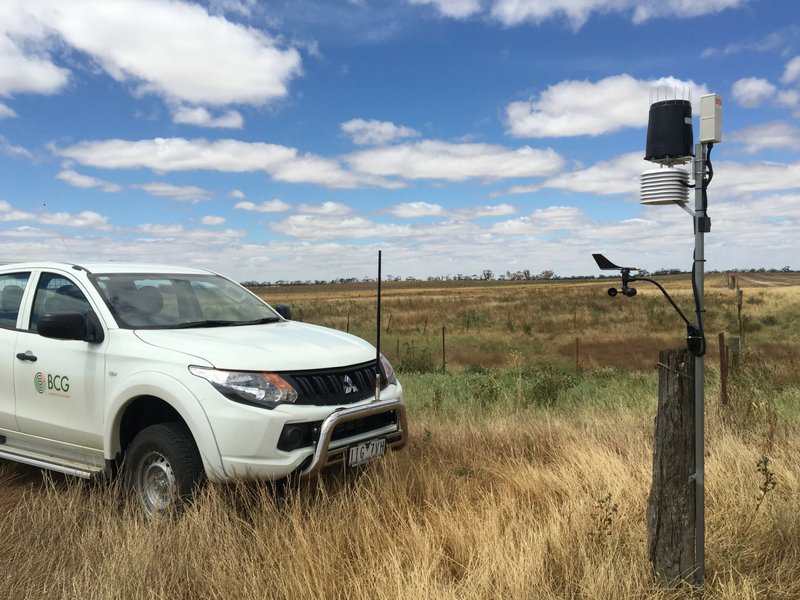
New interim findings from a BCG systems comparison trial, to be discussed at BCG’s Trials Review Day on Friday 20 February in Birchip, show plant available water at sowing fell by 60mm from 91 mm in 2024 to just 31 mm in 2025. The shift reflected a wetter January in 2024, followed by a very dry summer to autumn period leading into 2025.
The trial compares three systems: continuous cropping, cropping with a pasture phase (mixed farming), and a farmer-driven tactical rotation based on seasonal outlook and markets. Early results point to where flexibility becomes most important in dry years, including nitrogen management, grain quality and the option to redirect biomass into livestock production.
BCG Senior Scientist Dr James Nuttall said the results reinforced just how dominant seasonal conditions can be. “In 2025 we had very low plant available water at sowing across the site, and there was little difference in stored soil water between previous crops,” Dr Nuttall said. “In back-to-back dry years, the season can still outweigh any rotation effect.”
Legume choice, however, did influence nitrogen supply into the following wheat crop. Where wheat followed vetch, grain protein concentration and screenings were higher than where wheat followed lentil, reflecting higher soil mineral nitrogen at sowing after vetch. “When grain yield is constrained, extra nitrogen tends to show up in grain quality rather than yield,” Dr Nuttall said. “That means legume choice can still influence how wheat performs in tough seasons.”
For growers running livestock, the trial also showed the value of keeping forage options open. Lentil and vetch produced similar biomass at flowering (2.8 t/ha) following barley in 2025, but the end result differed. Vetch grazed at 16 DSE/ha delivered average lamb weight gains of 7 kg/head over 22 days, while lentil taken through to grain yielded 0.9 t/ha with high protein. “Being able to redirect biomass into livestock production gives growers another way to turn limited rainfall into a saleable product,” Dr Nuttall said.
The research is funded by the Australian Government, Department of Agriculture, Fisheries and Forestry through the Future Drought Fund initiative as part of the project ‘Long term economic, environmental and social outcomes of drought resilience practices in mixed farming’.
Register your attendance or become a member today at bcg.org.au. BCG CEO Fiona Best said the day gives growers a chance to step back and assess local data in a practical farming context. “In seasons where every input needs to earn its place, the value of reliable local research is hard to overstate,” Ms Best said.
Got a question for James? Submit your early Trials Review Day questions via this form
What decision are you grappling with on farm? Submit your question below to help shape the Trials Review Day discussion.Questions for Trials Review Day