You’ve heard about Grace’s role in the BCG office, now let’s talk about her role on her family farm.
Tell us about yourself, where you grew up, how you came to the farm, and what your role is today.
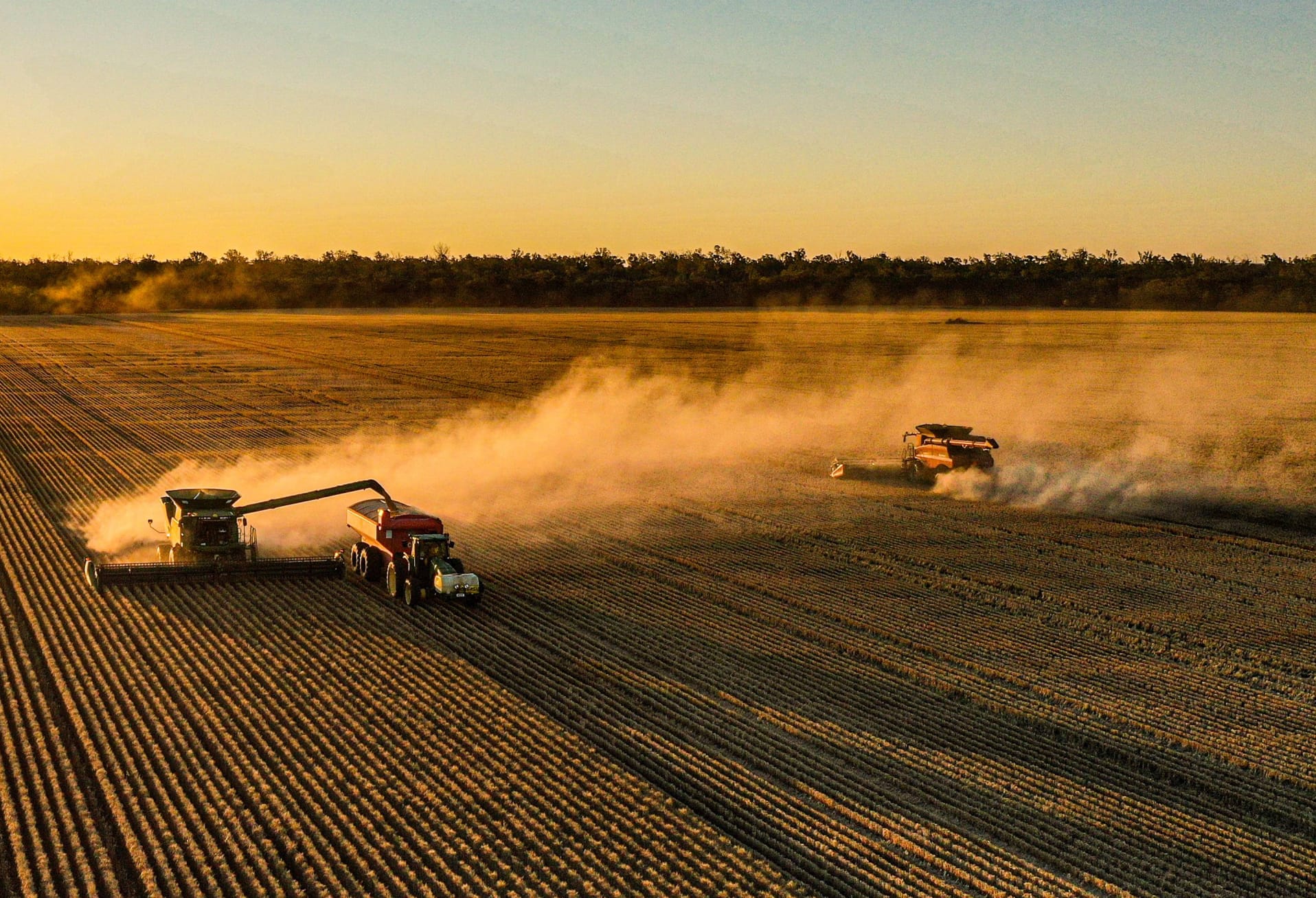
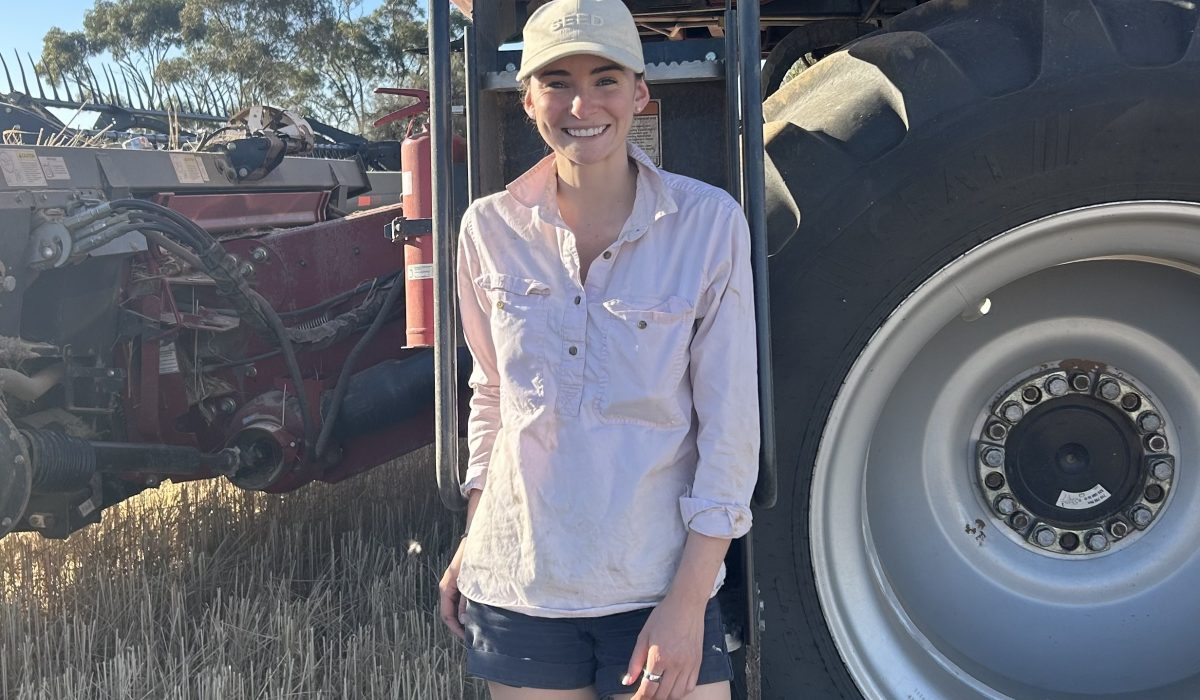
I grew up on our family farm, Woodlands, at Oakvale, just South of Quambatook. My three sisters and I are the sixth generation of Hosking’s to farm at Woodlands, alongside my grandparents and parents. While I currently work off farm at BCG, I’ve always remained closely involved in the farm, particularly during peak periods. From 2026, I’ll be stepping back into a greater on farm role, which is something I’m really looking forward to as we continue to evolve the business.
What does your farm operation look like?
We run a mixed farming operation, combining broadacre cropping with livestock. Our cropping program includes wheat, barley, lentils, canola and oats for hay, alongside a sheep and cattle enterprise that plays an important role in whole farm flexibility and risk management.
How is the season shaping up on your farm?
We’re counting our lucky stars this season. A timely 60 mm rain event around Anzac Day drove strong establishment across the program and early sowing combined with upfront nutrition really set our crops up. That early vigour and root development helped crops access stored soil moisture and better withstand tightening conditions later in the season, and as a result, we’ve been really pleased with the yields.
Are there any practices or pieces of equipment that have made a difference to productivity or cost control on your farm?
Focusing on timeliness has made the biggest difference to productivity and cost control across the farm, from getting crops in early, to timely spray applications and harvest logistics. We’re increasingly conscious of matching inputs to seasonal potential rather than taking a one size fits all approach. Working with a new agronomist this year has also been valuable, bringing a fresh perspective to our decision making. Having someone ask challenging questions and revisit parts of the system has helped refine our approach to inputs, timing and overall efficiency, while still building on what already works well in our farming system.
After some good yields in 2025, nutrition replacement will be a key focus heading into 2026. We’re also working hard to get on top of some ongoing weed challenges, particularly ryegrass. We’ll work closely with our agronomist to continue implementing a range of strategies, including windrow burning, hay production and timely chemical applications, to keep pressure on weed populations and protect long term system performance.
What do you love about farming?
Farming brings me an enormous amount of joy. It’s a cliche that’s thrown around a lot, but it genuinely doesn’t feel like a job. As I transition back into more on farm work, it’s also been one of the most challenging things I’ve ever done. The sense of accomplishment, the constant problem solving and the need to keep learning are incredibly rewarding. There’s a real sense of pride in producing something tangible and in knowing that the decisions you make today have long term implications. There’s also something pretty special about working alongside family on the same land that’s been in your name for six generations.
Drought is an inevitable aspect of the climate we farm in. How is your farm business preparing for future droughts, or potential financial shocks within the business?
Ensuring the business is in a strong financial position to withstand lower production periods is a constant focus, which means regularly reflecting on performance from season to season. Every investment decision is carefully scrutinised, with a clear expectation that it delivers a productivity or efficiency gain that justifies the cost.
For example, during harvest this year we relied more heavily on external contractors for additional cartage. We’re now crunching the numbers to determine whether increasing our own cartage capacity would improve efficiency and reduce risk in future seasons, or whether maintaining flexibility through contractors remains the better option.
I’m also very aware that in my time being more involved in the business, we haven’t experienced a severe dry year. Because of that, I lean heavily on the experience and perspective of Dad and Pa, who’ve farmed through far tougher seasons. Combining that lived experience with careful, data driven decision making helps us stay adaptable and avoid over committing in a highly variable climate.
Through BCG’s role as the North West Node of the Victorian Drought Hub, I’ve found the information around business strength has been extremely valuable in shaping how I think about risk and long term decision making.

This project is supported by the Victoria Drought Resilience Adoption & Innovation Hub through funding from the Australian Government’s Future Drought Fund.
The Victoria Drought Resilience Adoption and Innovation Hub is a state-wide collaboration of 10 organisations.
Led by the University of Melbourne and with headquarters at UM’s Dookie Campus, the Vic Hub is a Partnership between five farming organisations (Birchip Cropping Group, Food & Fibre Gippsland, Mallee Regional Innovation Centre, Riverine Plains and Southern Farming Systems), four universities (UM, Deakin, Federation and La Trobe), and the State Government (through Agriculture Victoria).
One of eight hubs established nationally under the Australian Government’s Future Drought Fund (FDF), the Vic Hub works to enhance the drought preparedness and resilience of Victoria’s agricultural industries, the environment and regional communities, encompassing broader agricultural innovation. Engaging with a range of industry and community stakeholders, the Vic Hub links research with community needs for sustainable outcomes.