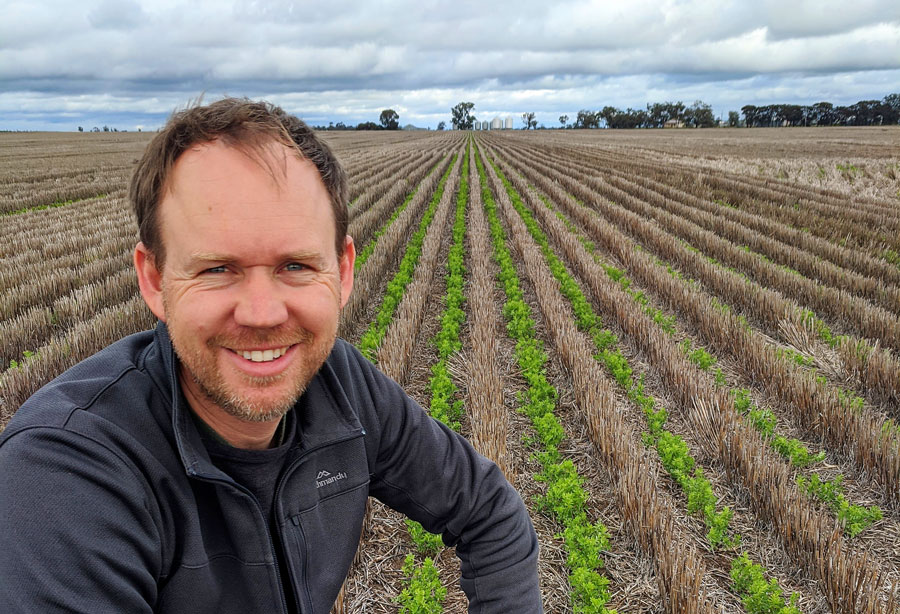
Tim is a highly engaged farmer and long-standing member of BCG. He regularly contributes to the Members’ Tech Bulletin, has featured on BCG podcasts, and is also a BCG board member and a member of the Wimmera advisory committee. Tim is a familiar face at BCG events. With his strong farming insights and consistently positive mindset, Tim was an easy choice for our Farmer in Focus this month.
Tell us about yourself, where you grew up, how you came to the farm, and what your role is today.
I grew up locally and farming has always been part of my life. Before returning to the farm, I completed a double degree in chemical engineering and commerce at the University of Melbourne, then spent 11 years in the oil industry. Over time, I’ve taken on a hands-on role in the business, with a strong focus on planning, logistics and making sure we’re setting the farm up to be productive and resilient into the future.
What does your farm operation look like?
We run a mixed cropping operation in Vectis, growing cereals and pulses including wheat (bread wheat and durum), barley, lentils, canola and increasingly milling oats. Our crop rotation has been refined over time to suit our soils, rotations, and weed management.
How did the 2025 season shape up on your farm?
The 2025 season was varied and somewhat frustrating. Lentils near Horsham were affected by frost after a rain event on 27 October, which really knocked the potential out of what was otherwise a promising crop. Lentils on a different block did much better, yielding around 4.5 t/ha. Canola came in below expectations, wheat was impacted by frost, and barley finished before the rain so it didn’t benefit from it. In saying that, we did have paddocks of wheat, beans and durum that performed particularly well considering the season. There was a lot of frustration around grain quality, pricing and the pressure to meet colour specifications.
How is your 2026 sowing program shaping up?
We always begin sowing on the first of April and we started with vetch for brown manure yesterday. We will move on to Canola next.
We received between 70-150mm of rainfall across our farm in early March, with that moisture now having moved down the soil profile to approximately 50-60cm. It will be interesting whether this sowing season will have a dry start, as surface soil moisture remains too low to support germination. The key question is whether we will receive timely early rainfall to trigger crop establishment, to make sure can link up with the moisture at depth. If this can occur, we’re looking at a really good year.
I think calculating N requirements will be important this year. We are hoping to optimise the N we can get and will continue with VR application where possible. We’ve secured a large portion of our urea requirements but are yet to see it on farm. Our rotation has remained the same despite recent rainfall and urea challenges.
Are there any practices or pieces of equipment that have made a difference to productivity or cost control on your farm?
A few things have really stood out. Last year, we soil tested every paddock, mostly testing two zones, which allowed us to refine fertiliser plans significantly. That’s something we’ll continue in future seasons.
We’re also continuing to use variable rate (VR) technology and are keen to make the most of it if we get a late rain event. Before the large rain in March, camera spraying was extremely efficient, saving both time and chemical, which is crucial when labour and input costs are high. Since the march rain, we have been doing blanket sprays to eliminate volunteers.
Being organised, lining up logistics beforehand and focusing on the little things has made a large difference to our productivity. Whether that’s having farm plans ready, machinery serviced or seed requirements locked in. Not doing everything at the last minute has made a huge difference.
During harvest, better logistics and upgrading to a more efficient truck meant we could get more done with one driver, and combined with increased on-farm storage, it made grain movement and marketing much smoother.
What do you love about farming?
Despite the tough seasons, I still love the challenge. Farming is always evolving; new research, new technology, new ways of thinking, and you’re constantly learning. Even in a dry or difficult year, there’s always something to take away that helps you do things better next time.
Drought is an inevitable aspect of the climate we farm in. How is your farm business preparing for future droughts, or potential financial shocks within the business?
We try to be proactive rather than reactive when it comes to drought and financial shocks. Soil testing, refining fertiliser strategies, investing in efficiency and improving technology are all part of building long-term resilience in our operation. We also have geographic diversity that helps spread the risk.
Mindset is also a big focus. We don’t want to sell ourselves short by being overly pessimistic. Even in dry years, some farms still achieve strong yields. If you never aim high at the start of the season, you’re not giving yourself the chance. The balance between realism and ambition is something we’re very conscious of.
Long-range forecasts are suggesting neutral to dry conditions through autumn, but in the Wimmera forecasts can often feel 50/50, anything can happen and we usually get just enough rain to pull through. Because of that uncertainty, we don’t cut back on inputs before a dry season arrives. We use variable-rate nitrogen generated soil testing, complimented by yield estimates at the time and data from protein maps to target specific areas, improving efficiency and reducing costs compared with blanket applications. This is a constantly evolving process that we are tweaking every year, and we hope that maybe one year we will get it exactly right.
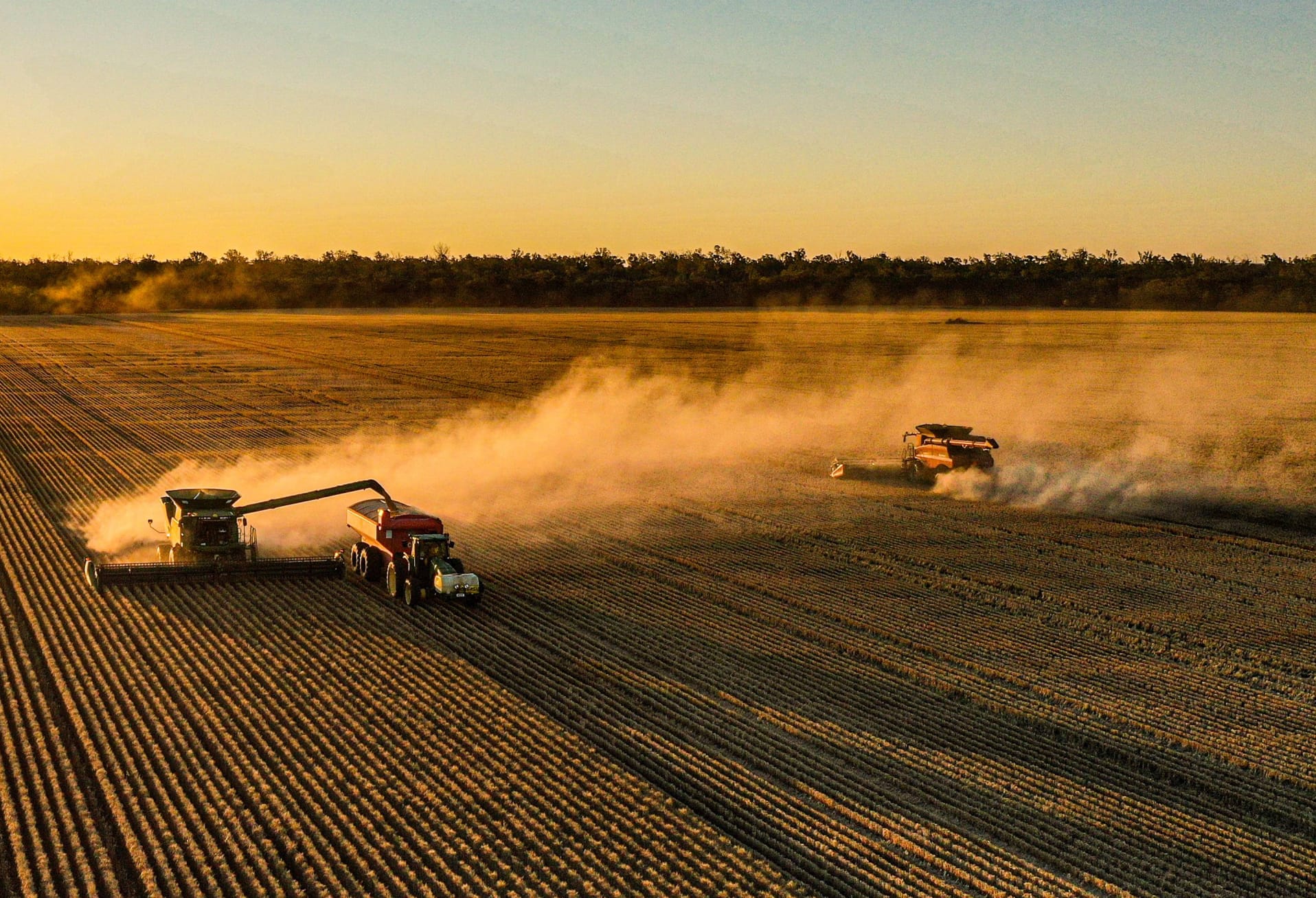
Image credit: GRDC
This project was supported by the Australian Government’s Future Drought Fund.

The Victoria Drought Resilience Adoption and Innovation Hub is a state-wide collaboration of 10 organisations.
Led by the University of Melbourne and with headquarters at UM’s Dookie Campus, the Vic Hub is a Partnership between five farming organisations (Birchip Cropping Group, Food & Fibre Gippsland, Mallee Regional Innovation Centre, Riverine Plains and Southern Farming Systems), four universities (UM, Deakin, Federation and La Trobe), and the State Government (through Agriculture Victoria).
One of eight hubs established nationally under the Australian Government’s Future Drought Fund (FDF), the Vic Hub works to enhance the drought preparedness and resilience of Victoria’s agricultural industries, the environment and regional communities, encompassing broader agricultural innovation. Engaging with a range of industry and community stakeholders, the Vic Hub links research with community needs for sustainable outcomes.