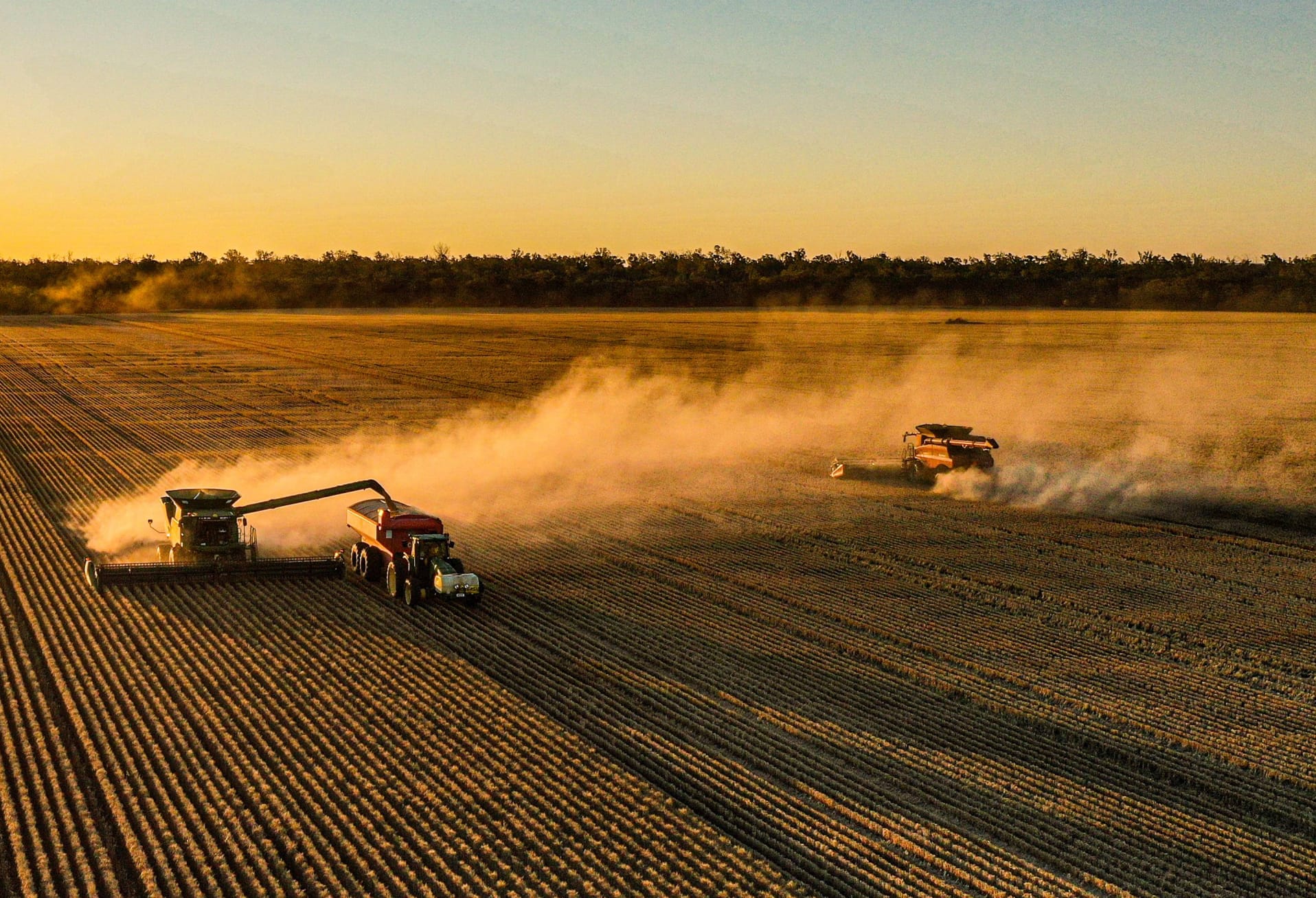


Harvesting crops that have lodged or ripened unevenly is emerging as a challenge for farmers this season.
To manage these issues, as well as high weed pressure (another consequence of the wet spring), crop-topping is a practice farmers commonly turn to. However increasingly, there are market risks associated with applying herbicide so close to harvest, and in the interests of protecting export markets farmers are being urged to consider these risks before deciding to spray.
Used in cereals, canola and pulse crops, crop-topping is recommended at different growth stages for different crop types (Table 1).
Generally, top-cropping occurs as the crop is changing colour or when cereal crops reach the late dough stage. At this stage, the grains are getting closer to leaving the farm gate and crop-topping must be conducted according to label guidelines to ensure residue levels on the primary product are acceptable to its intended market.
Table 1: Recommended timing for crop-topping according to crop type.
|
Crop type |
Crop-top/desiccation timing and comments |
|
Field peas |
At 30% moisture or less, or when the lower 75% of pods are brown with firm seed and leathery pods |
|
Faba beans |
When the hilum or scar-like area where the seed attaches to the pod wall turn black in the pod wall begins to yellow |
|
Chickpeas |
Desiccate when the green seed colour begins to lighten and the pod wall begins to yellow |
|
Lentils |
Desiccate just after the crop starts to yellow |
|
Wheat |
At 28% moisture (late dough) or less |
|
Canola |
Only weedmaster® DST® is registered for pre-harvest use in canola and therefore crop topping is only possible on Round-up ready varieties. Apply until crop is at least 20% of canola seed has changed to dark brown or black. See an image here. |
|
Barley |
Diquat, and now glyphosate (as at 2/11/16) is registered for pre-harvest weed control in barley (except malting barley). |
Pulses and oilseeds
According to Pulse Australia, the best time to crop top pulses for ryegrass control is when the crop is physiologically mature and the ryegrass is not further advanced than at, or just past, flowering as measured at the bottom of the plant (up-to-date guidelines are available here).
For canola, crop desiccation is recommended when 70 per cent of the pods are yellow and the seeds are browney or bluish and pliable.
Recently, saflufenacil (Sharpen®) has received approval for use as a harvest aid in winter pulses as a mix partner to paraquat. Sharpen may affect germination rates of retained seed. Lentils appear to be more sensitive to retained seed and it is advised not to use this herbicide on crops intended for seed.
However, with the majority of Australia’s pulse and canola production exported, Pulse Australia have urged growers to consider possible market restrictions that may arise from using certain herbicide/desiccant products this season, reminding them of the key role they play in ‘keeping the doors open’.
Further information, including the label, on using Sharpen as a harvest aid in winter pulses can be found at the BASF website.
Australian Oilseeds has produced a Desiccation and crop topping in pulses and canola factsheet. It outlines a useful process to use when applying late season herbicides:
- Use only permitted products: Using products not approved for specific use is not only against the law, it also places a high risk on maintaining market access for the whole industry when MRLs are exceeded.
- Do not exceed the product’s label rate: Regulations for individual chemicals are set to allow growers to properly use the product without violating domestic MRLs.
- Time the application according to the label: Follow label instructions and apply crop protection products only at the recommended crop stage.
- Consult with your exporter or processor, if possible, about what products are acceptable in international markets: they have a good sense of which markets may be sensitive to specific products.
Cereals
The benefits of crop-topping cereals include control of weed escapees, reducing grass weed seed set and to bring crops into maturation evenly.
Timing, and again, market risks are the main things to consider when thinking about crop-topping. The practice is more suited to early sown, early maturing crops so that withholding periods (WHP) can be avoided.
Wheat crops can be sprayed with some glyphosate formulations (not all) at the late dough stage from 28 per cent moisture in the grain on wards, but there is a mandatory WHP of seven days before harvest. Diquat can be applied as soon is the crop is mature and ready for harvest.
Top-cropping barley is more of a challenge with maltsters generally adverse to any herbicide residues on the grain.
A permit to allow minor use of Nufarm products Weedmaster DST dual salt technology herbicide and Weedmaster argo dual salt technology herbicide herbicide was issued on November 2, 2016 for pre-harvest application on barley (except malting barley). Application is allowed from the late dough stage (28% moisture) on wards but the crop can not be harvested, grazed or cut for stock food for seven days after application.
In a statement issued by Barley Australia on October 14 growers were reminded that protecting malt barley markets was an important consideration when making decisions about how to manage crops close to harvest.
“It should also be understood that major brewers strongly oppose the use of herbicides that are not registered for use late in the season and have advised that they will not knowingly purchase malt made from barley that has been crop-topped with glyphosate,” a Barley Australia spokesperson said.
“It is important to understand that the continued access to key export markets for Australian malting and feed barley may be threatened if widespread adoption of the practice produces residues which exceed current export market limits.”
An alternative for farmers coping with uneven barley crops this year may be windrowing.
As well as assisting in the even maturation of crops, windrowing barley can help growers avoid head loss and manage harvest logistics.
Growers thinking about windrowing barley will first need to weigh up the cost of windrowing (about $30/ha) against the potential yield loss from delayed harvest.
Barley should be windrowed when it is between 20-30 per cent moisture.
A factsheet on windrowing barley, including timing and economic considerations has been published for BCG members and is available here.
Maximum Residue LimitS
The Australian Pesticides and Veterinary Medicines Authority (APVMA) is a statutory body that considers applications for the registration of all chemicals used in Australia and are responsible for setting the maximum residue limits (MRLs) of chemicals used on produce entering the food chain.
Chemicals are assessed against a strict set of guidelines taking into account safety, efficacy, labelling and trade.
APVMA also approves the acceptable residues of the chemical on a crop or in an animal and, regarding trade, considers the end use of the product and if it conforms to requirements if it were sold outside of Australia or fed to an animal that will be sold outside of Australia.
Product choice needs to fit in with residue management for markets and further information on product choice and market implications can be found at the GRDC factsheet.