TAKE HOME MESSAGES
- Winter wheat cultivars Wedgetail and Rosella sown on 1 April were higher yielding than LRPB Scout sown on 6 May.
- Reducing plant density to 50 plants/ m² did not reduce the ability of winter wheats to compete with a simulated weed population (tame oats) when sown on 1 April.
- Winter wheat sown early produced more dry matter for grazing than spring wheats sown in May.
BACKGROUND
Due to the ongoing decline in autumn rainfall and increase in farm sizes, the widening of crop sowing windows through adoption of early sowing has the potential to significantly increase average farm wheat yield and profitability. There are two mechanisms behind the yield increase:
- Slow maturing wheat varieties (winter wheat and longer season spring wheat varieties) sown early and managed correctly have a yield advantage over mid-fast maturing varieties sown later, as they capture more resources (water, nutrients, radiation), particularly during growth stages vital for yield formulation.
- Including a slow maturing variety which allows early sowing in conjunction with currently-grown mid-fast varieties in a farm program results in more area of crop flowering on time, increasing average farm yield.
Slow maturing varieties sown early can produce excessive amounts of biomass and ‘hay off’ in dry springs. This can be avoided by planting at low densities (~50 plants/m²) and deferring nitrogen (N) inputs until after GS30, though this may compromise competition with weeds. Excessive dry matter production can also be managed by grazing slow maturing wheats in the vegetative phase, which has additional benefits for farms with a livestock enterprise.
This trial attempted to answer three questions:
- Do slow maturing wheats sown early (early April) yield as well as mid-fast maturing spring wheats sown in their optimal window in the Mallee?
- Does planting slow maturing wheats at low plant densities compromise their ability to compete with weeds?
- How much dry matter can slow maturing wheats produce for grazing and does defoliation affect yield?
For previous results please refer to the 2013 BCG Season Research Results, pp 39-44.
AIM
To assess the impact of time of sowing (TOS) on a range of wheat variety maturity classes (winter wheat, slow and mid spring maturing varieties) and to measure the impact of plant density and the presence of weeds (simulated with tame oats) on these varieties.
TRIAL DETAILS
Location: Quambatook
Soil type: Clay loam without sub-soil constraints
Annual rainfall: 239mm
GSR (Apr-Oct): 168mm
Crop type: See Table 1
Sowing dates: 1 April (TOS1) and 6 May (TOS2)
Seeding equipment: Knife points, press wheels, 30cm row spacing
Target plant density: 50 and 150 plants/m²
Harvest dates: 13 November (TOS1) and 1 December (TOS2)
TRIAL INPUTS
Fertiliser: Granulock supreme Z @ 50kg/ha at sowing plus 180kg/ha of urea (83 kg N/ha) top-dressed in two separate applications
Herbicide: Pre-sowing Sakura® @ 118g/ha In-crop Velocity® @ 670ml/ha + Hasten® @ 1% v/v Trial was managed to be disease free so received adequate fungicide applications.
METHOD
One replicated trial was sown using a split plot trial design. Treatments included two times of sowing (1 April and 6 May), sown at low (50 plants/m2) and standard plant densities (150 plants/m2). Targeted plant densities were not quite attained and actual plant densities were 38 and 88 plants/m².
Oat seeds were spread over the plots at a density of 25 seeds/m² prior to sowing to simulate the presence of weeds. Grazing occurred on plots specific to variety growth stage (Table 2). Grazing was mechanically simulated using a line trimmer.
Table 1. Details and disease rating of wheat varieties used in this trial.
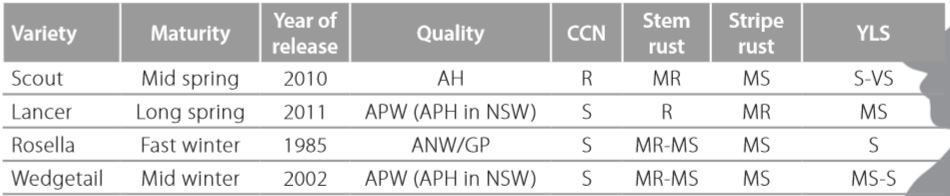
Resistance rating: VS=Very Susceptible, S=Susceptible, MS=Moderately Susceptible, MR=Moderately Resistant R=Resistant.
Table 2. Grazing dates on varieties
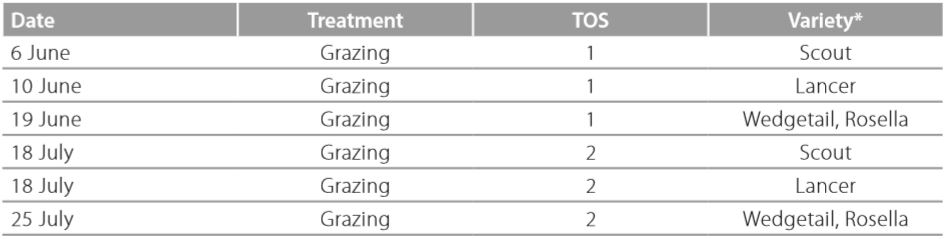 All varieties were grazed prior to GS30 being reached, targeting late tillering for all varieties.
RESULTS AND INTERPRETATION
Plants emerged very evenly following 83mm of rain in March. The 2014 season saw a number of frosts (defined as air temperatures below 2°C) across the region, with severe stem frost damage occurring in July and early August. At the Quambatook site, 85 days were recorded as having a minimum temperature below 2°C (Figure 1). This severely damaged the spring wheats (Lancer, Scout) sown on 1 April.
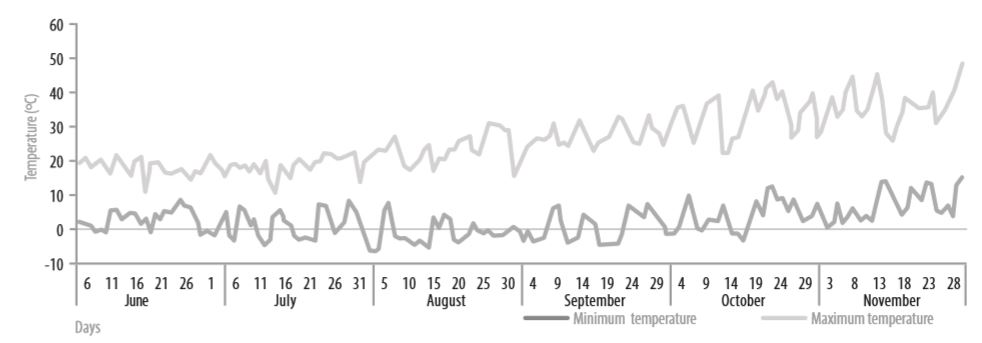
Figure 1. Temperatures recorded from 6 June until the end of the November at Quambatook.
Slow maturing cultivars sown early vs. fast maturing cultivars sown late
The first time of sowing plots (1 April), Wedgetail at both plant densities and Rosella at 50 plants/m², were the highest yielding treatments (Table 3). The spring wheat cultivars Lancer and Scout suffered severe stem-frost damage when sown at this time. Lancer at 150plants/m² suffered 68 per cent mortality on main stems while Scout at the same plant density suffered 94 per cent.
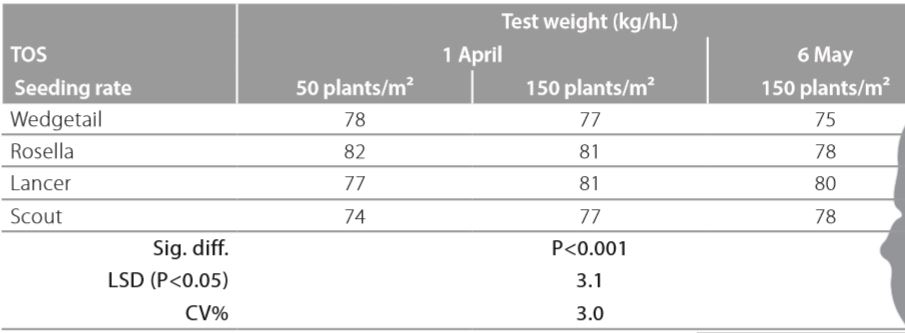
Wedgetail sown on 1 April out yielded the ‘local best practice’ control (Scout sown 6 May) by 0.3t/ ha (Table 4), and also achieved a higher protein content (13.9% vs 12.1%). Although Wedgetail’s screenings and test weight were marginal (Table 5 and 6), when sown at 50 plants/m² it would have achieved a binned grade of APW in Victoria and APH2 in NSW (or if directly marketed in Melbourne etc.). This season APH2 was trading at around a $40/t premium over APW and delivery into NSW, or direct marketing, would have been worthwhile.
Somewhat surprisingly, the slow maturing spring cultivar Lancer was the highest yielding treatment in the trial when sown on 6 May. This was probably because its slower maturity helped it escape the series of frosts in mid-September (Figure 1) which would have damaged Scout. The slow maturing winter wheats sown on 6 May were significantly lower yielding than those sown on 1 April.
Table 3. Influence of variety on grain yield.
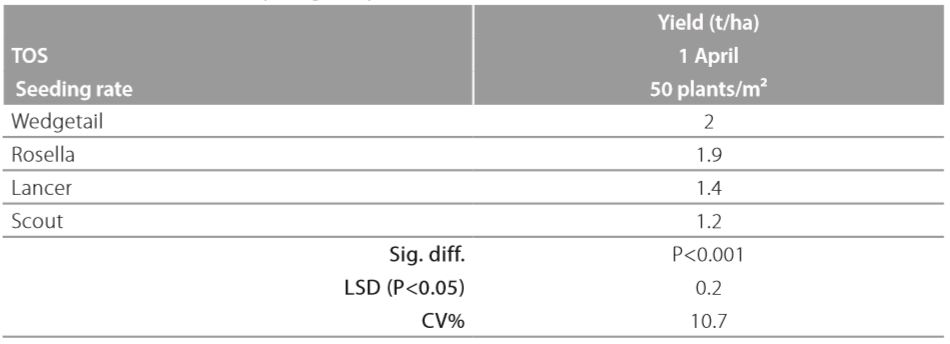
Table 4. Influence of sowing date, variety and plant density on grain protein.
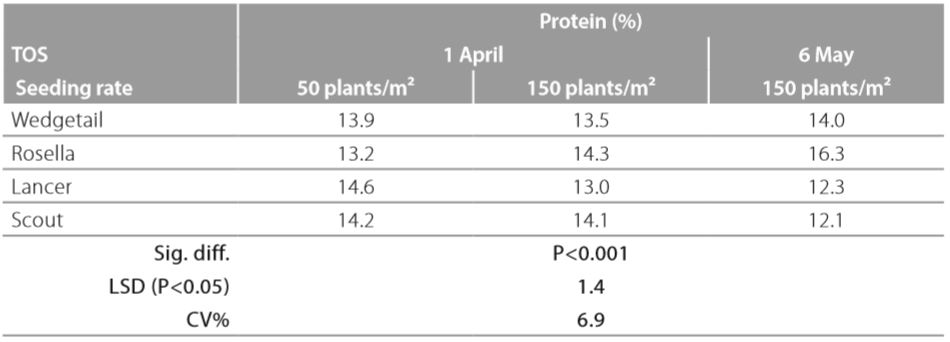
Table 5. Influence of sowing date, variety and plant density on screenings.
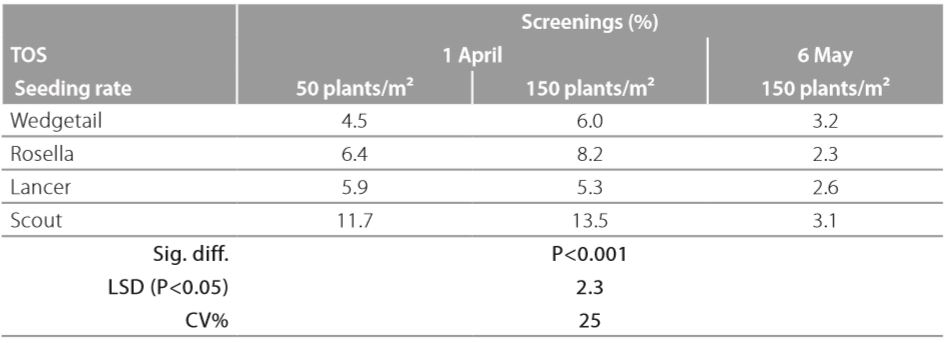
Table 6. Influence of sowing date, variety grazing and plant density on test weight.
Competitiveness of slow maturing cultivars sown early at low densities
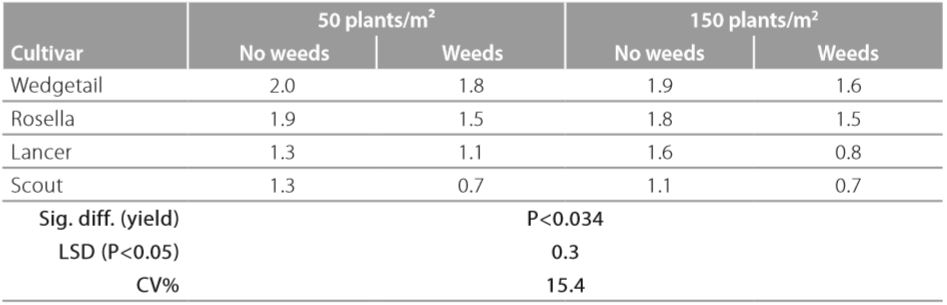
Sowing slow maturing cultivars such as Wedgetail at low plant density (50 plants/m²) did not decrease their competitive capacity. The percentage yield loss was the same in Wedgetail and Rosella wether sown at 50 or 150 plants/m2. Winter wheats (Wedgetail and Rosella) were much more competitive than Scout, but some of this effect was probably due to the stem frost damage sustained by Scout at the early time of sowing (Table 7).
Table 7. Influence of simulated weed population (tame oats) on grain yield of wheat sown 1 April at different plant densities.
Grazing early and late sown wheat
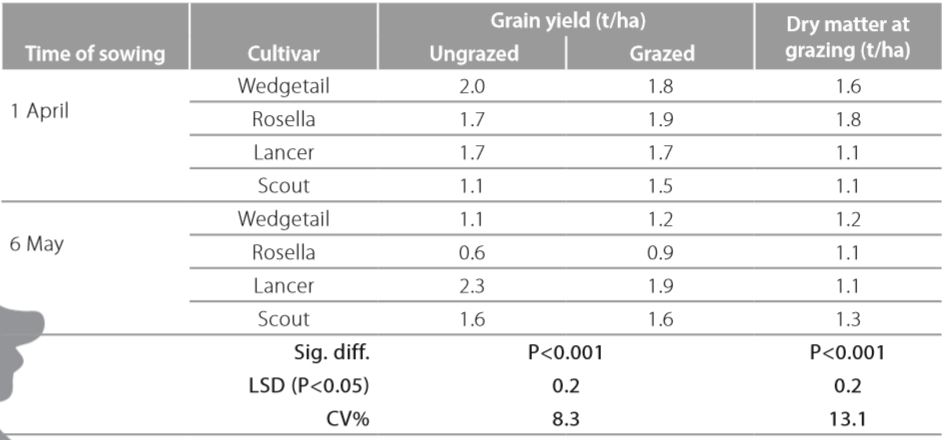
Slow maturing varieties sown early provided more dry matter for grazing than faster varieties sown later. Defoliation of the first time of sowing did not significantly affect yield in Wedgetail but increased yield in Rosella. Defoliating Scout sown early increased yield. This was probably due to reduced stem frost damage. Defoliating Scout sown late did not reduce yield. There was no effect (main or interaction) of grazing on protein, screenings or test weight (Table 8).
Table 8. Grain yield for different cultivars at different times of sowing and grazing.
COMMERCIAL PRACTICE
The results emphasise two important aspects of early sowing (pre 20 April) in the Mallee.
- Early sowing of a proportion of the acreage allows higher yield potential to be achieved across the whole wheat acreage.
- The yield potential for early sown wheat can be realised only if the variety is adapted to the earlier sowing and emergence date which in this trial involved sowing winter wheat cultivars, not spring wheats.
The results graphically demonstrate the risk of sowing early with faster maturing spring wheats not adapted for sowing windows earlier than the traditional ANZAC day start date. The effect of frost on these spring wheats sown on 1 April was first evident early in the spring as stem frost, and then again at flowering.
The dual purpose aspect of sowing a winter wheat variety early can be very appealing to mixed farmers who are looking to fill the early winter feed gap. If grazing these varieties, growers should ensure that stock are removed prior to GS30 to minimise the chances of a yield penalty.
ON-FARM PROFITABILITY
Sowing a proportion of wheat area early with slow maturing cultivars when the opportunity arises increases whole farm wheat yield and profitability. At present, the most reliable options for sowing before ANZAC day are winter wheats, particularly Wedgetail. Grazing winter wheats provides excellent feed during the winter feed gap and eases pressure on pastures for greater production in spring. This in turn increases potential stocking rates and hence the profitability of livestock enterprises.
REFERENCES
BCG 2013 Season Research Results, ‘Sowing in February: Crazy or clever?’ pp. 39-44.
ACKNOWLEDGEMENTS
This trial was funded by GRDC and conducted in collaboration with CSIRO and FAR. This trial work was also partially funded through GRDC’s Grain and Graze 3 project (SFS00028).