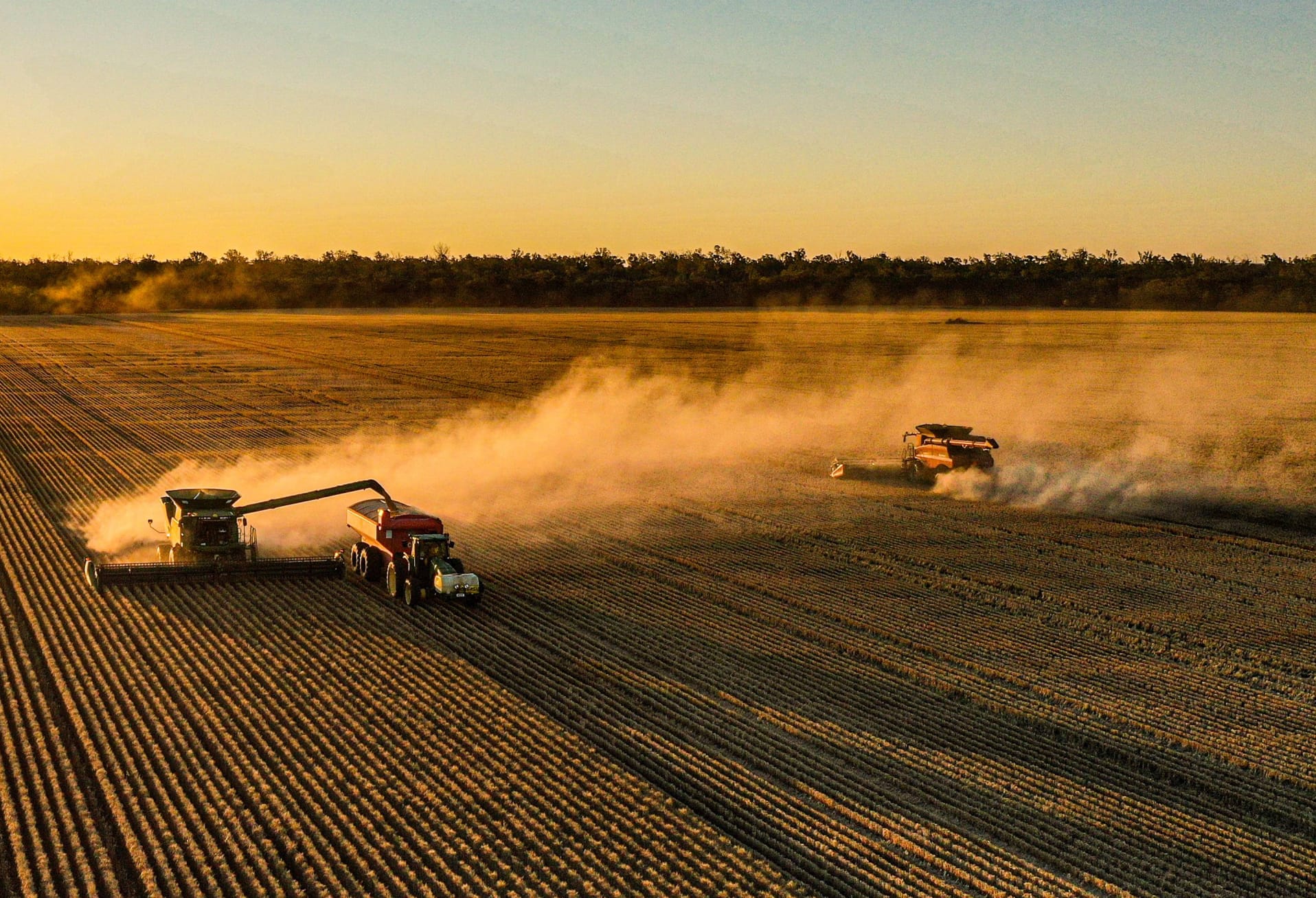
Over the last 20 years, cropping farmers have made a number of notable improvements to their agronomic management.
- Canopy management is widely practised. Crop nitrogen (N) requirements are rarely applied up front and are matched to seeding rate.
- Herbicide technology is much better understood. Herbicide resistance is better managed with new chemistry integrated with physical forms of weed control (such as windrow burning).
- Diseases are better recognised, controlled early and managed well
Despite these improvements growers and consultants still highlight nitrogen management as a major issue. Australia’s variable climate makes matching crop N requirements to the season’s potential a high risk and difficult task.
TAKE HOME MESSAGES
- Sound risk management commands that input decisions are delayed until as late as possible without affecting the yield potential.
- In this trial, the optimal strategy was to apply no additional inputs.
- Given the good start to the 2014 season, the yield potential was good and the optimal decision was to take advantage of that yield potential, despite the poor result.
AIM
To demonstrate alternate nitrogen management strategies available to growers and consultants.
TRIAL DETAILS
Location: Beulah
Soil type: Sandy loam with sub-soil constraints
Annual rainfall: 162mm
GSR (Apr-Oct): 126.6mm
Crop type: Mace wheat
Sowing date: 6 May
Seeding equipment: knife points, press wheels, 30cm row spacing
Target plant density: 130 plants/m²
Harvest date: 19 November
Trial average yield: 0.29t/ha
TRIAL INPUTS
Fertiliser:
At sowing Granulock Supreme Z @ 55kg/ha
In crop N Refer to Table 2
Herbicide/Insecticide:
Pre-sowing Sakura @ 118g/ha + Avadex @ 2L/ha + Roundup @ 1L/ha
In-crop Lontrel @ 100ml/ha + MCPA LVE @ 350ml/ha + Velocity @ 670ml/ha + LeMat @ 200ml/ha + Hasten @ 0.5% v/v
METHOD
The concept of the trial was to look at a range of N and fungicide input decision-making strategies and to compare outcomes. To do this, BCG sought input from a local agronomist and a farmer and compared their input decisions with others made using a dartboard (random), a modified French & Schultz equation and Yield Prophet®.
A replicated field trial was established at the BCG main research site at Beulah. Mace wheat was sown in a complete randomised block design on 6 May. Soil samples to 1.3m depth at the site were taken pre-sowing to measure soil water and available N on 13 February. Trial assessments included: emergence counts; a measure of greenness (NDVI refer to ‘Appendix 1: acronyms and abbreviations’ pp 215) prior to and after treatment applications; yield and quality parameters.
All plots received consistent agronomic management with full weed and insect control. The only differences were in the treatments applied. The procedures for each decision point were established prior to sowing and are summarised in Table 1.

RESULTS AND INTERPRETATION
INITIAL CONDITIONS
Soil test results from samples taken in February showed 1mm of plant available water and 44kg N/ ha which is very low for both. In addition, a large portion of the N (16kg/ha) was present in the 100 to 130cm layer, effectively making it unavailable because of the very dry conditions, unless there was significant in-crop rainfall.
SEASONAL CONDITIONS
Very dry conditions were experienced at the site from 13 February (soil sampling date) until a very favourable breaking rain of 34.5mm on April 10. For the following three months consistent rain was received and was tracking close to Decile 5 (Figure 1). However, after 1 August very little rainfall (14mm) was received and at the end of the growing season the total recorded was well below Decile 1. The spring rainfall at the site was the second lowest on record (114 years). The 2014 season produced the worst possible outcome for managing seasonal risk. Conditions were good early, followed by one of the worst finishes on record.
 climate forecasts

Despite the early break and good early rains, optimism was somewhat subdued by the threat of a developing El Niño. Despite regular predictions of an El Niño developing later in the year it did not officially eventuate. The BOM ENSO Wrap up on 15 July stated, “While the majority of climate models suggest El Niño remains likely for the spring of 2014, most have eased their predicted strength. If an El Niño were to occur, it is increasingly unlikely to be a strong event.” While these forecasts were not giving signals for an above average season finish they were not definitive in predicting the type of finish that was received.
crop biomass
NDVI assessments (which measure the level of green cover and are used as a substitute for crop biomass) were conducted prior to the treatment applications (30 June). There was no difference between treatments suggesting that any differences observed from this point forward were the result of treatment effects.
A repeat NDVI conducted on 18 August, after treatments were applied again, revealed no treatment differences. It is likely that this was a consequence of the dry conditions reducing the greenness of the crop for all treatments, irrespective of the inputs applied.
treatment inputs applied
The six very different approaches to crop input decision-making, as detailed in the method (Table 1) resulted in a wide range of urea application rates (between 0 and 160kg/ha) and low and high applications of in-crop fungicides across the treatments. These differences are indicative of the challenge that in-crop input selection poses for farmers and consultants. All treatments were sown with Vincit C treated seed.

Yield and quality
The optimum input strategy in 2014 at the BCG main research site was to not apply any inputs post sowing (Table 3). The control with no N inputs had a higher yield than treatments that had high rates of nitrogen applied (Dartboard, Yield Prophet and the Farmer). Unsurprisingly, the reverse applied for protein with the Farmer, Yield Prophet and Dartboard treatments generating H1 specification compared to the Control and French & Schultz treatments which produced H2. Despite the higher protein specification from these treatments, high screenings (Table 3) resulted in an overall quality specification of AGP for all but the Agronomist treatment which only achieved FED1.
It is interesting to note that the Agronomist treatment was the only treatment where nitrogen was not applied during tillering and applied at GS31. Insufficient monitoring was conducted on the trial to account for this effect.
treatment profitability

Based on the grain classification achieved (Table 3) for grain protein, test weight and screenings, the partial gross margin resulting from N applications and fungicides was calculated for each treatment. The cost of fertiliser and fungicide and the application was subtracted from the gross return to give a partial gross margin. Spraying and spreading costs used were $6/ha.
The control and French & Schultz treatments generated the highest return followed by the Agronomist. Dartboard, Yield Prophet and Farmer treatments all produced a loss from nitrogen and fungicide applications (Figure 2). In a commercial situation none of the treatments would have generated an overall profit when the cost of sowing, harvest, spraying, freight, seed and herbicides, are factored in.

Previous research conducted by the BCG on canopy management showed that “delaying nitrogen application until after the end of tillering can allow for a more accurate assessment of season conditions to be made and money to be spent on nitrogen only if a response is likely.” (BCG 2006 Season Crop and Pasture Production Manual, pp 134) In this case the low available starting N prevented the delay of application until the end of tillering as delaying may have caused N stress, reduced crop tillers and reduced yield potential. Sound risk management commands that input decisions are delayed until as late as possible without affecting the yield potential. That said, if we are to minimise the risk of lost income from applications of N above crop demand, N applied during tillering should only be sufficient for the crop to reach GS30 without experiencing stress. Then follow-up applications can be considered at this stage when greater knowledge about the season is available.
In the Mallee, experience has shown that yield and economic benefits from urea applications post first node (GS31) are unlikely because by the time a rainfall event has washed the urea into the soil, and the N in the urea has become available to the crop, the crop could be well past GS37 (H. van Rees 2014 pers comm). As such, in the majority of seasons, growers in the Mallee will need to have made all their N applications prior to GS31. Given the way the 2014 season developed it was too late as all nitrogen decisions had been completed.
The late onset of the poor season also meant that it was necessary to consider an application of fungicide in all treatments at GS39 which was reached prior to 1 August. The 2014 season was a season with low disease pressure, however, given that Mace is highly susceptible to stripe rust, the best practice approach was to protect the crop yield potential if the disease were to eventuate. That said, given there was some uncertainty about the season low cost options were pertinent.
It was interesting to note that up until GS31 (31 July), the Yield Prophet® treatment was showing a good chance of delivering a positive return from applied N while the modified French & Schultz treatment was not. This was due to the fact that a large portion of the soil N was present in the 100 to 130cm zone. The modified French & Schultz equation, which is a simple model, was including the N in this zone into the yield potential which, in reality, had a very low chance of being accessed. Yield Prophet® on the other hand, which is a dynamic model, had identified that the N at depth was unlikely to be available and was showing potential for a positive response to applied N.
In this case the modified French & Schultz provided the best outcome. But did it provide the best advice? In the long run, dynamic models like Yield Prophet® provide more precise information on which to base decisions. The modified French & Schultz equation provides a good guide for N management but those using it should have an understanding of its limitations.
COMMERCIAL PRACTICE
In this trial the optimal strategy was to apply no additional inputs. However, what was the optimal decision? Malcolm in 2009 notes that, “one of the first principles in managing risk in a farm business is that risk generates return. If a business wants low risk they will have to accept low returns. If owners of farm businesses want higher returns, they usually have to take a higher risk.” Given the good start the 2014 season, the yield potential was good and the optimal decision was to take advantage of that yield potential.
While the theory is correct it must be considered in the broader context of the overall business health. If the business is dealing with a run of poor seasons, has poor equity or crop inputs are already high, the optimal decision is to ensure the long term viability of the business. Staking the future of the business on the outcome of one season is not a sensible approach.
A business’ ability to manage risk is largely influenced by their ability to service debt. A business with high debt has a reduced ability to increase their exposure to risk and therefore return. Investment in your crop is necessary to improve profits, but can only be considered if your business is in a position to withstand the loss that may result.
ON-FARM PROFITABILITY
In the 2014 season, which produced the worst possible conditions for making input decisions and managing seasonal risk, the control was the most profitable option. Under the very dry conditions, the control produced the highest yield (0.38t/ha) and cost the least to grow ($1.50/ha), thus generating the highest partial gross margin of $77.76/ha. While the low cost approach was the most profitable in the 2014 season this would not be the case in an average season. In order to be sustainable, growers must adapt to the seasonal conditions and take every step necessary to match their crop inputs to the potential of the season, while keeping a close watch on their overall cost of production. The trend over recent years has been for diminishing returns where increases in inputs are not generating an equal increase in production and dollar return.
REFERENCES
Bill Malcolm (2009), Imagining the future with rigour: Risk principles and practice in crop and animal production. McKinnon Project Seminar Notes.
Thompson, B., Poole, N. and Reilly,C. (2006). In crop nitrogen timing and product choice for wheat, BCG 2006 Season Crop and Pasture Production Manual.
Pers Comm Harm van Rees (2014).
ACKNOWLEDGEMENTS
This trial was funded by Yield Prophet®.