BCG and Soil CRC partnership
BCG is fortunate to partner with Soil CRC to deliver research and extension to improve soil health and productivity in the Mallee, North Central and Wimmera.
What type of soil do you have?
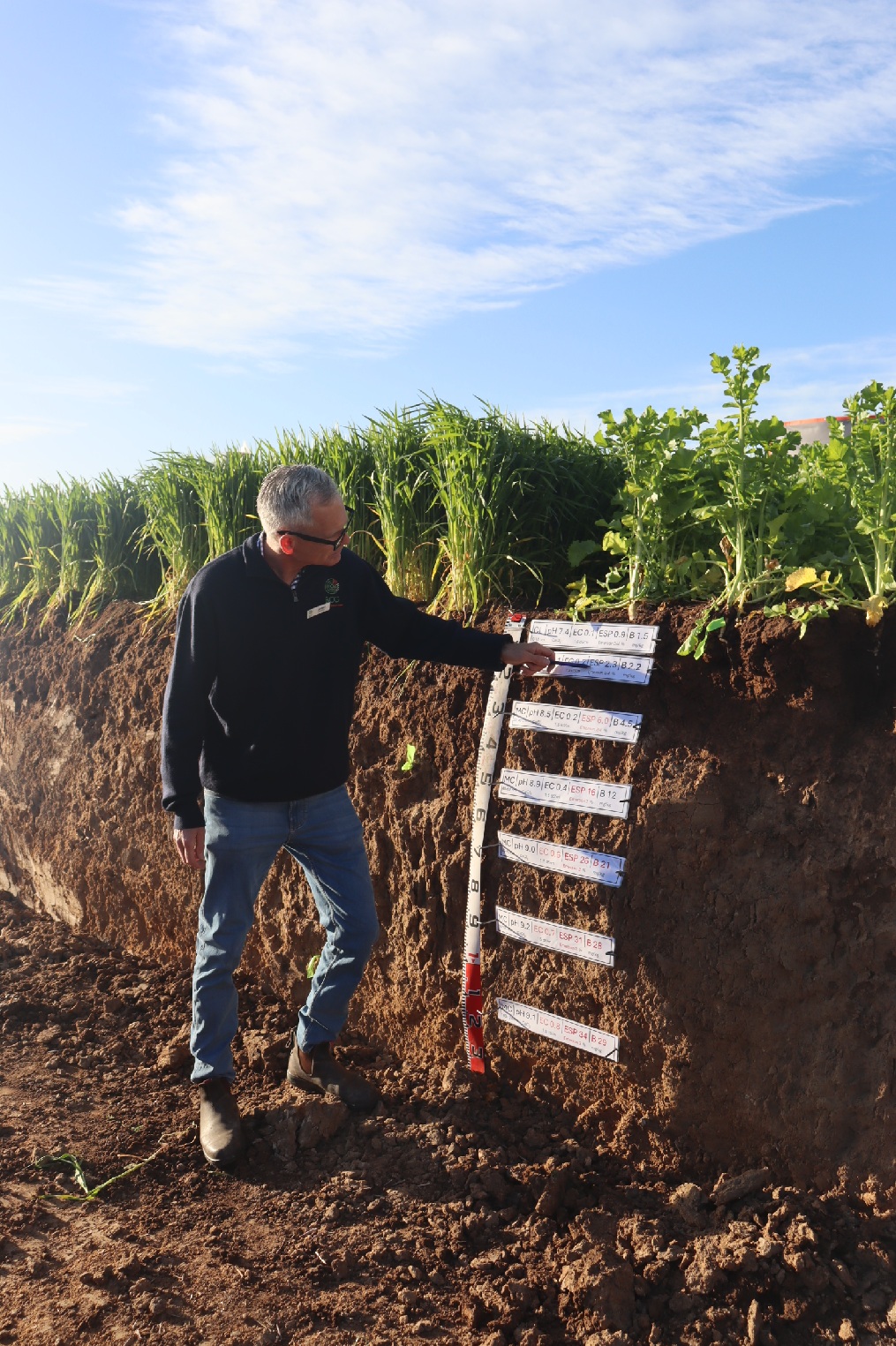
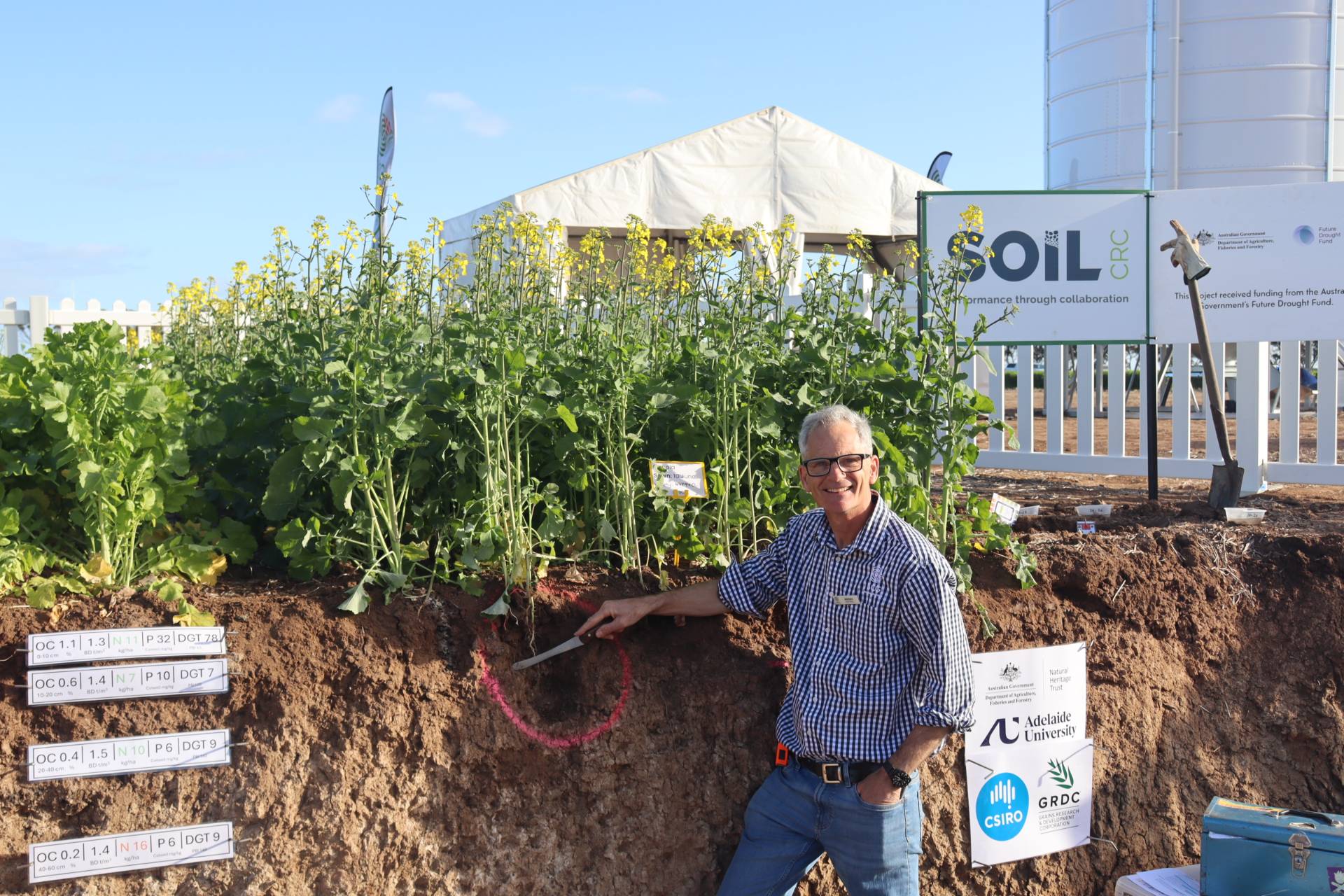
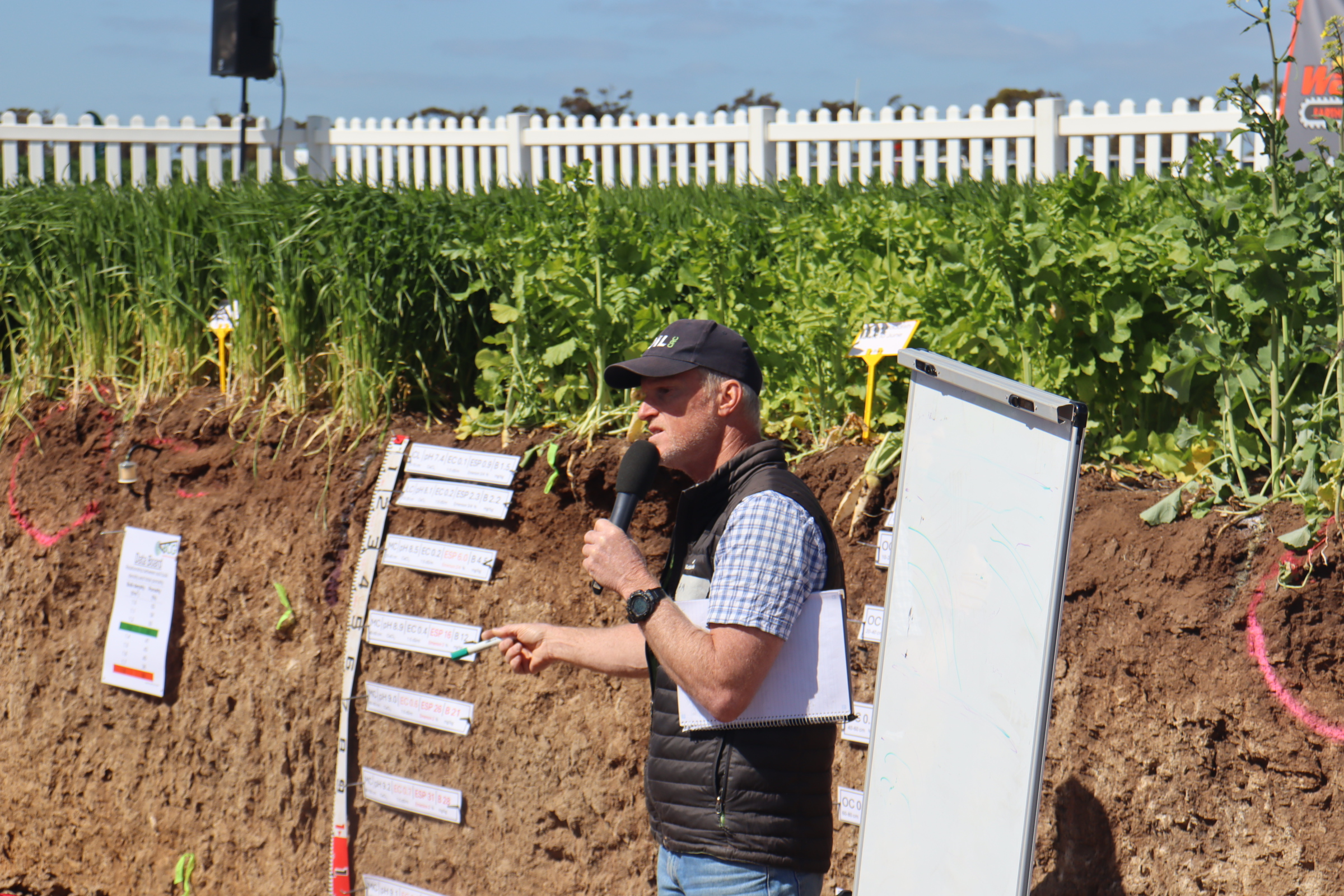
The soils vary widely across the region. In the Wimmera we have grey cracking clays, the Mallee has some sandy soils, in the North Central region we have sodic soils, and in Birchip we have calcareous soils with boron.
Why is soil important to BCG members?
Soil is the foundation for production for our whole farming system. They need to be protected and enhanced. We want our farmers to be sustainable and productive into the future and soil is fundamental to this. Maintaining soil cover, overcoming subsoil constraints such as sodicity, salinity and boron and ensuring productive soil that has good structure and is well nourished are a high priority for our members.
Why does the partnership matter?
Every soil in our region presents different challenges, so one-size-fits-all advice doesn't work. Working with Soil CRC lets BCG test practical solutions on local soils and share what we learn with growers. The aim is research that members can use on their own farms, whether they farm sandy Mallee soils, sodic North Central country or the heavy clays of the Wimmera.
What does this mean for members?
Members benefit from independent, evidence-based research on the soil challenges they manage every day. That research helps growers make confident decisions about protecting soil cover, managing subsoil constraints and keeping soils productive for the next generation.

Projects BCG are involved in
Current projects
This current Soil CRC project (1.4.007) aims to speed up the delivery of Soil CRC research to farmers to increase adoption and engagement, closing the gap that can stop useful innovations from reaching the people who could benefit most. Led by Soil CRC farming group participants, it bundles research outputs into integrated solutions for farmers and routes them through three pathways: an incubator for novel outputs, targeted extension for outputs ready to adopt, and general awareness campaigns. The project is led by Southern Farming Systems, and BCG is one of the participants. The aim is a new model for accelerated research translation that can also serve as a legacy framework for future CRCs and other soil research and extension programs.
This current Soil CRC project (2.2.008), led by the University of Tasmania, continues the technical development of the Smart Penetrometer, prepares it for commercial release, and runs extensive grower evaluation to gather farmer feedback. The device is driven into the soil and measures soil moisture, compaction and salinity at the same time, with readings mapped in real time on a smartphone. The aim is to help farmers identify whether poor production comes from salinity, waterlogging, water deficit, compaction or changes in soil type. BCG is one of the project's participants, which also include grower groups in Queensland and Victoria.
Soil CRC project 3.1.009, led by Griffith University, is developing slow-release urea fertilisers coated with peanut shell biochar, cow manure or green waste compost to improve nitrogen use efficiency and cut environmental losses. Over two and a half years, it will test them in large-scale glasshouse and field trials with grower groups, including Birchip Cropping Group, and assess their agronomic, soil health and economic performance to guide farmer adoption.
Soil CRC project 4.1.007, led by Dr Terry Rose of Southern Cross University, is investigating how greater plant diversity (crop rotation, intercropping, pasture phases and cover cropping) affects long-term soil resilience, soil carbon and productivity. It builds on long-term trials, including monitoring at a Birchip Cropping Group site in Victoria, and adds a sugarcane cover-crop study at Ingham, Queensland, plus new diverse plantings at Riverine Plains (Victoria) and Central West Farming Systems (NSW) sites. It will also measure how much organic matter from cover and intercrop species stabilises in soil.
This current Soil CRC project (6.4.002), led by Murdoch University, is testing innovative cropping and mixed farming practices for drought resilience and risk management, so Australian farmers can better prepare for future drought. It is extending seven existing long-term trials across four cropping regions, including a cropping trial at Birchip, to build up to eight years of data on different soils and drought risks. BCG is one of the project participants, and the project is funded through the Australian Government's Future Drought Fund. It also targets subsoil constraints, water use efficiency, soil health and soil carbon.
Past projects
Text here
This completed Soil CRC project (1.1.005) set out to determine what a fit-for-purpose soil certification scheme could look like in Australia, and how certification could generate financial rewards for producers. Led by Charles Sturt University, with BCG among the project participants, it ran for two and a half years. The findings suggest a standalone soil-only scheme may not be the best option, and recommend coordinating existing schemes so growers can demonstrate good soil management once and access multiple markets. They also stress that certification must pay off for producers and keep auditing rigorous without being costly or paperwork-heavy.
This completed Soil CRC project, led by the University of Tasmania, set out to understand why farmers often don't adopt soil management improvement programs, and whether current adoption strategies are working. It looked at the social drivers that affect how adoptable improved soil management is at the farm scale, working with farming groups across five states, including BCG, to develop criteria for adoptability. The criteria are designed to help future Soil CRC projects ensure research findings are taken up, and to be used more widely by the farming community.
This completed Soil CRC project (1.2.006), led by Southern Cross University, aimed to improve the uptake of new innovations and best-practice soil management by strengthening knowledge sharing among farmers, scientists and knowledge brokers such as farmer groups and agronomists. It supported extension for grower groups in four case study regions, co-developing and testing knowledge-sharing methods ranging from digital strategies to field days, and assessed how effective they were over time. BCG was one of the project participants. The outputs include the Knowledge Sharing Guide for Grower Groups, a Process Diary, a research findings fact sheet and related videos.
This completed Soil CRC project (1.4.003), led by Charles Sturt University, addressed the gap between agricultural research and on-farm adoption by testing farmer-led innovation, where farmers initiate, test, co-develop and adopt new practices rather than receive them from researchers. Five farmer groups each trained an Innovation Manager to run a four-stage innovation system, and each group worked with an agribusiness or R&D partner on a soil stewardship innovation. BCG was one of the project participants. The project ran for one and a half years, following Phase 1, and findings are reported in a 2026 research findings fact sheet.
This Soil CRC project (2.1.004), led by the University of Tasmania, aimed to build a low-cost "electronic nose" that detects gases emitted from soil and turns them into indicators of soil microbial health. The device uses off-the-shelf gas sensors to capture a "signature" of soil aromas, and also measures soil moisture, pH, temperature and soil respiration. It is being co-developed with farmers so the information is useful and easy to interpret, with BCG among the project partners. The goal is to give farmers a practical, in-field way to monitor soil health over time.
This completed Soil CRC project (2.1.008), led by Southern Cross University, assessed how land management practices affect soil biology, and which soil biology tests are practical and cost-effective for growers and advisers to monitor. It drew on five existing Soil CRC field experiments, collecting over 400 samples and analysing 89 soil properties. BCG was one of the project participants, and the project ran for three years. Soil protein (ACE) emerged as the most promising low-cost test. Results varied with site and season, so they are best judged against local norms and alongside soil chemistry, physics and crop performance.
This completed Soil CRC project (2.3.002), led by Federation University, aimed to co-develop the Visualising Australasia's Soils (VAS) online portal so it demonstrates value to farming groups and researchers, and to maximise the reuse of federated soil data. The portal's data comes from a federation of custodians who share it under rules they set, so they keep control of their data. The project ran from 2021 to 2024, and BCG was one of its 25 participants. The ultimate goal is for the portal to become an enduring, self-sustaining part of an Australian soils knowledge system, useful for research and education.
This completed Soil CRC project (4.2.002), led by Charles Sturt University, tested whether inorganic and organic soil amendments can overcome yield limits caused by soil constraints such as sodicity, acidity, nutrient problems and poor structure, and explained the mechanisms behind the effects. Six grower groups, including BCG, identified their priority soil constraints and soils, and samples from three layers of each soil profile were used in experiments measuring how amendments affected plant performance. The project ran for two and a half years.
This completed Soil CRC project (4.3.002), led by the University of Southern Queensland, ran from 2019 to 2022. Most decision support tools used in Australian agriculture can't model complex soil constraints, so the project aimed to close that gap. It developed soil constraint modules for three widely used tools, ARM Online, Yield Prophet and Soil Water App, to make paddock-level predictions more reliable. BCG was one of the project partners. The aim is to help farmers and advisers choose better management strategies for soil constraints that limit productivity.
This completed Soil CRC project (6.1.001) aimed to build soil health technical capacity in grower groups, Landcare groups and NRM organisations, so they can pass soil health information on to farmers. Three communities of practice, covering the west, south and north of the country, each assessed their members' soil science knowledge and skills, then wrote a capacity-building plan tailored to regional soil and farming issues. The project involved 30 participating groups, was co-funded by the Australian Government under the Smart Farms Program, and ran for two years. The three communities now act as knowledge hubs promoting sustainable, productive soil stewardship at the farm level, and the project produced recorded webinars and technical fact sheets.
Video series
Soil Constraints with Emeritus Professor Richard Bell
Managing Herbicide Residuals in Soils with Associate Professor Mick Rose
What are the trade offs when it comes to growing summer crops? A video by Professor Terry Rose
Organic-based Nitrogen Fertiliser - Trial Update by Isabella Atkins
More profitable crops on highly calcareous soils by Doctor Nigel Wilhelm

Information on this website is not a scientific journal and has been prepared solely as a means of disseminating information to the members of BCG and the community. Content on this website has been prepared in good faith on the basis of information available at the date of publication. Although all reasonable care has been taken in producing the reports within, the authors do not warrant that the content is free from errors or omissions. The authors and BCG does not accept any liability for the contents of this publication or any loss, damage, cost or expense incurred from relying on the information within. Readers are responsible for assessing the relevance and accuracy of the contents of this website. Products may be identified by propriety or trade names to help readers identify them, however, this is not an endorsement or recommendation of any product or manufacturer referred to.