

In last month’s eNews, Chris Sounness finished his article comparing harvest to a bittersweet symphony and over the last month, with all that has been thrown at us, there has been some sweetness as rich and creamy as melted white chocolate and some of the overwhelming bitterness of over 90% cacao dark chocolate.
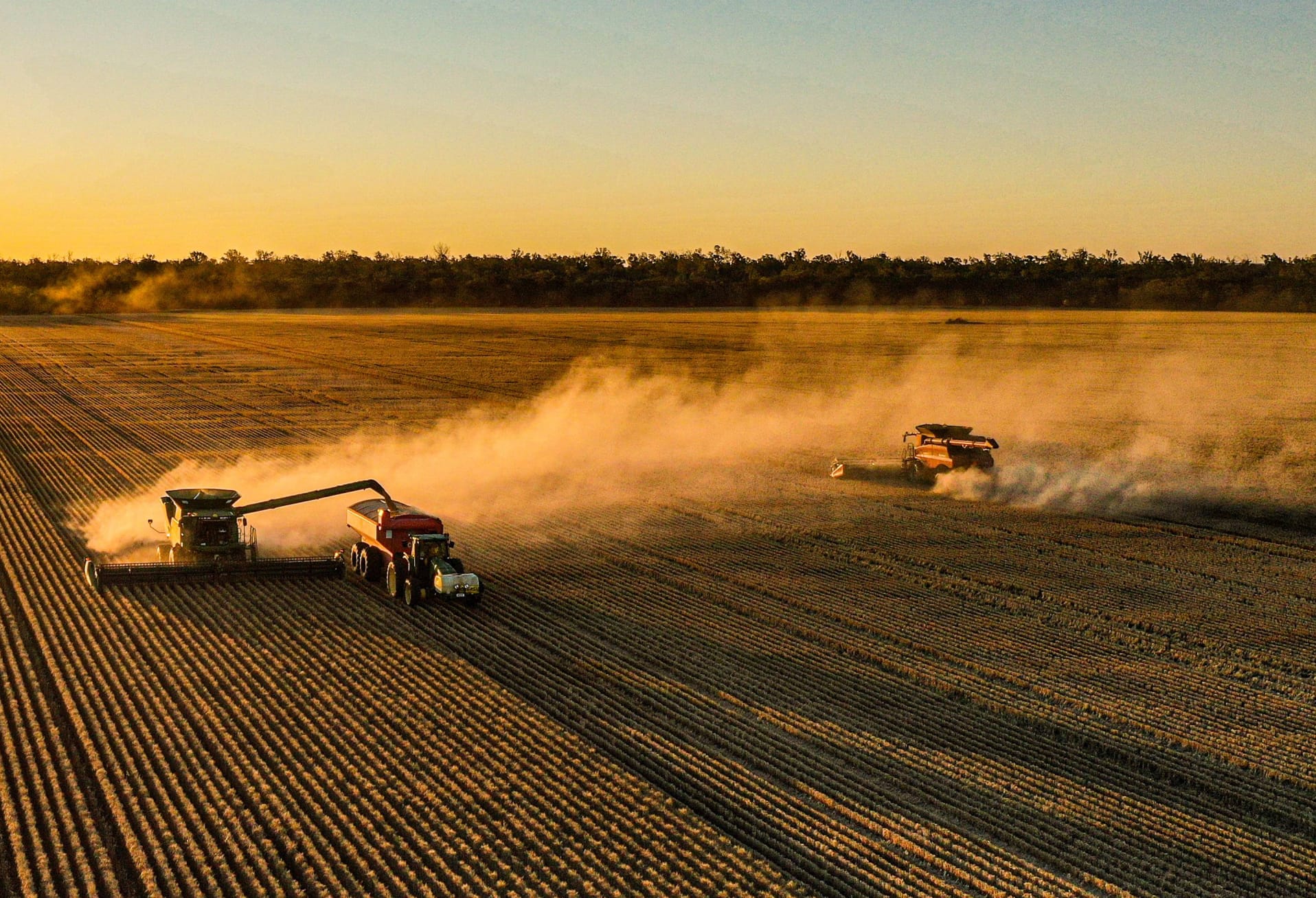
Most farmers in the Mallee started harvest about the usual time, late October to early November, and harvesting conditions were good – not too hot, not too breezy, even the flies seemed to stay away for a bit. There were some very sweet yields for many, above average for lentils and canola and no quality issues, although the late adopters to lentil growing realised that you can’t eat Lindt every year, but a good Cadbury block can still be very satisfying.
But then the weekend cooled down in the south and the Wimmera was hit by widespread frosts that wiped an estimated $180M off the region’s potential harvest before they had even begun. To be hit so late and so comprehensively is a cruel, bitter blow. There will be a lot of extra hay around.
As the good harvesting weather and high yields in the Mallee continued into the second week of November, (the sunsets have been especially magnificent), reports of more bitter blows started coming out – a header burnt to the ground with only 140 hours on the clock, a 1000ha crop fire and a truck destroyed. As with most years, these stories (and twitter photos) were just the first of many, although header fires thankfully seem to be fewer than last year.
Just as we were settling into the rhythm of the long, dusty days (especially for those growing Jumbo lentils – gee they yielded well but sure produced some dust) the weather changed and much of BCG’s area got 30-40mm of rain in the middle of the month. For those of us around Berriwillock and Culgoa the timing was sweet. Local band, Stillwater who were big in the 80’s made a comeback for a local fundraiser. The break for rain meant that we were able to show our support for the band and the Culgoa Community Store well into the night.
With good drying winds, and after a few good sleep-ins, we were soon back on the headers and well into the cereals. Wheat crops were yielding better than expected, a pleasant change from the last few years and there were also some bumper barley crops around. But it wasn’t long before the next bitter blow hit with massive hailstones (about the size of those eggs you shouldn’t count until they are hatched) devastating some crops around Banyena, Wycheproof and Charlton and further south.
By the last week of November, while a few people had finished, we were all once again playing stormlotto with the BoM predicting up to 200mm, even for the Mallee. So, it was with a sweet mix of disappointment but also relief that we received ‘only’ 44mm and most of the rain hit further east as is usually the case. This break allowed some time for reading and telly watching, in between sessions outside doing the bindii two step.
Over 100 town records for daily rainfall totals were broken across Victoria over the weekend. With that stark statistic in my mind and the bittersweet whirlwind of events we have experienced in only the last few weeks, I reflected on an article from Marc Hudson, University of Manchester who wrote in The Conversation that November 30, 2017 marked the 30-year anniversary since the first national Greenhouse conference which led to the publication of a book, Greenhouse: Planning for Climate Change. Thirty years on the scenarios of likely climate change for Australia predicted back then seem to be coming to fruition but I wonder if that book is on a dusty shelf somewhere…
On Saturday night I realised that Hollywood was way ahead of the scientists with a very bitter climate scenario from 1973. We watched ‘Soylent Green’ a sci-fi thriller with Charlton Heston. Set in 2022 in a New York overrun by 40 million people it shows a dystopian future of pollution, poverty, dying oceans and year-round humidity due to the greenhouse effect. With 2022 only 4 years away we are not quite headed down that track, but it is well worth watching as a salient reminder of where we do not want to go. And with the oceans and farmland polluted, what is the Soylent Green food product really made from ….? The answer leaves a very bitter taste in the mouth.