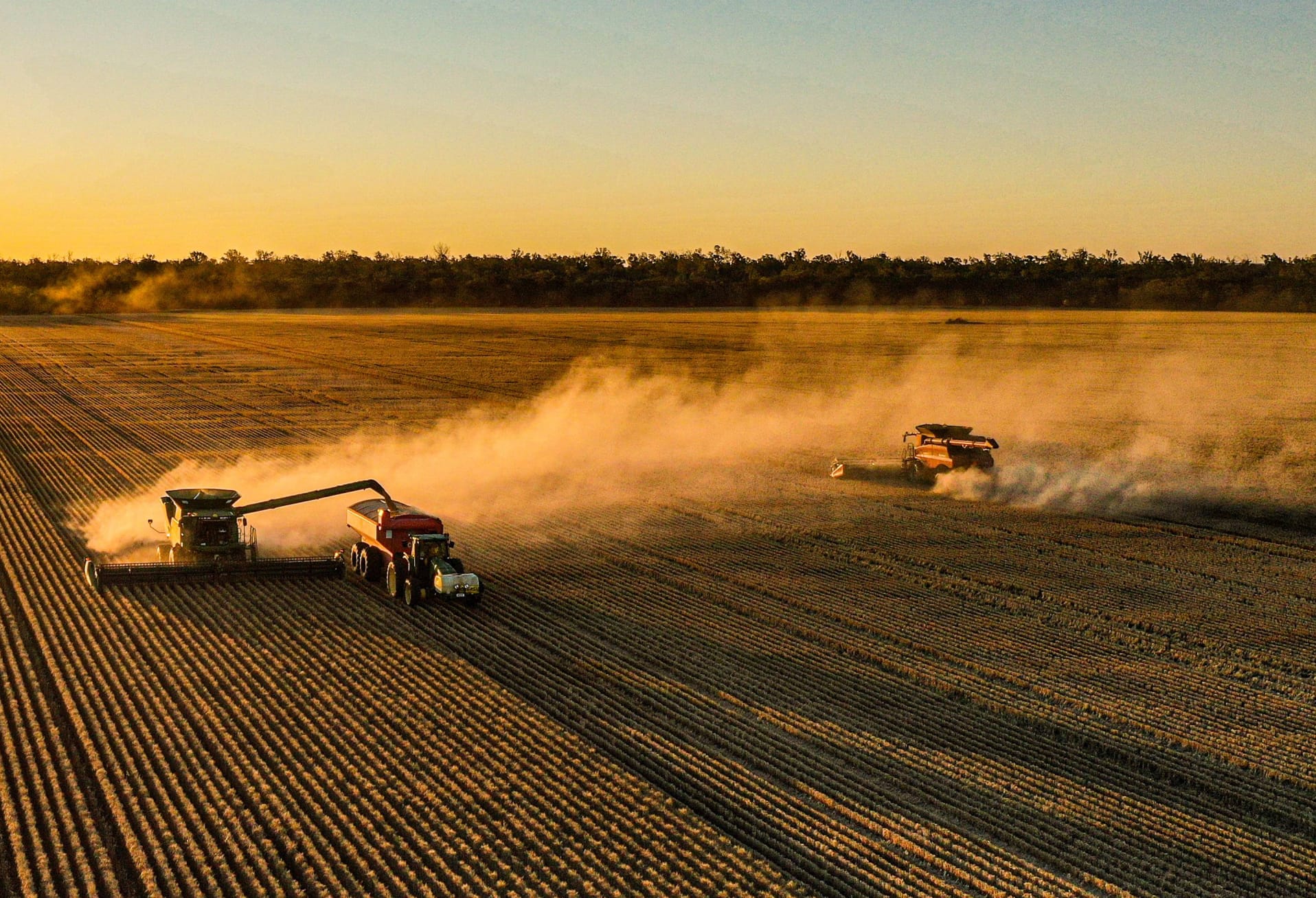


With the 2017 cropping season drawing to a close, we’ve taken a look at this year’s crop production and started to look ahead to the 2018 season with help from Rural Bank’s Ag Answers.
Total Australian crop production in 2017/18 is forecast to be 35 per cent lower than last season’s record crop. At a state level, above average production is expected in Victoria, however all other states will record below average production in 2017/18, with New South Wales growers expecting a particularly poor result. A late season frost has caused damage to some crops in the Wimmera, particularly to chickpeas and lentils.
While world wheat prices remain close to 10-year lows, domestic wheat prices have decoupled from overseas markets since June 2017, moving higher on local demand and expectations of below average production in Australia. Despite the support that domestic demand is giving to old and new crop markets, there will be enough grain harvest in Australia to more than meet domestic demand this year. That being the case, Ag Answers expect the Australian market to begin tracking the overseas market again, once Australian harvest results are confirmed. The location of where grain is produced, compared to where it is wanted, is likely to be a key issue this season.
The impact of the recent rain event that came off the back of a low-pressure trough and brought heavy rains across Victoria will put the remaining crop in the Wimmera and Mallee at risk of downgrading. We understand that the region received rainfall of 30-50mm in the most recent event. This, coupled with temperatures in the 30s leading up to and during the storms could lead to humid conditions – also not good for quality.
Looking beyond this season, below average wheat prices are still likely to characterise the market in 2018/19, given the volume of wheat stocks available to the market.
It is very early to anticipate seasonal conditions in 2018/19, however the Southern Oscillation Index has recently moved to a La Nina setting, increasing the likelihood of more summer rainfall in the eastern states, which will benefit summer crops and help establish good soil moisture for the start of 2018/19 season. La Nina events typically decay by the end of summer, so this will be an unusually short La Nina. We just hope all the rain hasn’t come at the worst possible time, and there will be more to come after everyone finishes up harvest.
This article is brought to you with support from BCG Gold Corporate Partner, Rural Bank.
“The future for agriculture is bright. And at Rural Bank, we are committed to providing exceptional financial services, knowledge and leadership for Australian farmers to grow. We understand the importance of providing good information for producers to make sound business decisions, and we value the opportunity to share relevant information from our own insights division, Ag Answers.”
To subscribe to our Ag Answers commodity updates and other insights publications, visit www.ruralbank.com.au.