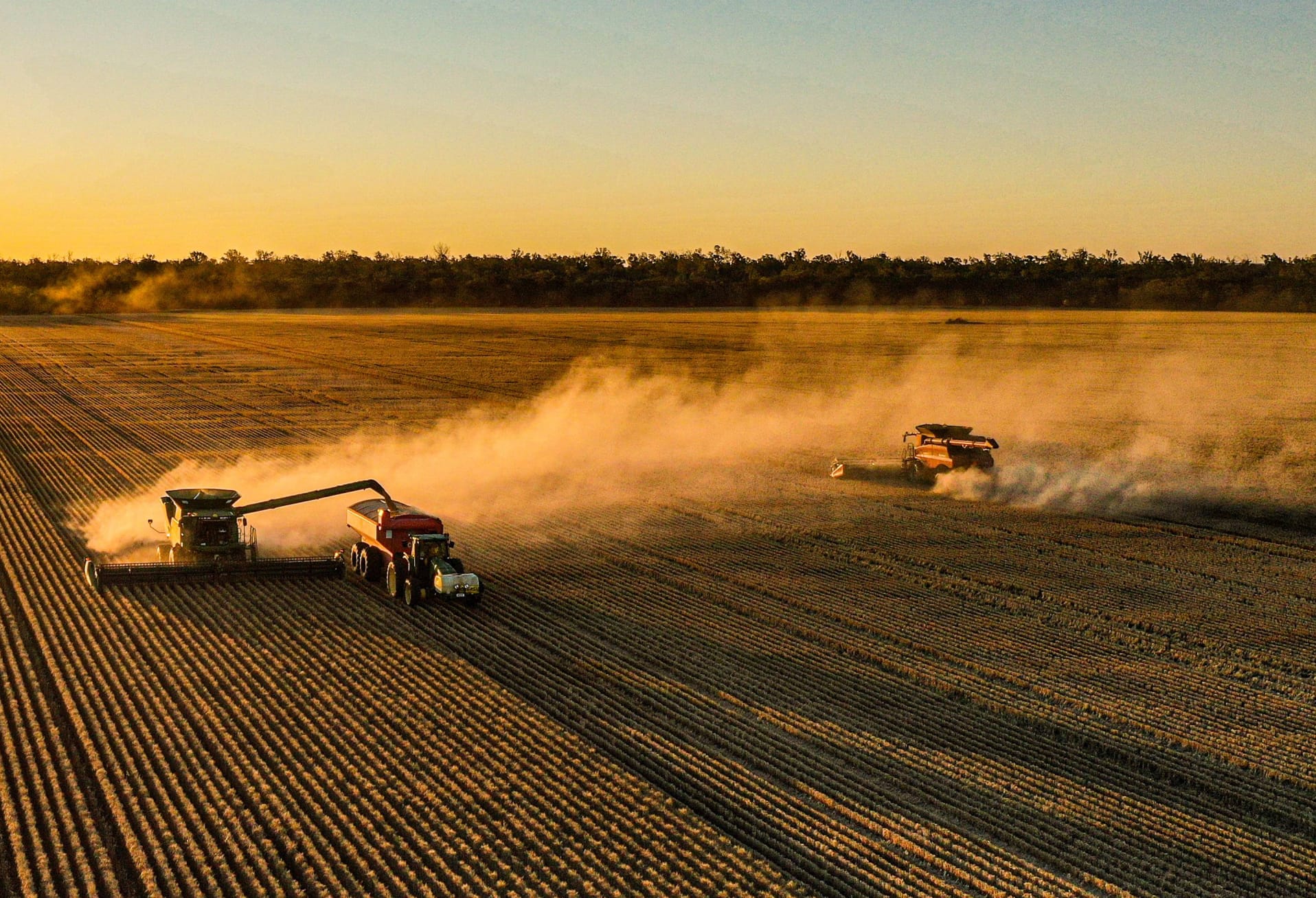


How different do we feel now, compared with this time last year? Farmers have been sighted wearing slightly self-satisfied grins, which is great to see.
While some BCG members have only just stepped down from the header, I hope everyone has had the chance to get away. After a long and exhausting (albeit extremely successful) harvest, it is important to take a breather before we re-set the brain to take on 2017.
While the media proclaimed 2016 as a bit of a disaster with Brexit, Trump and the loss of a few celebrities, for me the story of the year was about the 90-year-old Chinkapook farmer enjoying his 75th harvest. The story about Philip ‘PK’ Templeton was inspiring for many reasons. For starters he really was enjoying his 75th harvest. PK had not missed a harvest since 1941. His tough, can-do spirit shone through in every comment he made and you’ve gotta love the way he hogged the header, hardly letting his son have a go. While the interviewer obviously loved PK’s stories about teams of horses, drought, tough times and no telly, PK really appreciated the air conditioner in the header and knew what a difference the modernisation of farming has made.
“Bugger the old days,” was his reflection. After so long farming you think he would have seen it all but 2016 was his “best harvest yet.”
In fact, 2016 was the ‘best harvest yet’ for many and it is good to saviour that slightly self-satisfied feeling because the busy year and big harvest put a lot of strain on staff, machinery and our families. Obviously the market, particularly for our cereals, is very uninspiring, but production is our main game and we can definitely tick that box as a job done.
As we discuss a lot in our GAPP (Growth Adoption, Production and Profitability) group meetings, while yield is king, what really keeps us in the game is profitability.
In good rainfall years one of the key challenges is having the confidence to spend the money in-season to make the most of the opportunities, which can be a real brain shift after a few years of minimising inputs and keeping costs down.
A recent article in the GRDC’s ‘With the Grain’ put forward some interesting conclusions about the drivers of profit. Based on five years of benchmarking data across 300 Southern Region properties, the work by Rural Directions appears to confirm many widespread beliefs while challenging others. They compared the top 20 per cent most profitable farms with the average and found that size doesn’t matter as much as we might think. Where you farm doesn’t matter that much either. In this study the SA-Vic Mallee performed best in terms of return on business equity, both at the top 20 per cent level and also on average. No wonder I found it such a good read!
The big gap between the profitability of the top 20 per cent and the average farm in the study was not due to size or technical knowledge but more about implementation – getting jobs done on time and well, not just identifying business risks but making changes before they have real impact, and being very disciplined about keeping variable costs down.
The top 20 per cent of businesses had variable costs of around 35 per cent of overall turnover, compared with the average business at about 43 per cent.
Because that is the other side of having a good year; possibly spending too much to get the crop off. Now is a good time to reflect on the efficiency of our harvest teams. Do you subscribe to the theory that you can’t have too many hands around at harvest or do you run a leaner group of workers who take a break once their task is done?
As we prepare for the 2017 season, with a hopefully more relaxed discussion with the accountant than last year and a positive forward looking chat with the agronomist, once again we are in the land of the unknown. The recently released Very Fast Break is fairly conservative with average to drier rainfall and average to hotter temperatures predicted for the first half of the year, but with the provisos of low model accuracy so early in the year.
With the New Year comes new hope and farmers are nothing if not optimists (at least at this time of the year).