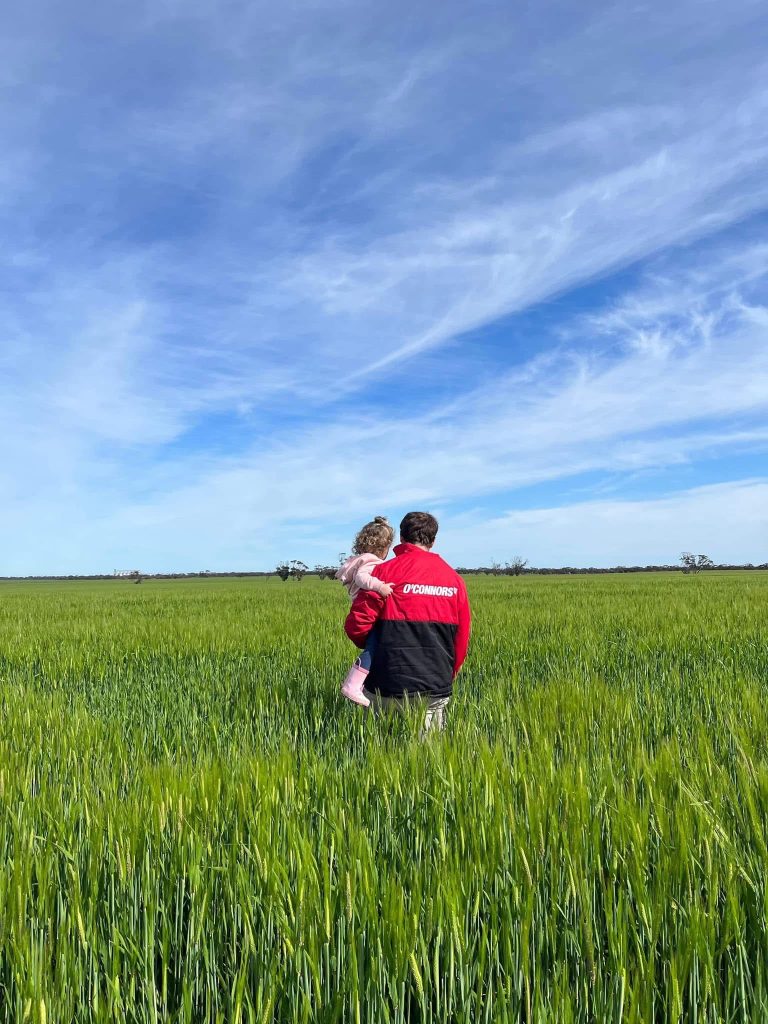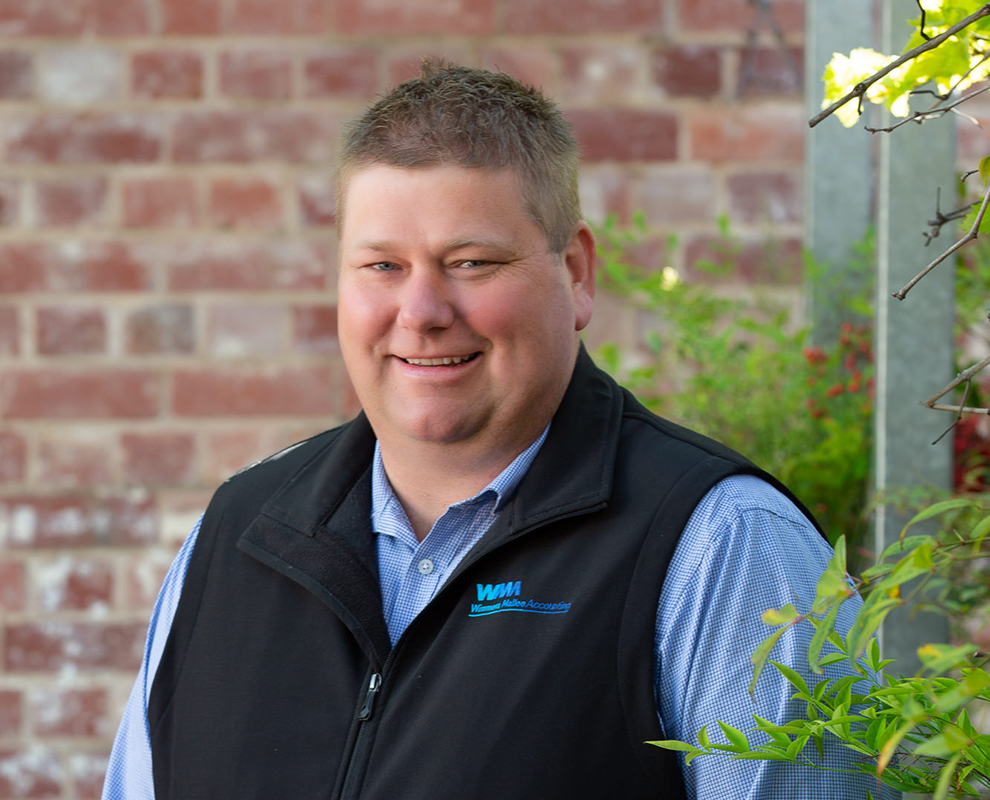
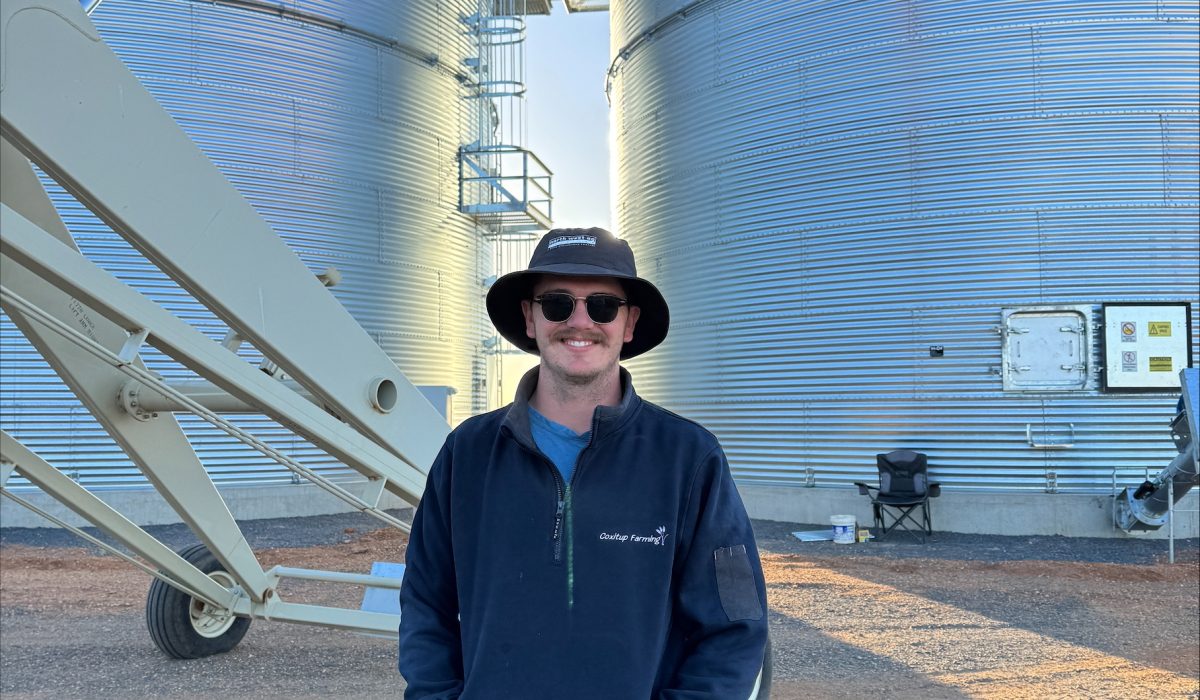

We recently caught up with Boigbeat farmer Charlie Cox, joining him in the truck as he carted loads to and from the silos.
Tell us about yourself, where you grew up, how you came to the farm, and what your role is today.
I grew up on our sixth-generation family farm in Boigbeat, and I’ve loved it for as long as I can remember. As a kid, I always wanted to be a farmer. I started working full time on the farm when I was 17 and haven’t looked back since.
I look after the day to day operations and work alongside Thomas and Max. We handle most of the hands on work and maintenance, keeping everything ticking along. Dad still makes most of the big decisions, though we like to challenge him every now and then.
What does your farm operation look like?
Our enterprise is a 100% cropping operation, producing wheat, barley, canola, peas, lentils, and a couple of paddocks of hay.
We’re a true family operation. I work alongside Mum, Dad, my younger brother Thomas, and Max.
It’s a shared load, and my mum Jodi, is as good as two blokes. She’s always on the go, whether she’s in the truck, tidying fence lines, moving vehicles, or cooking. We wouldn’t be anywhere without her.
How is the season shaping up on your farm?
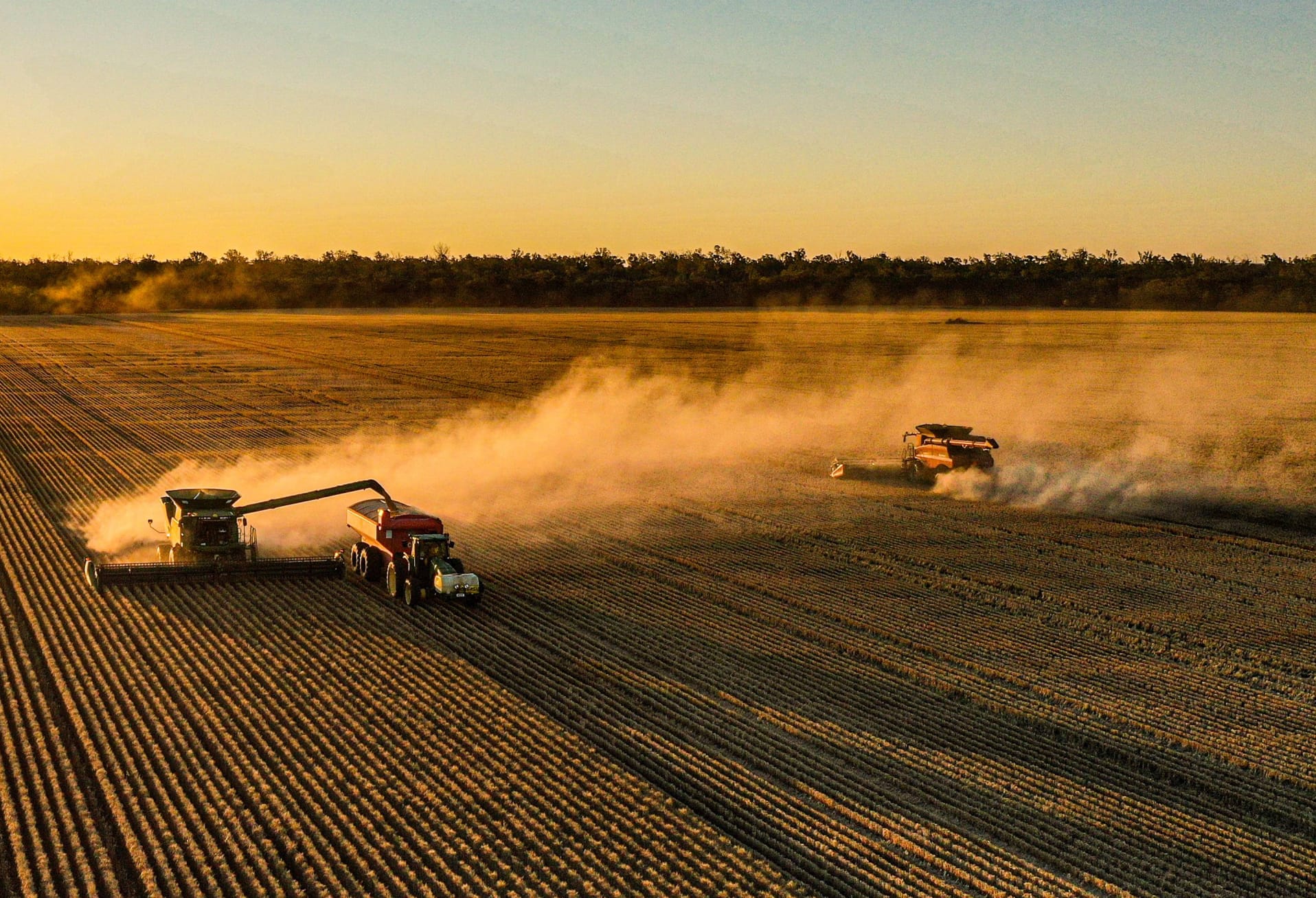
We had a reasonably dry year, but we were lucky to receive some rain at a crucial time. We’ve had some pleasant surprises in the yields from our lentil and barley paddocks. With this ongoing rain, we still have a bit to get through, and quality is becoming more of a challenge.
Are there any practices or pieces of equipment that have made a difference to productivity or cost control on your farm?
- Camera controlled spraying has made a noticeable difference in reducing our chemical costs, providing a valuable tool for managing tough summer weeds that are often resistant to traditional knockdown chemistry.
- Looking ahead, our 2026 program will include exploratory deep ripping to identify where we may see benefits from nutrient applications or from breaking up compaction layers to encourage deeper root growth.
- We’ve also invested in additional on farm storage to better manage long term costs, using silo bags opportunistically to keep the headers moving during harvest.
- Pre-spreading urea has improved efficiency at cropping time and eased pressure post crop emergence, allowing us to focus on other timely operations such as spraying and rolling.
- We use hay as a strategy to keep our paddocks clean of annual winter weeds.
What do you love about farming?
No two days are ever the same, there’s always something new to tackle. I’m genuinely intrigued by the innovation in agriculture, the emerging science, and the constant opportunities to improve productivity; there’s always something to learn and a better way to do things. The variety in the work is another big draw, one day you might be on an excavator, the next you’re learning to drive a truck. You’re never confined to just one role. Farming is also deeply connected to the community. We help others, they help us, and we’re proud to be able to help community groups like the footy club.
What has been the most enjoyable BCG event you have attended?
I loved the Farmer Network Ball. It was a great night and a fun way to connect with other young farmers. I’ve already seen a bit of information about next year’s event, and it’s looking like it’s shaping up to be another ripper! I’m excited for the golf day too that is going to follow. Any excuse to make a weekend out of it!
Drought is an inevitable aspect of the climate we farm in. How is your farm business preparing for future droughts, or potential financial shocks within the business?
We regularly turn over our machinery so it’s reliable, efficient, and requires minimal maintenance. Keeping our gear clean and well serviced means that if we needed to, we could take on contracting work to bring in extra income. It also means that if a drought hit, we’d be entering that year with equipment that’s ready to perform.
Modern farming practices have also made us far more drought tolerant. Moisture preservation is a major focus for us, and the effort really pays off. Last year we’d already made two passes before Christmas and probably four over summer, we work hard to hang onto every bit of moisture we can.
We’ve also invested a lot of time into learning and improving our practices. Whether it’s through BCG or GRDC workshops or working closely with our agronomists, staying open to new technology and information is essential.
This project was supported by the Australian Government’s Future Drought Fund.

The Victoria Drought Resilience Adoption and Innovation Hub is a state-wide collaboration of 10 organisations.
Led by the University of Melbourne and with headquarters at UM’s Dookie Campus, the Vic Hub is a Partnership between five farming organisations (Birchip Cropping Group, Food & Fibre Gippsland, Mallee Regional Innovation Centre, Riverine Plains and Southern Farming Systems), four universities (UM, Deakin, Federation and La Trobe), and the State Government (through Agriculture Victoria).
One of eight hubs established nationally under the Australian Government’s Future Drought Fund (FDF), the Vic Hub works to enhance the drought preparedness and resilience of Victoria’s agricultural industries, the environment and regional communities, encompassing broader agricultural innovation. Engaging with a range of industry and community stakeholders, the Vic Hub links research with community needs for sustainable outcomes.