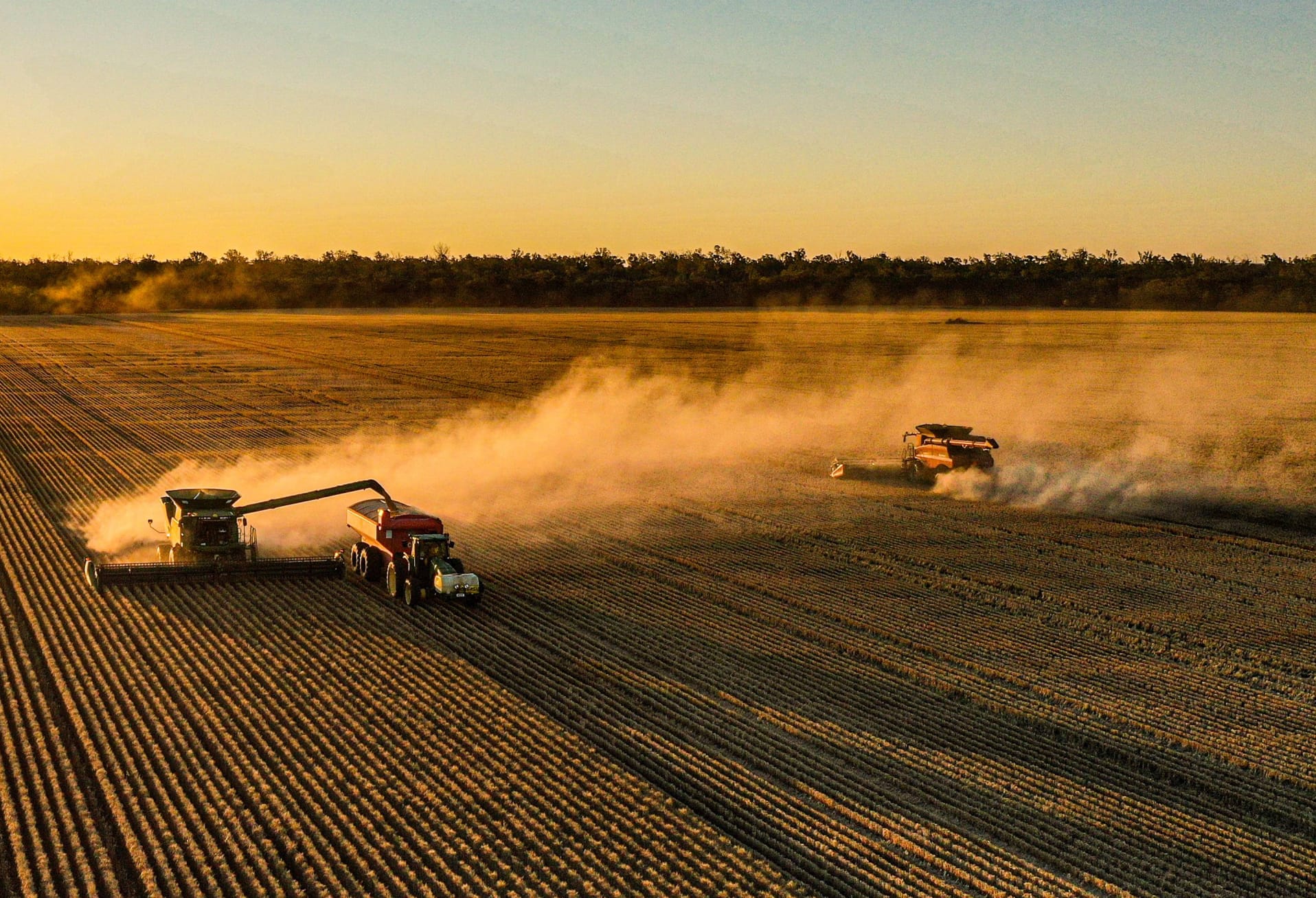


The hum of harvesters is upon us, and a variable season for most has meant yield and quality uncertainties have made planning difficult, leaving grain growers with some decisions to be made around storage, logistics and marketing on-the-go.
With a tough end to the season, getting storage right becomes all the more important. Growers want to avoid delivering to receival sites only to be rejected due to infestation or quality downgrades. Selling some grain during harvest may be necessary prior to the domestic quota being filled, and to also help with cash-flow. Flexibility and good records will enable you to be able to make quick decisions.
Silo hygiene is vital to avoid infested grain and maintain grain quality. After cleaning, prepare silos with Dryacide® (amorphous silica) which will dehydrate most insects. Cereal grain stored in silos should be treated with protectants such as IGR (insect growth regulator) plus fenitrothion 1000g/L – but keep in mind lesser grain borer is developing resistance to fenitrothion.
As with herbicides and other chemicals, always check and adhere to the label. Consider the volume of grain to be placed in larger silos, as fumigating a small amount of grain in a large silo can be expensive, as treatments are based on silo volume rather than grain volume.
Silo bags are becoming an increasingly popular short-term storage option due to low cost and logistical flexibility. Although they can tend to get a ‘bad rap’, being careful when filling and post-harvest can overcome most issues.
Being prepared is the key to success with silo bags. Ensure a well prepared pad with minimal or no stubble or vermin to damage the bag, fill bags upslope and set breaks on filler for correct stretch. Allow time to regularly check and patch bags with silicon or bag sticky tape (available from your bag supplier) during storage to maintain quality, and decrease attack from pests.
Small tasks can save bigger headaches later on. Labelling silos with variety and treatments will help avoid confusion for longer-term storage. For shorter-term storages, including silo bags, take running samples to allow quick decision making as quality specifications are already determined.
For further information on grain storage visit storedgrain.com.au which provides a comprehensive information hub for best management on-farm grain storage.
BCG has created a ‘seed exchange’ which aims to offer growers a platform to communicate about seeking and selling grain this harvest, as well as preparing for the 2015 cropping program.
The initiative has been set up to connect growers who have had a good season and will have good viable seed, to those that have been less fortunate.
To become involved in this initiative, growers are asked to provide some basic information such as crop type, variety, amount, location and a means of communication. Information can be updated on the BCG website at www.bcg.org.au.
By Johanna Couchman, DEPI secondment.