
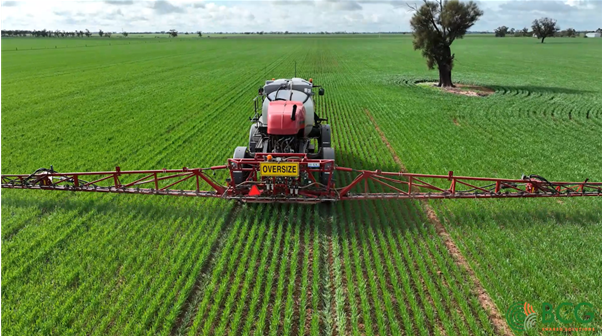

A cheap insecticide added to the tank can feel like inexpensive insurance, but what else is that application killing and could removing beneficial insects ultimately mean more spraying, not less?
Growers will be encouraged to look before they spray during Implementing Integrated Pest Management sessions with Cesar Australia at BCG’s Main Field Day. Running at 10am and 12pm, the practical sessions will take growers into the crop to find out what is actually there, distinguish pests from beneficial insects and consider how that information can inform insecticide decisions. With many crops carrying strong yield potential this season, the aim is not to take unnecessary risks with pest control. Rather, the session will look at how growers can protect that potential without automatically adding another input to the program.
Growers will get hands on with simple monitoring and identification techniques for pests likely to be found in local crops, including redlegged earth mite (RLEM), blue oat mite and lucerne flea. The session will also cover when and how to use TIMERITE as part of an RLEM management strategy.
Importantly, growers won’t just be looking for pests. Predatory mites, parasitoids and other beneficial insects can all contribute to keeping pest populations in check, and the session will explore how growers can recognise and protect the species already doing some of the pest control work for them.
It is an approach BCG has explored previously through its Shared Solutions podcast, where entomologist Dr Paul Horne described IPM as much more than simply choosing not to spray.
“IPM isn’t just doing nothing,” Dr Horne said. “If there’s pests there, you have to control them. It’s just how you choose to use it, which products you choose, whether it’s cultural or whether it’s a pesticide. All IPM is, is trying to use things in the best possible way so they work together.”
That distinction will be central to the Main Field Day session. Rather than asking growers to stop using insecticides, the focus will be on understanding when intervention is required and selecting control options that manage the target pest while minimising unnecessary impacts on beneficial species.
The economics of those decisions will also be put under the microscope. Broad spectrum insecticides can be an inexpensive addition to a tank mix, making a “just in case” application attractive. However, the lowest cost product per hectare may not always result in the lowest pest control cost across the season. Removing beneficial insects can leave crops more exposed to subsequent pest populations, while some more selective products may have a higher upfront cost but preserve beneficial species and potentially reduce the need for repeat applications.
Wimmera agronomist Tim Pohlner discussed that challenge in the earlier BCG podcast, acknowledging that the price difference between broad spectrum and more selective chemistry could be a significant hurdle for growers.
“Most farmers will want to see an economical return from that long term,” Mr Pohlner said. “Farming is a money making venture. We’re not doing it as a hobby.”
He said implementing IPM did not have to mean changing an entire farming system at once, with starting in one paddock a practical way for growers to build confidence in monitoring and management. The Main Field Day session will bring those principles back to the paddock, asking growers to consider not only what a spray costs today, but what effect that decision could have on pest management tomorrow. By knowing what is in the crop, recognising the beneficial insects already at work and understanding the strengths and limitations of different control options, growers can make more informed decisions about when and what to spray.
Cesar Australia’s Implementing Integrated Pest Management sessions will run at 10am and 12pm at BCG’s Main Field Day at Curyo on Wednesday 9 September. Register at bcg.org.au/events. Attendance is free for BCG members and $60 for non-members.