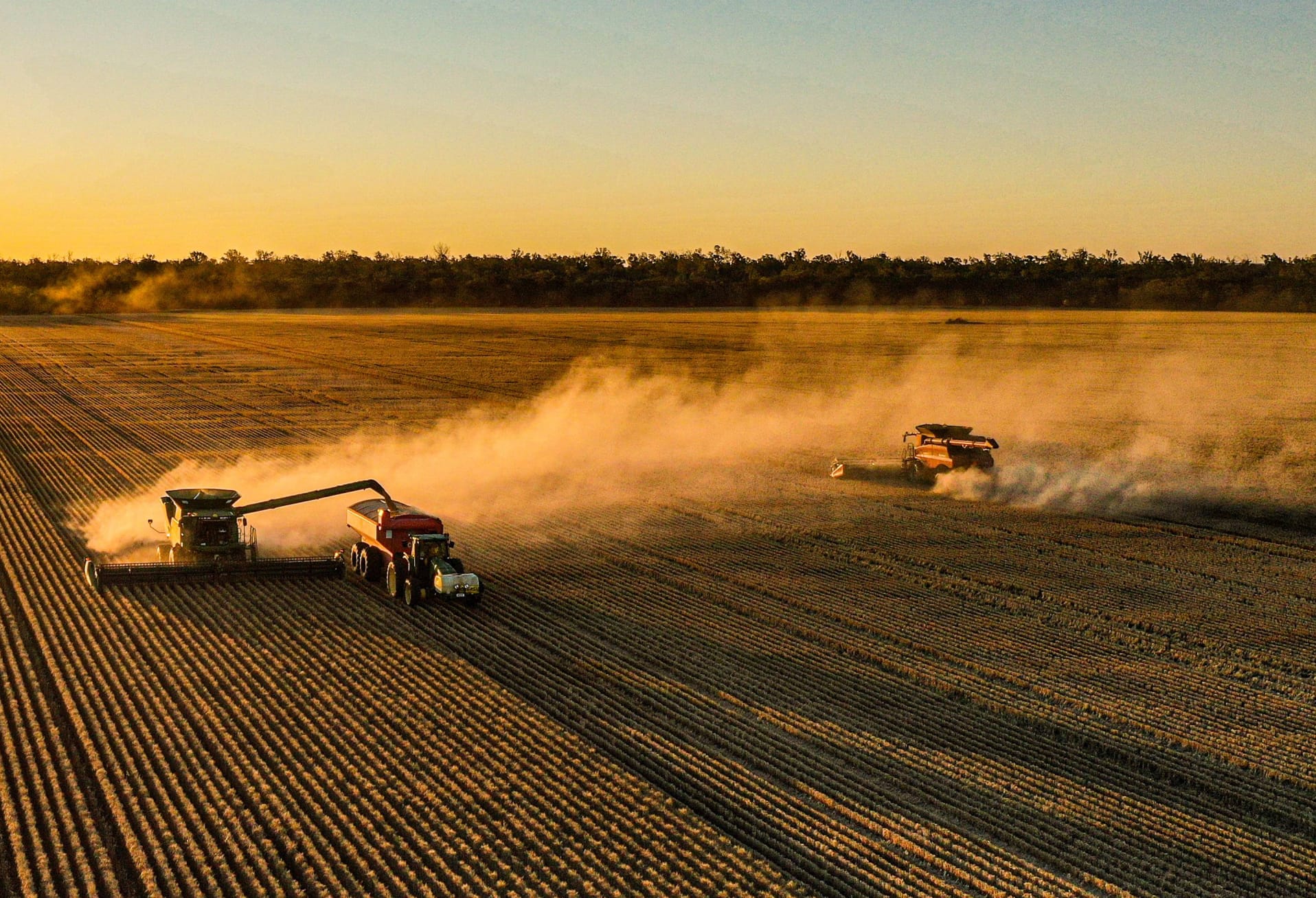


After months of looking at rain gauges, attention is starting to turn to thermometers. Across much of north west Victoria, crops are carrying strong yield potential into spring following an exceptionally wet start to the season. Soil profiles are full, crops have biomass and, in many paddocks, there is more yield on the table than growers have had to manage for several years. But we are also approaching the part of the season that can change things very quickly.
What happens if it frosts? And, perhaps more importantly this year: does having all that moisture in the soil actually reduce the risk of severe frost damage? It is one of the questions meteorologist Jane Bunn will tackle when she opens BCG’s Main Field Day at Curyo on Wednesday 9 September.
Does wet soil buy us some protection?
There is some science behind the theory. Moist soil has a greater capacity to absorb heat during the day and release it overnight. Previous BCG frost work has highlighted that when soil moisture is low, the risk of frost damage can increase because moisture helps increase the soil’s capacity to store heat.
So after the rainfall received this season, it is reasonable to ask whether wetter soil might help take the edge off a frost. But it is not as simple as saying moist soil equals no frost damage. Frost impact still depends on how cold it gets, how long temperatures remain low, humidity, wind, topography and what stage the crop has reached. A wet soil may provide some buffering during a radiative frost, but it cannot protect susceptible plant tissue from a sufficiently severe event.
What growers want to know now is what our unusually wet starting point means for the frost risk we are carrying into the next six to eight weeks. Jane will explore that question alongside the broader weather and climate drivers shaping the remainder of spring when she presents at 9.00am at Main Field Day.
The frost discussion will continue in the paddock through the GRDC Hyper Yielding and Profitable Cereals project. The project is focused on wheat and barley in low and medium rainfall environments, where growers make many of the decisions that shape yield potential well before they know how the season will finish. That makes 2026 a particularly useful season to look at it. When a season suddenly offers more upside than expected, is your crop set up to capture it? And how do you chase that opportunity without simply adding more risk?
Timing still matters
A major part of that equation is getting crops to flower at the right time. Flower too early and frost risk increases. Push flowering too late and heat and moisture stress become a bigger threat. The optimal flowering period sits between those risks.
At Main Field Day, the Hyper Yielding and Profitable Cereals team will use the trials at Curyo to discuss optimal flowering periods, critical periods for yield formation and differences between varieties and sowing times. If the tap turns off now, which crops are best placed to finish? If frost arrives, which are at their most vulnerable stage? And what can this season teach us about spreading that risk in future?
A winter wheat in your back pocket
Winter wheat will form part of that discussion too. Winter wheats require exposure to cold before progressing towards flowering. This allows suitable varieties to be sown earlier without necessarily flowering too early into the frost risk period. GRDC research into early-sown wheat has shown the value of matching variety development to sowing opportunity. One of the practical take homes at Main Field Day will be simple: Have a winter wheat in your back pocket. Not because it suits every paddock, but because having genetics that match an early sowing opportunity gives growers another way to spread flowering and production risk.
If frost does hit
No sowing strategy or soil moisture level removes frost risk altogether. BCG’s previous frost work and GRDC’s frost management resources both reinforce the value of getting into the paddock and properly assessing damage before making decisions. GRDC recommends checking susceptible cereal crops after screen temperatures fall below 2°C, with damage generally most evident seven to ten days later. If significant damage is confirmed, the question becomes what the crop is worth from there. GRDC outlines options including taking the crop through to harvest, cutting for hay, grazing or other salvage options.
Jane Bunn will open the BCG Main Field Day at 9.00am on Wednesday 9 September at Curyo, before growers head into the paddock to explore those questions through local research, including the GRDC Hyper Yielding and Profitable Cereals project.
When there is this much potential sitting in the paddock, understanding what could still shape the finish is worth the conversation.