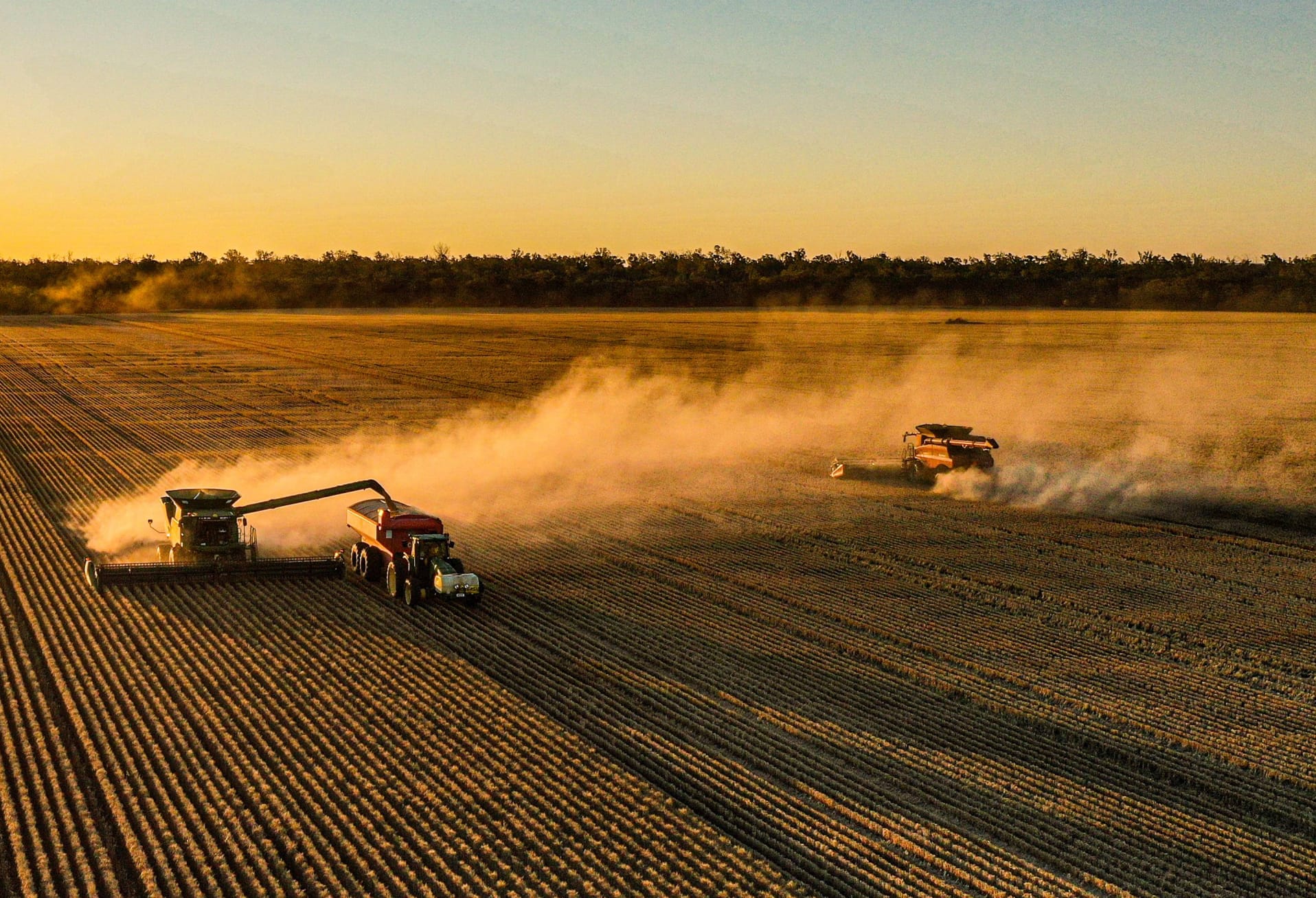


Location: St. Arnaud
Crops: canola, barley, oats, oaten hay, vetch and lucerne
Livestock: first cross ewes and Merino ewes
Annual rainfall: 450mm Soil type: creek loam, grey clay and rising red ground
An ongoing campaign to grow better crops and improve paddock fertility has motivated the McNally family to move focus to crop nutrition in recent years and to look at practices that ensure their crops have the best opportunity to reach their maximum potential.
Convinced that there are grain yield and quality benefits to be gained from split fertiliser applications and opportunistic top-dressing, the family has designed and implemented a nutrition strategy to specifically meet the needs of their St. Arnaud mixed farm. They have also ensured that it is sufficiently flexible to respond to the unpredictability of the season.
Matt McNally, a Longerenong graduate who runs the farm business with his parents Greg and Anne, and brothers Nathan and Heath, said an understanding about what could be gained by ensuring crops had access to adequate nutrition was becoming clearer with each harvest.
He qualified this, however suggesting that while the science behind ever-increasing in-sea
son urea application was convincing, any nutrition strategy had to take into account the particulars of each individual farming system.
“While we always plan to topdress the majority of our crops, we still put out about 65kg/ha of urea at seeding,” Matt said.
“We need to have something under our crops in case it gets wet and we can’t get onto them.”
Standard practice on the McNally farm is to band urea at seeding with Granulock fertiliser. This is possible thanks to the PSS Scaribar’s double shoot system on the seeder (parallelogram and press-wheels).
A top dress of 60-70kg/ha of urea usually follows later in the season and, if conditions are conducive, a second top-dress of 40-50kg/ha may occur.
“Some paddocks are sampled each year and make decisions based on the results, along with the seasonal forecast and the paddock history,” Matt said.
“We set our nutrition strategy early on, and will usually alter it only if seasonal conditions change drastically.”
According to Matt, investment in machinery has helped facilitate improved crop nutrition practices on the farm and led to better results in the paddock.
He credits his seeder’s presswheel and double-shoot system with improved crop establishment. The ability to put out less fertiliser at, or ahead of, seeding has seen crops produce noticeably less biomass early on and more grain later in the season.
Matt said the purchase of a spreader had enabled urea to be top-dressed closer to rain, maximising crop uptake and minimising nitrogen volatilisation.
While information delivered by BCG and their farm advisor have helped the family to improve nutrition and other farm practices, Matt and Greg said their most valuable learnings have come from other farmers.
“The things that we pick up from talking to other farmers is invaluable,” Greg said.
ADDITIONAL INFORMATION
2013 CHAIRMAN’S WELCOME | THE YEAR THAT WAS 2013 – FARMING FOR TOMORROW | 2013 RESEARCH SITES | 2013 SITE DESCRIPTIONS | BCG RESEARCH METHODOLOGY | GUIDELINES FOR INTERPRETING SOIL TEST RESULTS | 2013 GRAIN PRICES | 2013 BOARD, STAFF AND COMMITTEE | ACRONYMS AND ABBREVIATIONS | CEREAL GROWTH STAGE CHART | DISCLAIMER