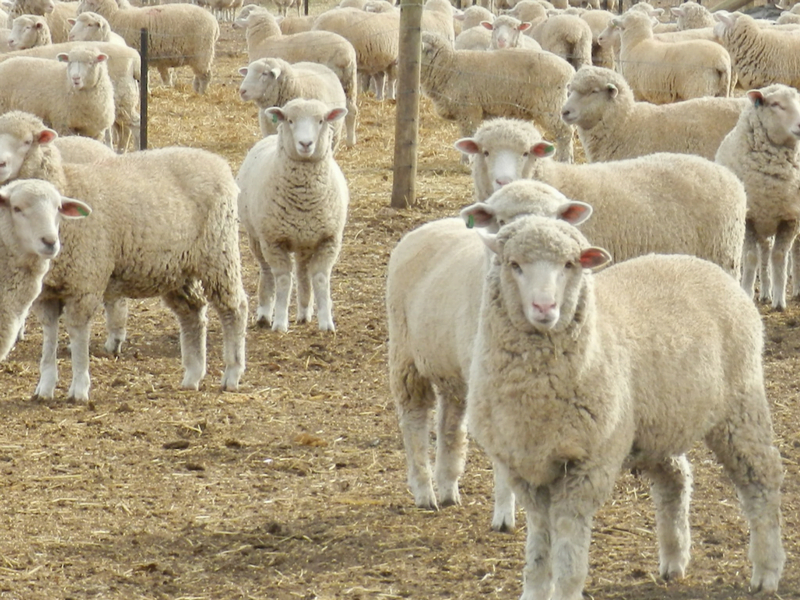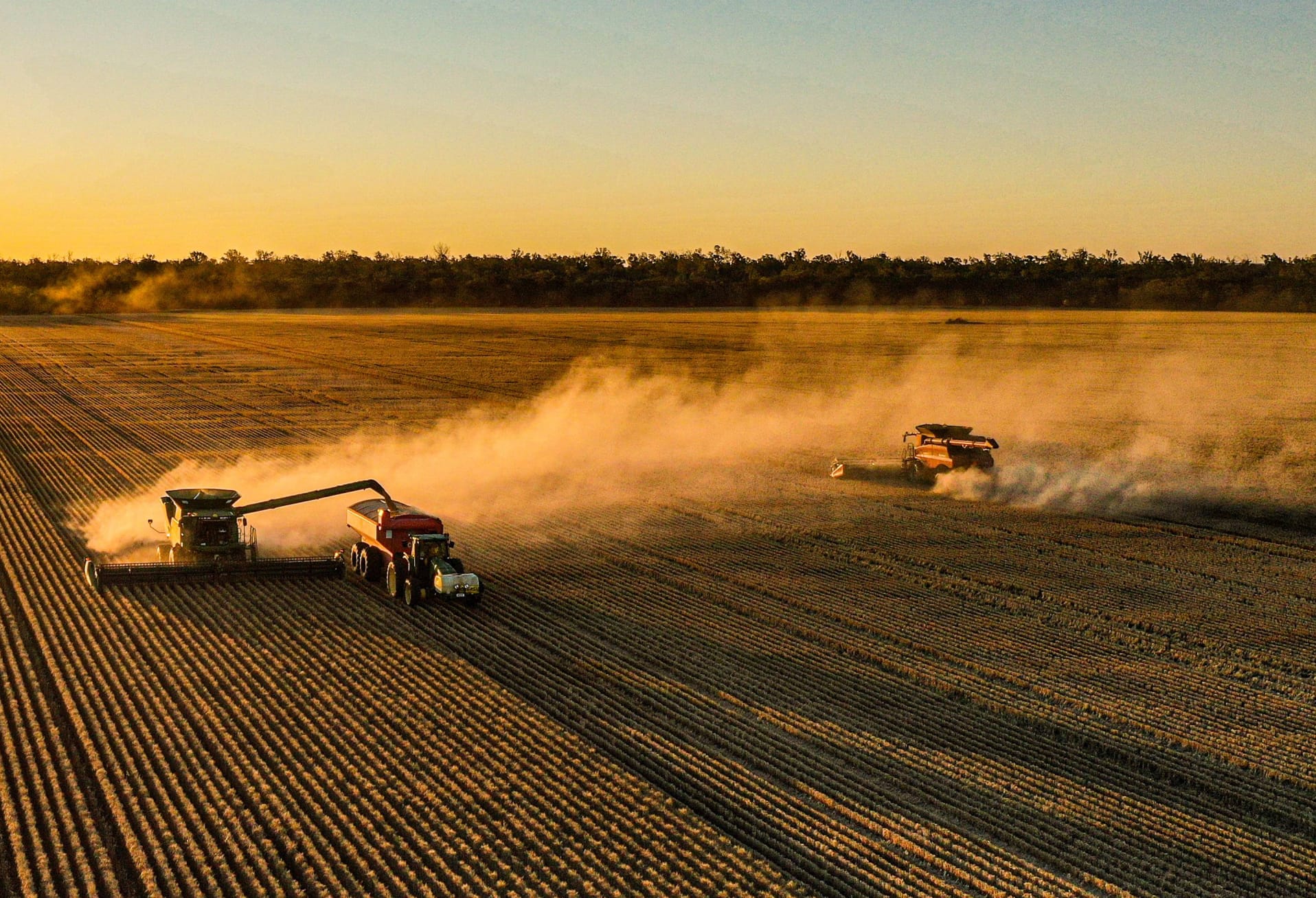


The benefits of grazing crops are clear to Baringhup mixed farmer Colin Jennings. Not only is the practice enabling him to fill the traditional early winter ‘feed gap’, it is helping him achieve his goal of running more sheep on fewer hectares.
Colin, with his wife Debra and son and daughter-in-law Doug and Lisa, farm 760ha in
Victoria’s nor th central region. They produce wheat, barley, oats, canola and lucerne hay
alongside a livestock enterprise where the primary focus is on meat production.
Oat crops have been routinely grazed on the farm for quite some time, but it is only
in the past three years that Moby barley was introduced into the rotation to provide another
food source for the sheep.
“Moby has fitted into our system really well,” Colin said.
“ We used to grow it on larger paddocks (40ha) but found grazing was too uneven. We’ve reduced it to 20ha which ensures better utilisation and allows us to spell another paddock.”
According to Colin, the addition of Moby barley to his cropping rotation has improved the
carr ying capacity of his business.
He said despite 2015 being drier than average he wasn’t forced to lower stock numbers.
“ We’ve had 104ha of Moby in and were able to run 1500 ewes and lambs on it. It is filling the
gap in dry years.”
FARM DETAILS
Case study: Colin and Debra Jennings
Location: Baringhup
Farming operation: Dryland cropping/sheep plus 30ha flood irrigation
Mean annual rainfall: 482mm
Soil type: Red loam and a small parcel of black country
THE SYSTEM
April is a busy month on the Jennings’ farm. If there is an early break, sowing will begin with the Moby barley and in some years it will be sown into older lucerne stands to be watered.
Lambing is also usually happening in April and with stock on depleted stubbles at this time of year, a lot of feeding sheep with hay and grain is occurring.
Ewes and their lambs are moved onto Moby crops as soon as possible. In 2015 this occurred at the start of June but Colin said in a “normal year” (when sowing occurs earlier), they can start grazing Moby by late May.
Colin has no strict rules about how long his stock stay on the crop. He makes this decision
according to the season, and because his sheep are his number one priority, he will happily
allow them to graze right through to harvest. “For us it’s all about the feed. The sheep can just keep eating it and grow the lambs,” Colin said.
Additional opportunities come from having some irrigation. In 2015 30ha of flood irrigated
land was sown to Moby and undersown with lucerne (photo above). The paddock produced a
very useful hay crop (96 large rolls from 15 acres).
TRADE-OFFS
Moby barley is considered a forage crop on the Jennings’ farm so Colin doesn’t feel as though he is compromising a ‘crop’ when he grazes it. It is simply being used as intended.
Nevertheless, at $1000/t it is expensive so Colin does harvest their own seed.
Weed management poses the biggest issue on the Jennings’ farm.
“It doesn’t have to be perfect, but we will spray paddocks out if they become too grassy,” Colin said. “Agronomically, you really need to treat the Moby like a wheat crop which can be tricky.
“Our agronomist has been really supportive of what we are doing and has helped us along the way.”
BENEFITS
Colin says the benefits of grazing crops overwhelmingly outweigh any trade-offs.
“It’s allowed us to remain mixed farmers,” he said. “We got to a point where we were having to feed out so much hay we almost felt like we’d have to lease our land out or go 100 per cent cropping. With grazing crops, we can be much more flexible.
“We’re getting good weights over-the-hooks, our grain feeding costs have been lower and
we’ve had more grain to sell.”
Most importantly though, the Jenning’s farm is now able to run more sheep on fewer hectares, while producing more crop at the same time.
LOOKING AHEAD
Despite the last few season’s being dryer than average, there is a sense of enthusiasm about
the future.
With Moby barley most certainly proving its worth during the dry 2015 growing season, it
will remain as part of the rotation and plans are in place to refine the system.
Specifically, Colin is looking at sowing earlier, including dry sowing a lot of his Moby barley, and also planting some long-season Wedgetail wheat. Along with this, he said he plans to pay more attention to weed management and nutrition to improve on the already good results he is getting from his mixed farm business.
Colin said he would recommend Moby barley to other farmers.
“Don’t be afraid to go ahead and sow it,” he said. It germinates easy. Just give it a go.”
THE PROJECT
Grain and Graze 3 is the third phase of a long-term mixed farming program, supported by the Grains Research and Development Corporation (GRDC). The initiative aims to improve understanding about grazing crops, how to integrate livestock and cropping on farms, and the management challenges and risks of operating a complex farming system. As part of the project a series of case studies have been produced that provide information about grazing crops and the effects on livestock and crop production.
ADDITIONAL INFORMATION
For further information pertaining to the 2015 season, please use the links below.