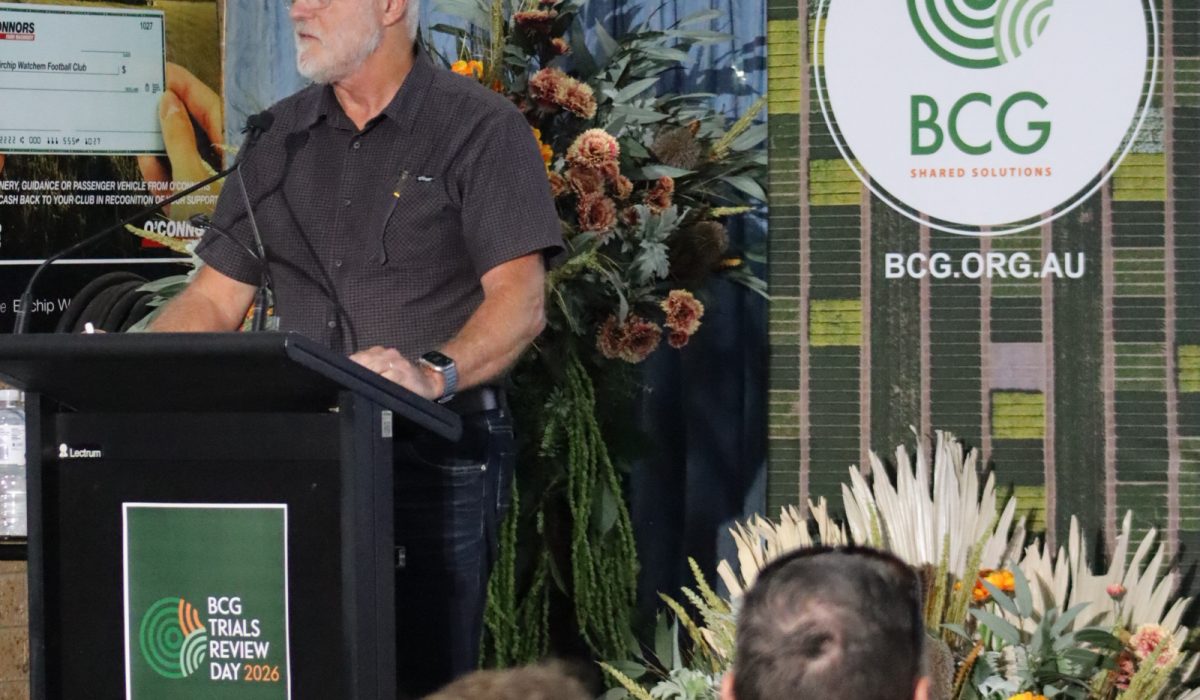

More than 160 farmers, agronomists and industry representatives gathered in Birchip for Birchip Cropping Group’s 2026 Trials Review Day, a program grounded in agronomy, cost of production and risk management. Among the research updates and economic insights, one session highlighted a shift moving steadily from policy discussion to commercial reality: carbon reporting.
Delivered by Professor Richard Eckard from the University of Melbourne as part of the Federal Government’s Carbon Farming Outreach Project, the session provided clear, evidence based context on how changing policy settings and supply chain expectations are likely to influence farm businesses. International commitments under the Paris Climate Agreement and Global Methane Pledge are now filtering into agricultural value chains, with more than 130,000 multinational companies setting emissions reduction targets. In Australia, mandatory climate-related financial disclosures will progressively capture Scope 3 emissions, including those embedded in grain supply chains, from 2027.
While immediate full farm greenhouse gas audits are unlikely for most growers, reporting expectations are building. Industry averages may initially be used before more farm level data becomes common later in the decade, signalling a structural shift rather than a short term cycle. Importantly, the focus is on emissions intensity, measured as greenhouse gas per tonne of grain, rather than total farm emissions, aligning closely with profitability drivers. Improving productivity, lifting nitrogen use efficiency and optimising inputs can reduce emissions intensity while strengthening margins. Nitrogen, as both a major cost and emissions source, sits squarely at this intersection.
Practical mitigation options such as applying the 4Rs of nitrogen management and considering fertiliser source and enhanced efficiency products were discussed. However, many strategies reduce emissions without directly increasing yield, reinforcing the likelihood that supply chain incentives and shared responsibility models, including insetting approaches, will be required.
Consistent with the day’s broader theme, the message was pragmatic. Carbon reporting does not sit apart from profitability; in many cases it reinforces existing best practice around efficiency, productivity and sound business management. BCG will continue supporting growers to navigate this evolving landscape, ensuring farming systems remain informed, competitive and commercially prepared.

Delivered with funding support from the Commonwealth of Australia through the Department of Climate Change, Energy, the Environment and Water under the Carbon Farming Outreach Program in collaboration with the Grower Group Alliance