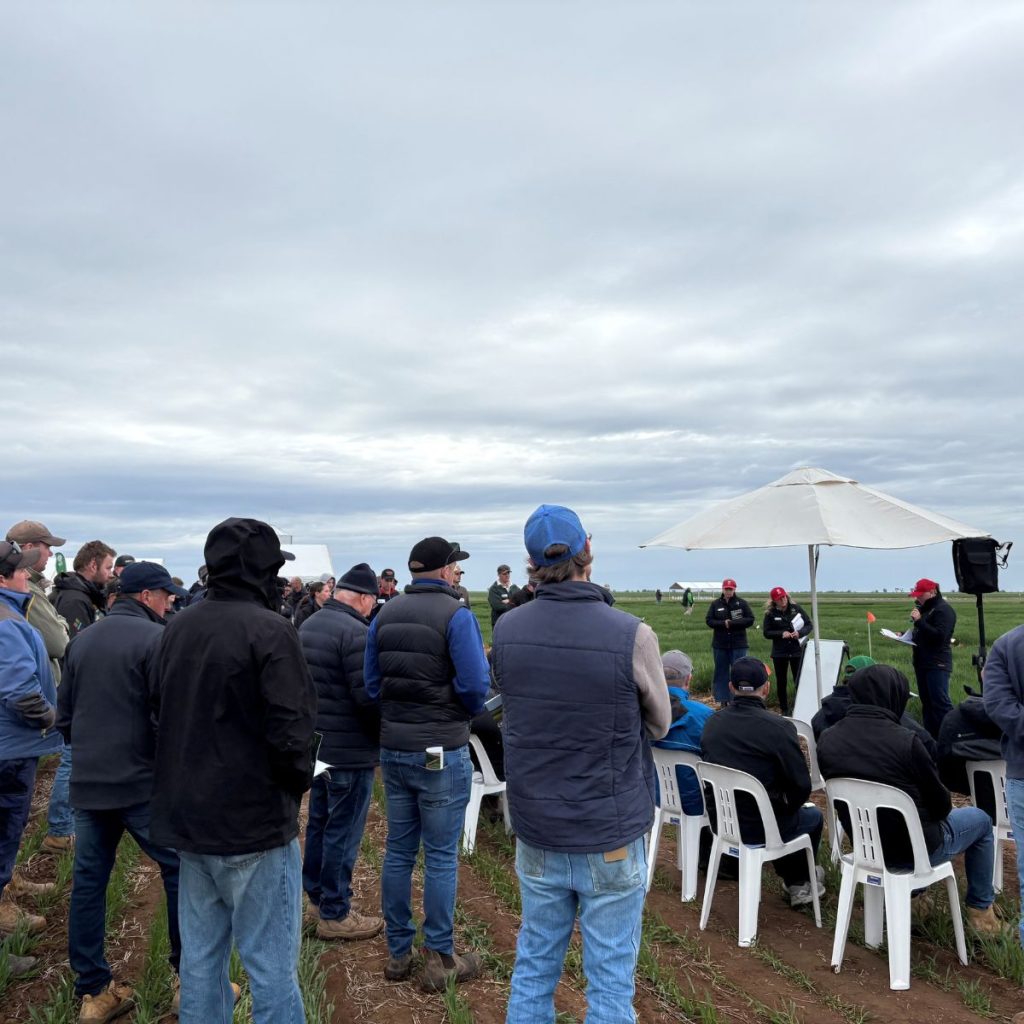
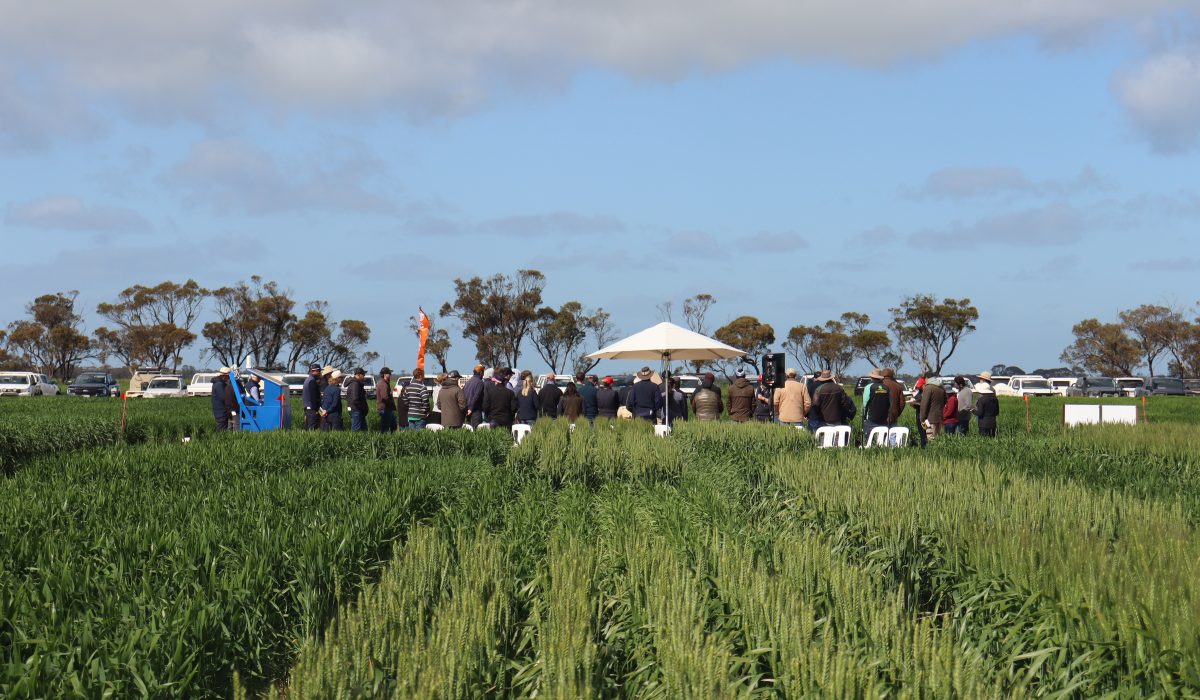

Making variety choice a part of a farming business’ formal review for 2027 was a key message at the variety choice session at this year’s BCG Main Field Day.
The backdrop was the Grains Research and Development Corporation (GRDC) funded National Variety Trial (NVT) Wheat and Barley trials at the BCG main research site where growers, agronomists and plant breeders discussed which varieties are currently being grown and which varieties could be considered in future rotations. Dr Grant Hollaway, Astute Ag, also contributed to disease discussion.
Zoe Wilson, BCG Research Agronomist who manages BCG’s NVT program, explained her top wheat and barley variety picks in the Mallee, Wimmera and North Central.
Barley variety picks:
- Maximus CL- Quick season, not always the highest yielder but is consistently above average. Malt grade.
- Neo CL- High yielding, slower in maturity then Maximus CL, suits slightly longer growing seasons as observed in the North Central region, shorter rachilla so it’s not as itchy. Malt grade.
- Combat- A conventional feed barley, high yielder, suited to early sowing with an early prostrate growth habit for competition, feed grade.
Wheat variety picks:
- Shotgun – considered a Scepter replacement, AH quality, mid-maturing spring wheat.
- Tomahawk CL – High yielding Clearfield alternative to Razor CL Plus, Quick – mid maturing APW rather than Razor’s quick ASW.
Barley ‘one to watch’:
- AGT Reaper CL – Under malt evaluation, quick- mid Clearfield, potentially a replacement for Maximus or Neo. Moderate tolerance to head loss and lodging.
Wheat ‘ones to watch’:
- LRPB Hurdle – Considered an awnless Scepter, APW, flexibility for hay, high yielding.
- LRPB Ambush – AH, high yielding, mid-maturity spring wheat, similar management to Shotgun and Tomahawk CL.
What would make you switch?
The 2026 growing season has been characterised by high disease pressure and high input costs. The audience readily discussed what factors would lead farming businesses to make a variety change based on disease resistance.
Growers said yield remains “king” when selecting varieties, but there is increasing interest in varieties that can offer a better disease package without sacrificing too much yield.
The discussion highlighted the value of long-term trial data in identifying varieties that may be worth considering even if they sit slightly behind the highest-yielding options. Disease resistance was also seen as an important risk-management tool, particularly in seasons when wet conditions can make timely fungicide applications difficult.
One grower noted that using flutriafol applied with fertiliser at sowing provided additional flexibility around fungicide timing but stressed that variety selection still needed to balance yield potential, disease risk and the practical realities of getting machinery onto paddocks.
The strong grower engagement at BCG’s Main Field Day highlighted the appetite for new varieties, as well as the careful consideration that goes into choosing what to grow next.
BCG’s ongoing variety evaluation and extension work, supported by GRDC, will continue to give growers independent information to help weigh up yield, disease risk and other considerations when making variety decisions for future seasons.
Dr Plowman encouraged growers to take time before 2027 to formally review the season with advisors and the farm team can help identify what worked, what didn’t and where changes could be made to avoid pitfalls in the future.
Growers can access yield data, long-term variety performance and disease ratings through the GRDC National Variety Trials website: https://nvt.grdc.com.au/