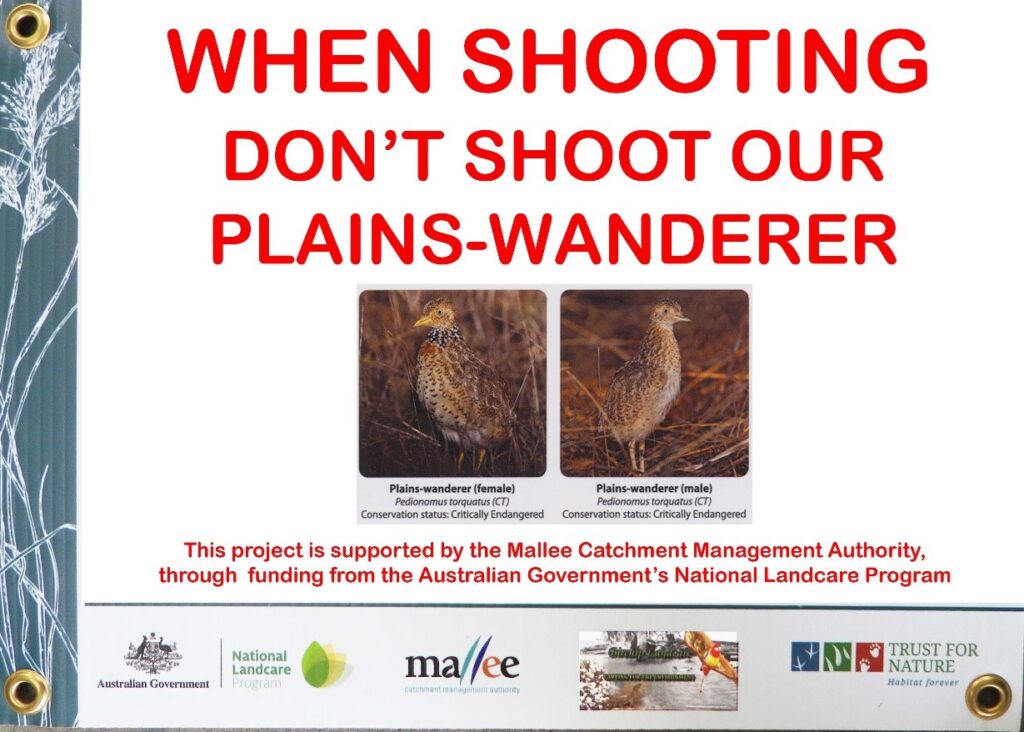


Plains-wanderers are one of the animals that make Birchip and the cropping country unique and special.
These birds are only about 12cm high, with long yellow legs and a yellow bill, and look a little bit like a quail. They are the sole surviving species of an ancient family of birds, the Pedionomidae, and are a very high priority for conservation. They are such a high conservation priority that four zoos in Australia are undertaking breeding programs to try to increase their numbers.
Plains-wanderers need the native grassland paddocks that have been least disturbed by cropping for habitat. These grasslands will often have Wallaby, Spear and Spider grasses and sometimes daisies, saltbush and lilies.
Therefore, if you have any of these paddocks remaining, they are precious!
Sometimes these paddocks will have been direct drilled in the past, but some native grasses remain. These paddocks can still provide habitat for the bird.
Closely managed grazing by sheep or cattle is an important way to manage grasslands for Plains wanderers, so grazing activities can occur along with conservation of the bird’s habitat.
In fact, Plains-wanderers can’t live in grasslands that are too dense—they like paddocks with clumps of grass and bare spaces in between. Sometimes these bare areas will have lichens and mosses growing.
There are some incentives available for protecting native grasslands. Trust for Nature may provide a financial incentive for the land to be protected by a conservation covenant, which will allow for livestock grazing in the paddock, but not cropping. There are also emerging opportunities with biodiversity markets, with legislation before Parliament at present to establish Nature Repair Markets, that will operate in a similar way to carbon markets.
If you, or anyone in the family, is a shooter, make sure they familiarise themselves with Plains-wanderers, so that they’re not mistaken for a quail.
And think twice before you work up that ‘rough’ paddock that’s never been touched—it may be important for the Plains-wanderers’ survival!
The Birchip area is still an important refuge for the bird. Over the past five years, Birchip Landcare Group and Trust for Nature have placed ‘song meters’ in suitable locations around Birchip to survey for the presence of the bird and the song meters have picked up the distinctive calls of the Plains-wanderer.
Work on the Plains-wanderer is supported by the Mallee CMA, through funding from the Australian Government’s National Landcare Program.