

18 February 2019
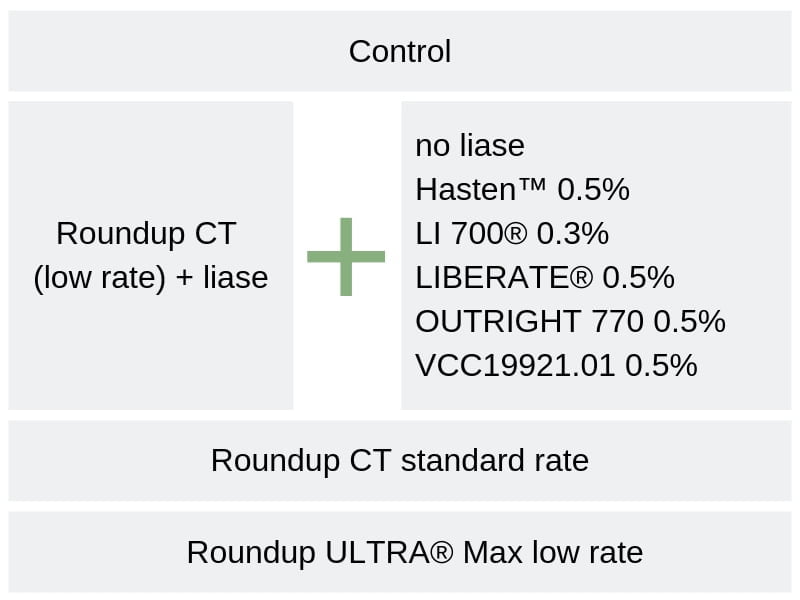
In a commercial situation roundup rates are often around 1L/ha to 1.3L/ha, as growers are targeting a broad range of weeds.
To identify the true efficacy of the adjuvants, a lower rate of glyphosate was used, this provided a unique opportunity to assess the adjuvants
8 February 2019 – Heliotrope life cycle
Common heliotrope (Heliotropium europaeum L.) is an annual summer weed found in grain growing regions across Australia. It characteristically struggles with competition from other weeds but thrives on bare ground areas such as a summer fallow making the Mallee and Wimmera ideal locations at this time of year.
Heliotrope flowers three weeks after germination and produces viable seeds three weeks after flowering. Consequently, it’s important to control this weed as quickly as possible to stop reproduction.
Heliotrope often emerges after a summer rainfall event and through field observations, it has been found to require a minimum of approximately 20mm of rainfall to germinate.
This summer we have seen heliotrope emerge later than other weeds, particularly in crab holes and lower lying areas of the paddock. They have typically emerged once the water has subsided.
While it can be a relatively easy weed to control, this trial is really investigating the efficacy of adjuvants and glyphosate rate on weed control.
25 January 2019
A paddock for our heliotrope trial has been found at Jil Jil.
BCG research leader, Claire Browne, explains why this site is perfect for a trial.
23 January 2019
After significant and widespread rainfall in December 2018, grain growers were busy spraying summer weeds during the new year period in a bid to conserve soil moisture. Now a second germination, particularly in paddocks where water sat for days and even weeks, has growers gearing up for the next round.
Due to years of local research and extension, the benefits of summer spraying are widely understood with some research suggesting every dollar invested in summer weed control could see a five dollar return in additional yield due to improved stored soil moisture, nitrogen storage and other system benefits.
Common heliotrope (Heliotropium europaeum L.) is one summer weed that has been spotted across paddocks in this second wave germination and growers in the Wimmera and Mallee are currently facing the challenge of what to apply in a summer spray to control this weed.
Adopting the latest in effective and safe spray practices across all chemical usage is highly recommended and now that spraying during the day is considered the safest option, adjuvants are becoming extremely important.
There are many adjuvants on the market, all with mechanisms of action (such as wetters and oils).
BCG research conducted in 2009 looked at adjuvants accompanying glyphosate in summer spraying and found, based on prices at the time, that adjuvants can account for a substantial part of the total cost of application, so it is essential to get it right.
At a recent BCG Mallee advisory committee meeting, the issue of summer spraying with regards to types of glyphosate products and adjuvant type was raised. BCG staff have consequently developed this into a trial for further investigation.
The aim of this trial is to identify the effect of adjuvant type and glyphosate product on heliotrope control.
This trial will review the effects of adjuvants on weed control, specifically heliotrope, as well as identify the costs associated with adjuvants versus using a higher quality glyphosate product.