

The idea of harnessing innovation and turning it into gains for Wimmera and Mallee farmers, and the industry as a whole, continues to motivate BCG to deliver high-end research, development and extension across the region.
To this end, each season’s research program is designed, keeping in mind industry developments and trends, and areas of emerging interest or concern as communicated by growers.
Machinery options and sowing systems are creating quite a bit of discussion of late, particularly with the wide spread adoption of retained stubble and no-till farming systems.
Machinery will be a predominant feature at the Main Field Day on September 9, with University of South Australia agricultural research engineer Jack Desbiolles discussing row spacing and seeder set-up for stubble and residue management and Queensland farmer and CTF solutions consultant Wayne Chapman discussing controlled traffic farming.
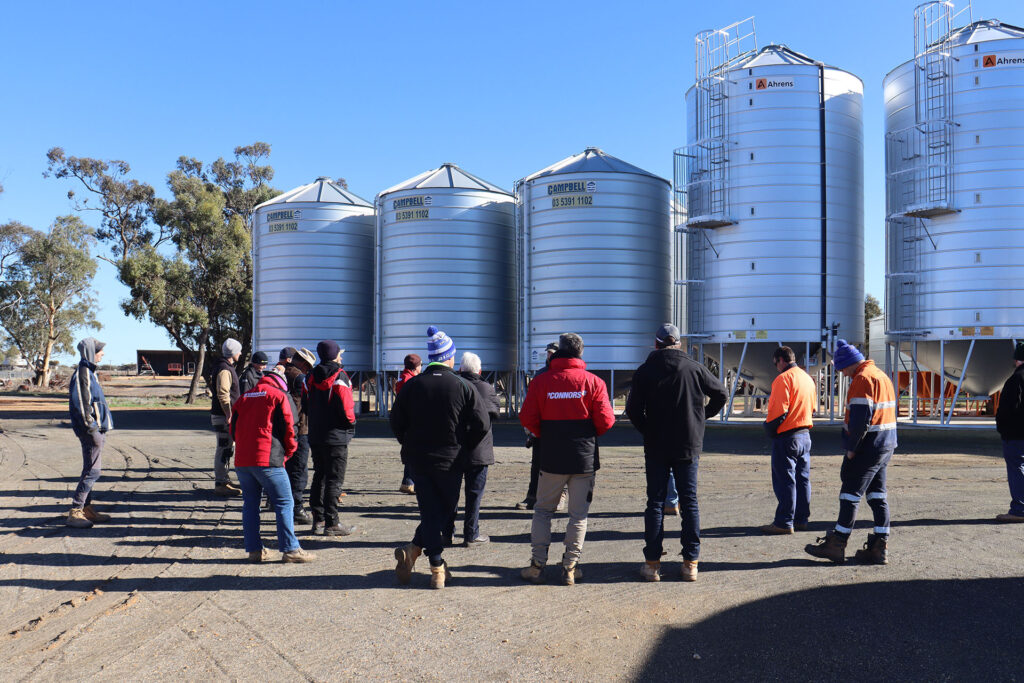
Machinery design will also be a focus of a BCG-led grower trip in August. The trip, which is being undertaken through the GRDC stubble initiative, will include farm visits and a tour of Postlethwaite’s engineering workshop at St. Arnaud (details on the website).
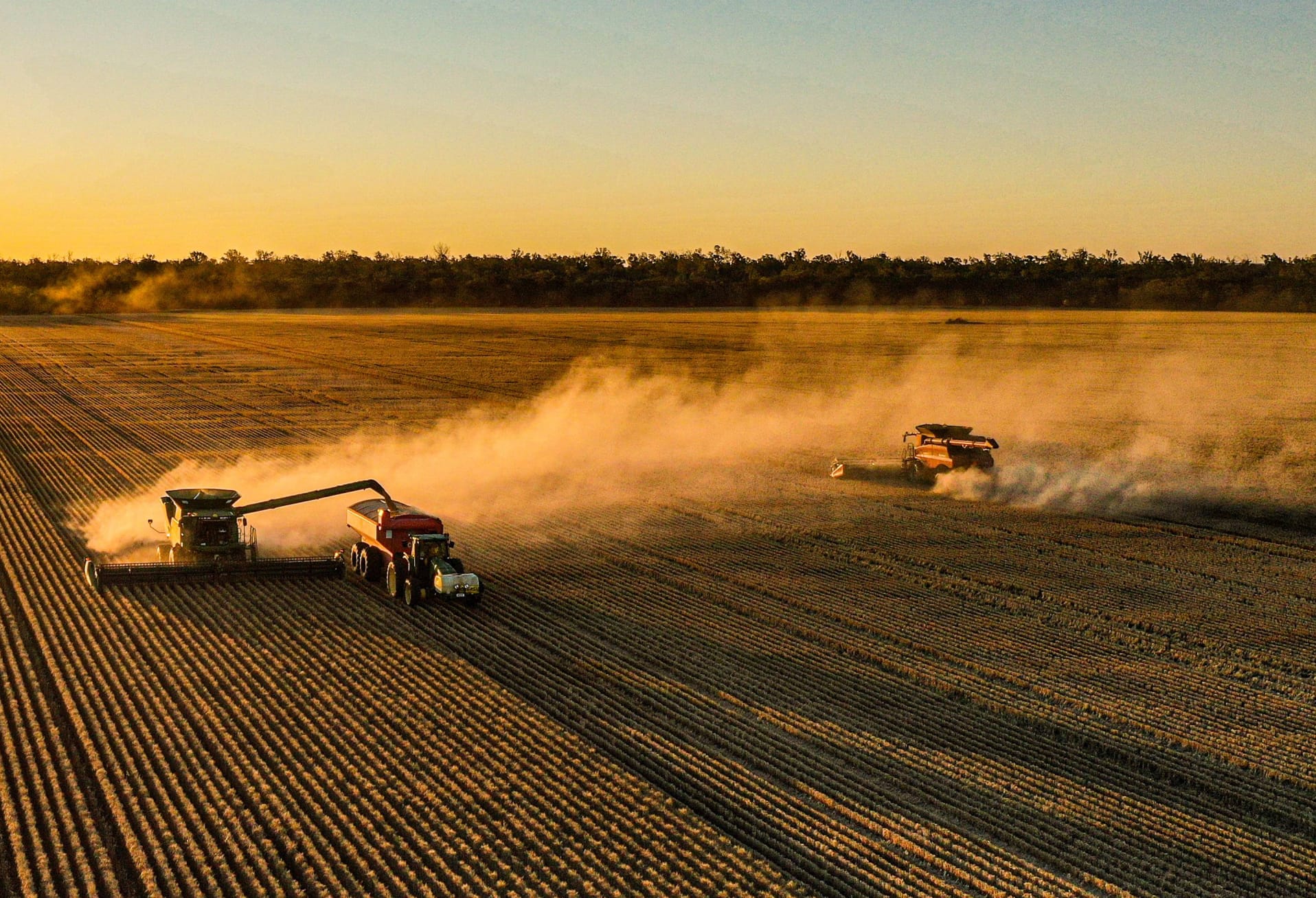
Responding to an increased inquiry about controlled traffic farming (CTF), BCG, on behalf of the Australian Controlled Traffic Farming Association, has embarked on a five year GRDC- funded project examining the impact of a CTF system on soil compaction and crop performance in a low rainfall environment.
Pundits of CTF cite improved soil properties (better soil biology and root penetration and reduce erosion risk), reduced fuel usage and increased yields as major benefits however, there are generally high capital costs involved in getting all machinery widths to match which can also bring about some logistical issues.
These issues, coupled with the fact that not a great deal of research into CTF has been undertaken in low rainfall zones, or on sandy soils, has motivated BCG to get involved.
The trial, being conducted at Bulga (west of Swan Hill), will compare various compaction treatments imposed pre-sowing using a full (6500 litre) tow-behind boom spray weighing 21.5 tonnes.
Treatments include:
1. Minimum compaction – CTF for five years
2. Low compaction – high axle load; one pass dry
3. Intermediate compaction – high axle load, one pass wet
4. High compaction – high axle load, three pass wet
5. Soil amelioration – tynes used to rip (not overly deep)
The trial is farmer managed, using commercial machinery. It was sown on April 19 using a single disc planter (no-till, single shoot) and emergence was assessed three weeks post-sowing (11.2mm rainfall in this period), and five weeks post-sowing (an additional 6.4mm in this period).
The minimum compaction treatment displayed the best emergence by far, with the low compaction and soil amelioration being the worst at the initial assessment. At five weeks, the minimum compaction treatment still displayed the best emergence (an additional 15 plants/m2), with all other treatments being fairly even.
The depth of seeding became shallower with higher compaction treatments, having a large impact on emergence rate. This could be caused by an inability for the disc seeder to penetrate the compacted surface, or the seeder being set-up for the CTF treatments, thus placing the seed shallower in the compacted treatments.
As the season progresses, it will be interesting to see if early differences are still evident at harvest. It is anticipated that the results from this research, which will include economic and agronomic analysis, will help growers to make decisions about the suitability of CTF for their farming system.