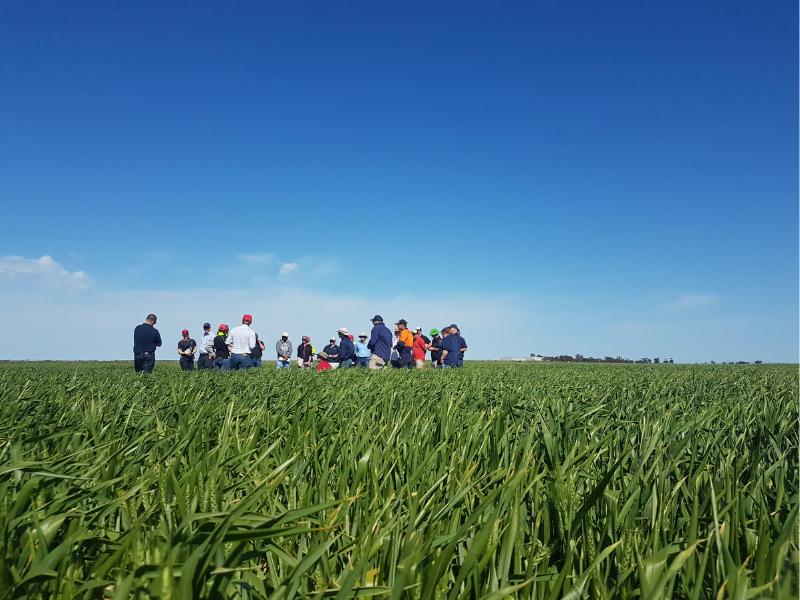


The possible benefits of using silicon to improve plant resilience during stresses such as drought, heat and frost will be discussed at BCG’s Main Field Day on Wednesday the 14th of September at Nullawil (on the corner of the Calder Highway and Burgins Road). While many pot (glass house) studies have proven how silicon can aid plant resilience, it has previously not been tested on a broadacre scale. BCG Research Agronomist Tariq Gerardi will explain how BCG is investigating this idea and the possible benefits of silicon in our cropping system.
“The trial is designed to investigate if commercially available silicon products can be used to increase yields in standard Mallee crops during dry times. We are also using this trial to see if silicon could be used as a tool to employ farming rotations which are more marginal [such as winter wheats, graze and grain systems and some pulses like chickpeas and faba beans] in the Mallee due to variable rainfall.”
“I’m certainly looking forward to seeing and discussing the trial with farmers from across the region at BCG’s Main Field Day on Wednesday the 14th of September. Research such as this is just another way BCG helps growers be more resilient in times of drought and that has a flow on effect into communities,” Tariq said.
This project received funding from the Australian Government’s Future Drought Fund.
Pulse agronomy, Septoria management in the low rainfall zone, barley agronomy, varieties, soil carbon, herbicide technology and fodder trials are also on the program and will provide an opportunity for farmers to connect with researchers and their work occurring in the region, for the region.
Gates open at 8am with onsite catering available from breakfast through to refreshments at the conclusion of the day.
This event is free for BCG members and $50 for non-members. To become a member, visit bcg.org.au For more information on becoming a member or regarding the field day call (03) 5492 2787.