

French student Sebastien Sester is undertaking a six month practice-orientated internship at BCG, examining agronomic and farming systems research as part of his Masters of Science at Wageningen University in the Netherlands.
As part of his work experience Sebastien is providing fortnightly updates to his course supervisor. These updates also provide a valuable international perspective to BCG and our members.
Sebastien’s report from the past fortnight (August 1-13) follows:
Successful farmers and the other end of the supply chain
By Sebastien Sester
Now that we are more than half way through winter, days start to be longer again. Thanks to good rainfall and sufficient amounts of nutrients, crops are looking very good.
However, because of wet conditions, blackleg in canola and ascochyta blight in pulses are causing farmers some issues, and severe damage has been reported in paddocks by BCG and other organisations.
Nevertheless, farmers hope that rain will continue coming to deliver a good season finish.
I took part in a couple of tours over the last fortnight. I joined a BCG board tour that visited Wimmera farms and a GAPP tour to Melbourne, with 15 growers from different places in the Wimmera and the Mallee.
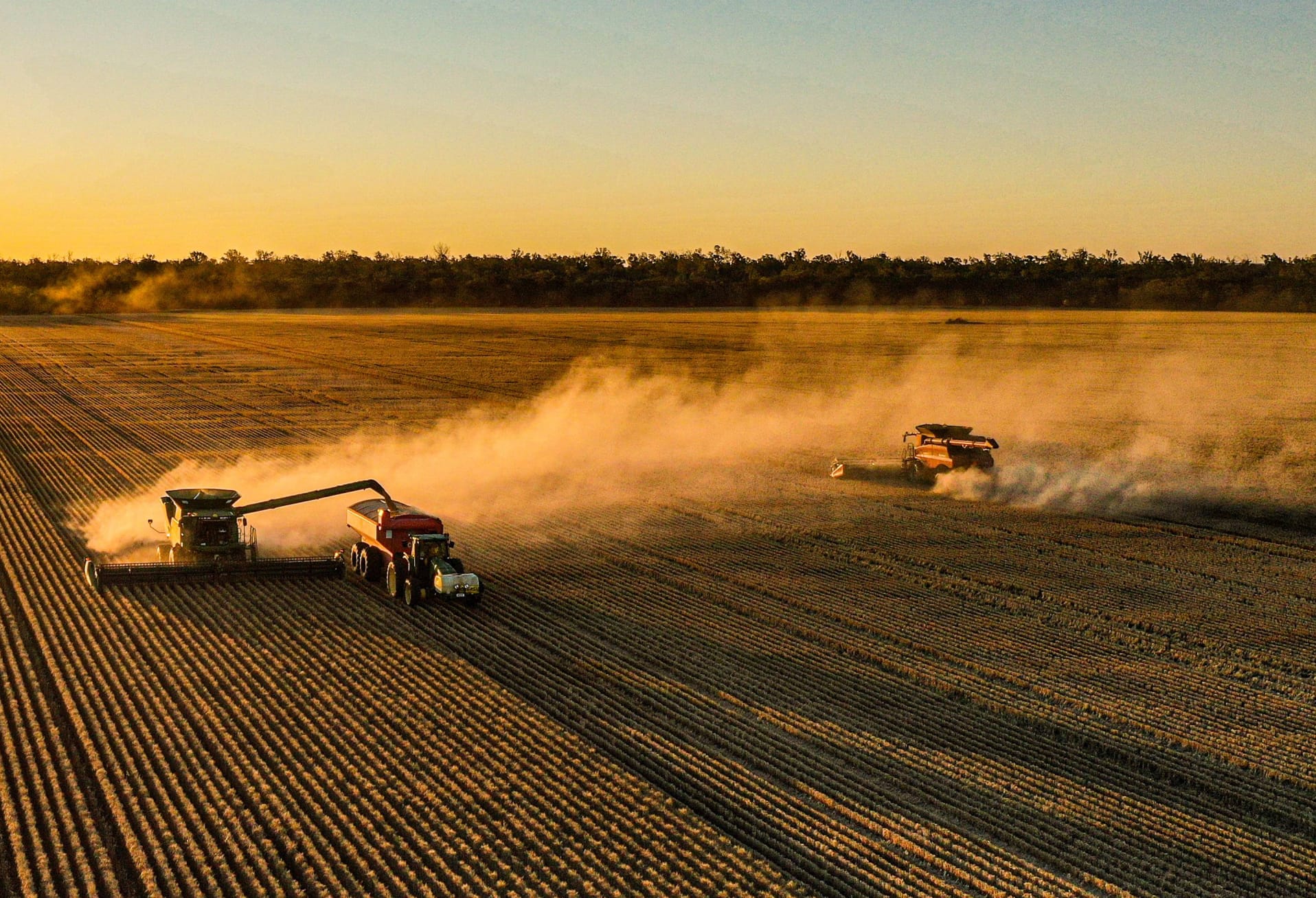
The visit to Wimmera farms was organised by the board of BCG and aimed to visit farmers who are also BCG members. One of the farmer we visited was very competitive and has heavily invested in machinery, equipment and technology. He owns a brand new precision disc seeder, allowing him to direct sow his crop without causing soil disturbance. He uses a controlled traffic system, and has all his machinery set up on a three-meter wheel spacing, including his two headers. This allows him to continuously drive on the same tracks, which reduces soil compaction and disturbance, thus improving water infiltration and soil life.
He also owns a boom spray that is set up to only spray between the crop rows, significantly increasing the herbicide’s efficiency and reducing potential damage to the crop. His other boom is equipped with a green seeker – a sensor that detects the presence of weeds and only sprays where it needs to. It was good to see all this technology in use on a farm, and as we had a look to one of his paddock, the results were amazing – a very clean paddock, very consistent crop, good soil physical and biological quality. It seems that large investments paid off.
In opposition to all that new, flashy and costly machinery, the farmer was building a device on his own made from old steel and a fair bit of welding. That very smartly-designed tool would allow him to pick up hay bales by following the same tracks, without needing to drive across the paddock. It seems that having a successful total controlled traffic system requires both new technology and old fashioned engineering and mechanics. Very surprisingly, the grower told us that he leases 70 per cent of the land he farms (4400 hectares) which is quite uncommon and certainly has an impact on his finances.
The second farm we visited was drastically different – a larger area is cropped, and a big sheep flock is run. The most notable difference was that part of the land is irrigated.
Thanks to irrigation, the farmer was able to run a very profitable lucerne seed enterprise. This family farm also diversified its income by building cabins and renting them to tourists or workers – a very good strategy.
The most interesting fact is that the family farm is coherently managed, with every member having a different role and his own responsibilities. It was good to see a successful business where family relationships are preserved.
The farmers we visited on this day all seemed to be very successful and above average in terms of management, practices and results. I actually think that they belong to the very top 10 per cent of farmers. In addition, the paddocks we visited were one of their best crops too. It was very interesting to see and to talk to them, but I believe it would be even more interesting and educational to visit farmers that perform less well and have more problems.
As an organisation trying to improve the prosperity of farmers, BCG has more to learn from struggling farmers than from already prosperous ones.
The second tour I took part was a supply chain tour trip to Melbourne organised by BCG for farmer’s part of the GAPP (Growth, Adoption, Profit, Production) program.
The Melbourne GAPP trip took place on Thursday 4 and Friday 5 of August and the tour aimed at building growers understanding of what happens post farm gate by providing insights into agricultural supply chains, logistics and R&D.
Over the two days, we visited different actors involved in the agricultural supply chain:
Hay Australia exports 70000t of hay every year, of which 90 per cent is oaten hay. Japan and Korea are the main markets. They recently secured a new market with China and are planning to expand their processing facilities. Because of their very intensive animal production systems and their restricted access to agricultural land, countries like Japan and Korea import a lot of Australian hay. Hay is a good market for Australian growers, as it has many agronomic and economic advantages (weed control, rotation, income diversification, risk reduction). Growers were happy to learn that traceability is very good, with every grower and every paddock having its own identification number.
We then did a tour of the facilities at Latrobe University AgriBio Centre. Farmers were impressed by all the technology that is used in plant breeding and disease research, and are looking forward to see future developments and how these applications will filter down to farm and grain trade level.
The next day, the group headed to the Cargill canola crushing plant where 500t of grains are crushed daily. The group was surprised by the number different steps required to obtain canola oil and by all the quality tests that are done on the grain. Farmers were surprised and keen to discover what happens to their grain and how it is processed.
Located in the Port of Melbourne, Emerald Grain is a just-in-time business, as grain is held on-site for three days maximum before being loaded on ships, as a bulk or in containers. Farmers were amazed by the scale of storage facilities (40000t of grain) and were once again satisfied with talks on quality and traceability at all of the processes. The visit of the Port of Melbourne was a real eye-opener. We learnt that 2.6 million containers are moved yearly. Of these, 70 per cent is imported goods and 30 per cent exported goods, which is mainly agricultural products. This shows that agriculture is primarily important to the Australian economy.
The last visit was held at Barrett Burston Malting Co., a 100-year old malthouse. The company processes batches of 75t of barley and produces malt in a very old-fashioned way compared to modern plants. Even so, Barrett Burston produces just as good malt as the ‘flash’ new processors. Here too, farmers noticed that input quality (barley, water) is very important in the transformation processes.
In general growers who attended the trip really enjoyed it, and gained valuable insight into other parts of the supply chain. Indeed, most farmers do not necessarily know what happens to their grain once it leaves farm gate. I was happy to discover that people involved in transforming and processing agricultural goods actually are aware of the production methods and the farmer’s problems. They all seemed well aware of last years’ droughts and this year’s positive outlook.
Another great opportunity for me was meeting key contacts within the industry and networking with other farmers from different regions sharing ideas and issues encountered on farm.
More of Sebastien’s reports can be found here.