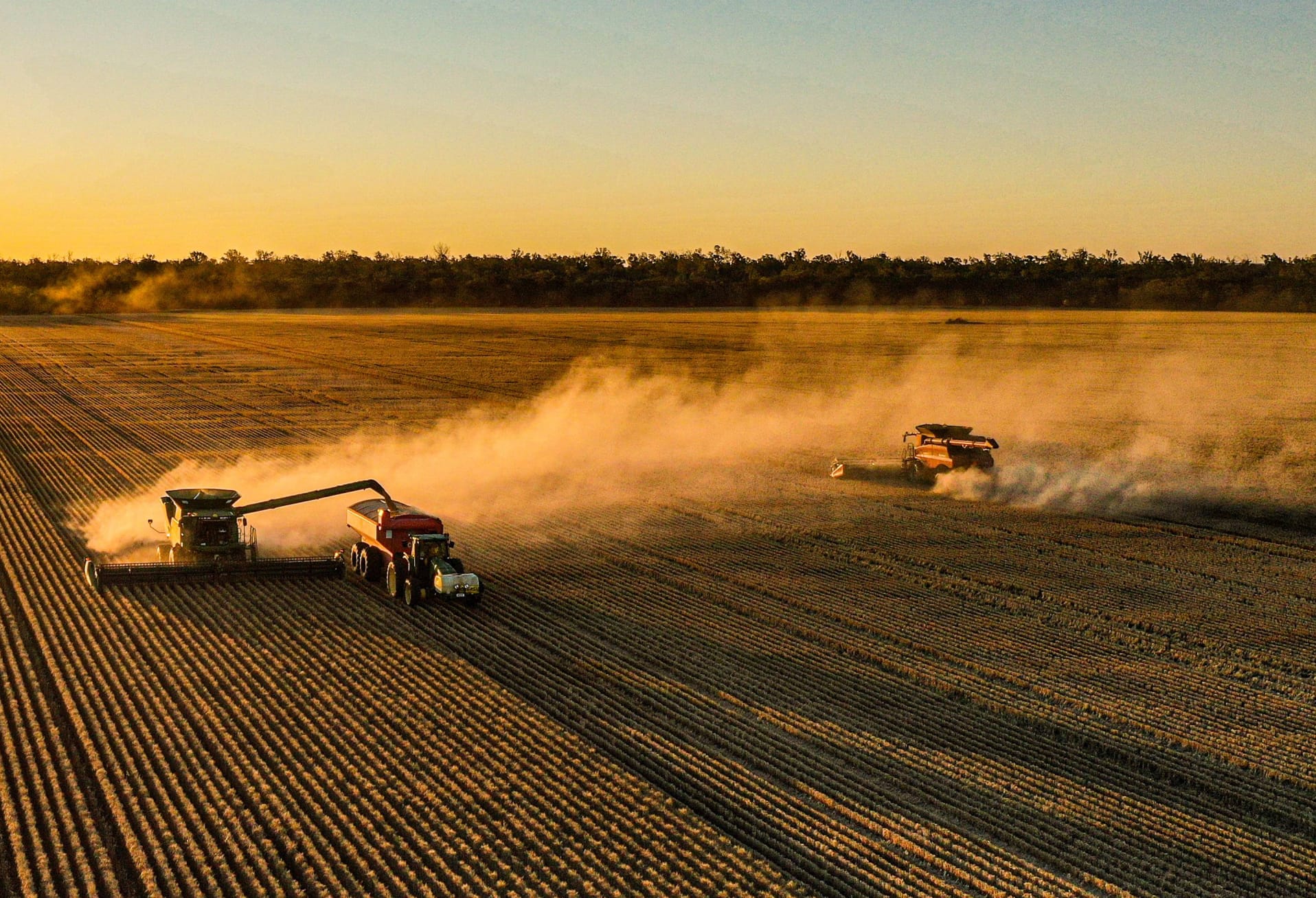


Real-time yield data appearing on the monitor in the harvester cabin offers growers early insights into the efficacy of decisions made throughout the year, or on longer-term rotation decisions over several years. In this particularly water-limited year, where the growing season rainfall in many regions of Western Victoria was Decile 1, questions are coming up: “Did this paddock get the Nov rain last year?”, “Did the fallow in the rotation, two years ago, have an effect on yield this year?”, “Is my decision to switch varieties this growing season paying off?”
Two long term systems projects, established by BCG at locations across Western Victoria, are rigorously testing the effects different rotations have on profitability and sustainability. There are nineteen rotations being tested in total and with several years of data now collected, they are revealing preliminary insights into the effects of crop type and variety selection, nitrogen program, inclusion or exclusion of livestock, weed control and fallow are having on profitability and productivity.
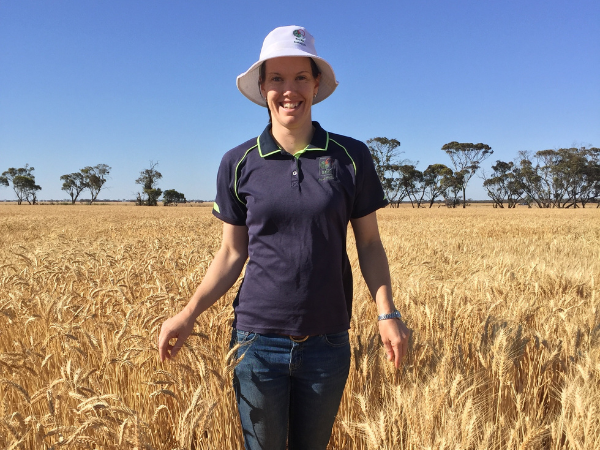
Two of the systems trials at Kinnabulla were highlighted at a BCG Crop Walk held in early October, with differences observed between treatments. Wheat following fallow in the rotation exhibited noticeably better grain fill and more biomass production- a clear sign of how stored soil water earlier in the system continues to influence outcomes in a dry finish.
Both trials will equip farmers with knowledge to better understand the drivers of their profitable and sustainable farming systems, particularly how soil nitrogen and moisture move through the system based on the various rotations. Many of the treatments were designed in consultation with local farmers and advisors, ensuring the work reflects real world decisions in the region.
The Southern Australian Farming Systems project, funded by GRDC, is being led by the University of Adelaide and BCG is delivering three sites across the region at Kinnabulla, Manangatang and Wallup.
Another large-scale farming system trial, Drought resilience mixed cropping systems trial, is delivered by BCG and is distinguished from others by the inclusion of livestock. This project, led out of The University of Melbourne and funded through the Future Drought Fund, focusses on drought resilience for mixed farming systems.
At the Crop Walk, BCG Senior Research Manager, Dr Yolanda Plowman said the Southern Farming Systems trialtrial research was revealing insights into how ‘nitrogen moved through the system’ utilising several measurement strategies including soil testing and biomass assessments.
She also shared a simple grading system that gave treatments a score from A to D, much like the way a paper would be marked at school. Based on pairing soil mineral N with total soil water status of each treatment, the plots were graded accordingly (see Table 1). Growers can apply this harvest to help analyse how individual paddocks have performed this year in terms of resilience, soil water use and grain fill outcomes.
Table 1. Give your paddock a grade
| Grade | Soil N | Water | Take-home | |
| A. High N, High Water | >50 kg N/ha | >90 mm | Big yield potential but high risk of leaching or lodging if unmanaged. | |
| B. High N, Low Water | >50 kg N/ha | <60 mm | Likely fallow or low extraction last year; can defer N top-ups until rain. | |
| C. Low N, High Water | <30 kg N/ha | >90 mm | Most responsive zone to applied N. Where top-ups will pay. | |
| D. Low N, Low Water | <30 kg N/ha | <60 mm | Nutrient and water limited, avoid chasing yield here. |
Why this work matters
As this season shows, decisions made years earlier, such as including a fallow or legume, can significantly influence yield stability and economic performance in a dry finish. These long-term systems trials are generating the evidence base needed to help growers identify the rotations that; build nitrogen efficiently, make best use of stored soil water, enhance resilience in tough seasons and maintain profitability across variable years.
If you would like further trial insights or to learn more about applying the grading system at harvest, please contact BCG or visit bcg.org.au
Systems trials at a glance:
The region
- Location: Kinnabulla, Victoria
- Average annual rainfall: 370 mm
- Average growing season rainfall (Apr. to Nov.): 277 mm
Drought resilience mixed cropping systems trial (2024 to 2027)
- Design: Phase replicated – large farmer sown (disc seeder) plots (37 x 100 m), 3 replicates.
- Rotation (R) treatments
- R1 – Wheat-Barley-Lentil
- R2 – Wheat-Barley-Vetch (grazed)
- R3 – Lentil-Wheat-X (responsive system – not phased)
- Farmer engagement and co-design for regional relevance – favored systems with legumes to build N and reduce reliance on ‘bag’ N particularly after some high yielding wheat crops (e.g. > 3t/ha) in 2023. Lentil is also a high value crop.
Southern Australian Farming Systems trial (2023 to 2026).
- Design: Phase replicated – randomised complete block design with each treatment containing three replicates. Each system contains up to four crop options to represent a specific crop sequence.
| Sequence ID | Phase 1 “Year 1” | Phase 2 “Year 2” | Phase 3
“Year 3” |
Phase 4
“Year 4” |
Nitrogen |
| 1 | Lentil | Wheat | Wheat | Lentil | Standard district practice |
| 2 | Lentil | Canola | Wheat | Wheat | Decile 5 |
| 3 | Vetch (brown manure) | Canola | Wheat | Wheat | Decile 5 |
| 4 | Lentil & Faba bean | Wheat | Wheat | Lentil & faba bean | Decile 5 |
| 5* | Wheat (advisor) | To be decided | Low | ||
| 6* | Wheat (strategic) | To be decided | N Bank |
*Indicates responsive systems
Acknowledgements
Thanks to local farmer Linc Lehmann for hosting both trials and for undertaking the broad-acre operations within the Drought resilience mixed cropping systems trial.
This project was supported by the Australian Government’s Future Drought Fund.
The Southern Australian Farming Systems project is part of a network of nine trials being conducted across South Australia and Victoria as part of the GRDC-University of Adelaide ‘Farming Systems South’ project (‘Enterprise choice and sequence strategies that drive sustainable and profitable southern Australian farming systems’).
The FSS project aims to better understand the drivers of profitability and sustainability in farming systems in the southern region. It also aims to better realise water-limited potential, motivated by the perceived ‘gap’ that remains in profitability and efficiency (e.g. gross margin per mm rainfall) despite good single crop agronomy.