In the lead up to BCG’s Main Field Day, it was clear who should feature as BCG’s next Farmer in Focus.
Life member Trevor “Waffle” Grogan has been part of BCG from the very beginning. He hosted some of BCG’s earliest trials in the 1990s and, more than 30 years later, is hosting the Main Research Site for the fourth time in 2026.
Waffle is incredibly generous with his time, paddocks and support, and no favour ever seems too big or too small.
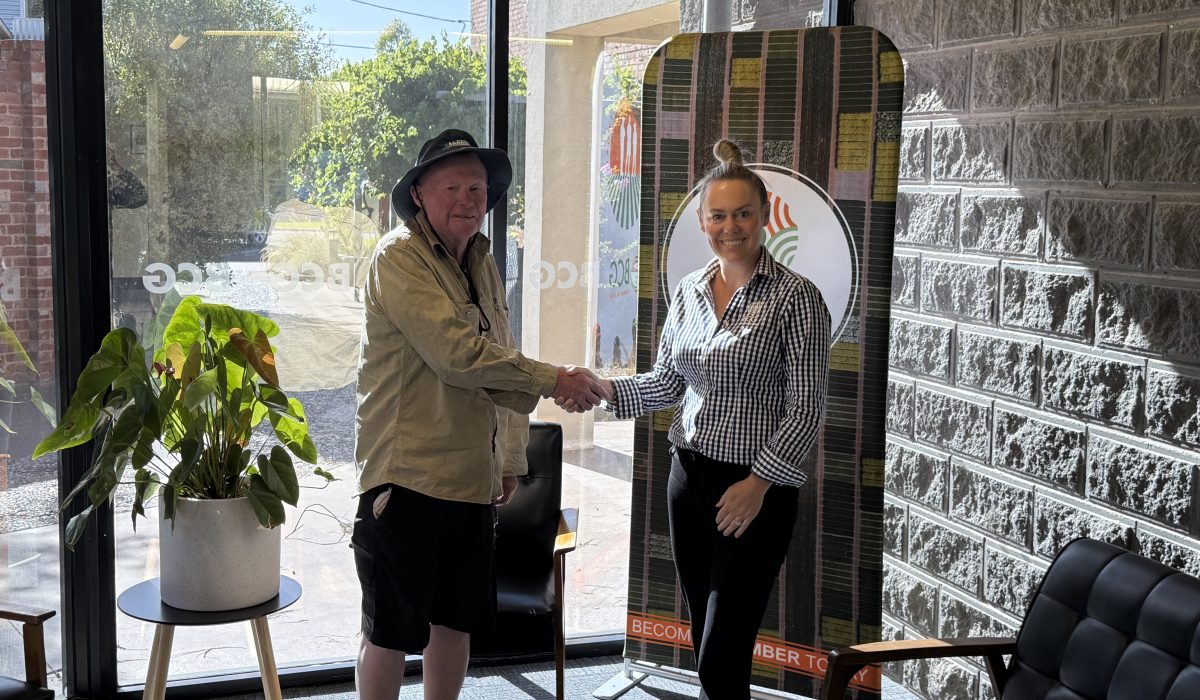
While Waffle hates any personal attention, we caught up with him in the BCG office yesterday to chat about his involvement with BCG, hosting the Main Research Site and why he keeps saying yes.
Tell us about yourself, where you grew up, how you came to the farm, and what your role is today.
Born and bred on the farm, Trevor was driving a tractor from the age of 13 and was completely involved in farm work by 14 or 15. He’s been working on the farm ever since. He runs a broadacre cropping enterprise in Curyo, alongside his two workers, Aidan and Peter.
Why do you keep coming back to BCG’s Main Field Day? What do you enjoy?
Catching up with other growers and talking farming. You’ve got growers coming from different regions, with different soils and different challenges, so it’s always interesting to hear what they’re seeing on their farm.
There’s also a good mix of presenters, from BCG staff to different researchers. It’s great to hear about the work they’re doing locally and beyond.
And, of course, I always look forward to seeing the results. That’s what it’s all about, seeing how things are progressing throughout the season and then getting the compendium at Trials Review Day. It’s exciting to see it all come together.
Which sessions are you going to attend?
I always change my mind, it depends on the day.
For now, looking at the program, I’ll go to herbicide crop safety in pulses, then the soil pit discussion. I’m keen to see what’s going on there and how deep the roots have gone this season. Then I’ll probably head to Integrated Pest Management in the afternoon.
I’m also interested in hearing what Jane Bunn has to say. I’m keen to know what’s going on with this weather!
What is the best part of hosting?
Having the research done on the farm is probably the best part. You can watch it throughout the season and see how different varieties, treatments and ideas perform under the same conditions you’re farming in.
It provides a chance to see things being tested before you might try them yourself, and there’s always something you can take away and think about for your own farming operation.
Every year I have hosted they have been magnificent years, it has always rained! I should probably do it every year.
Are there any practices or pieces of equipment that have made a difference to productivity or cost control on your farm?
We bought a second hand camera sprayer, we only used it twice last year but it was good. Obviously, there is not much need for it this year.
We are pretty general in who we are and what we’ve got. We run the same operation year in and out.
How is disease pressure on your farm?
Not too bad! Right now, we’re doing a second spray for rust on our wheat.
What things are you getting in order as harvest approaches?
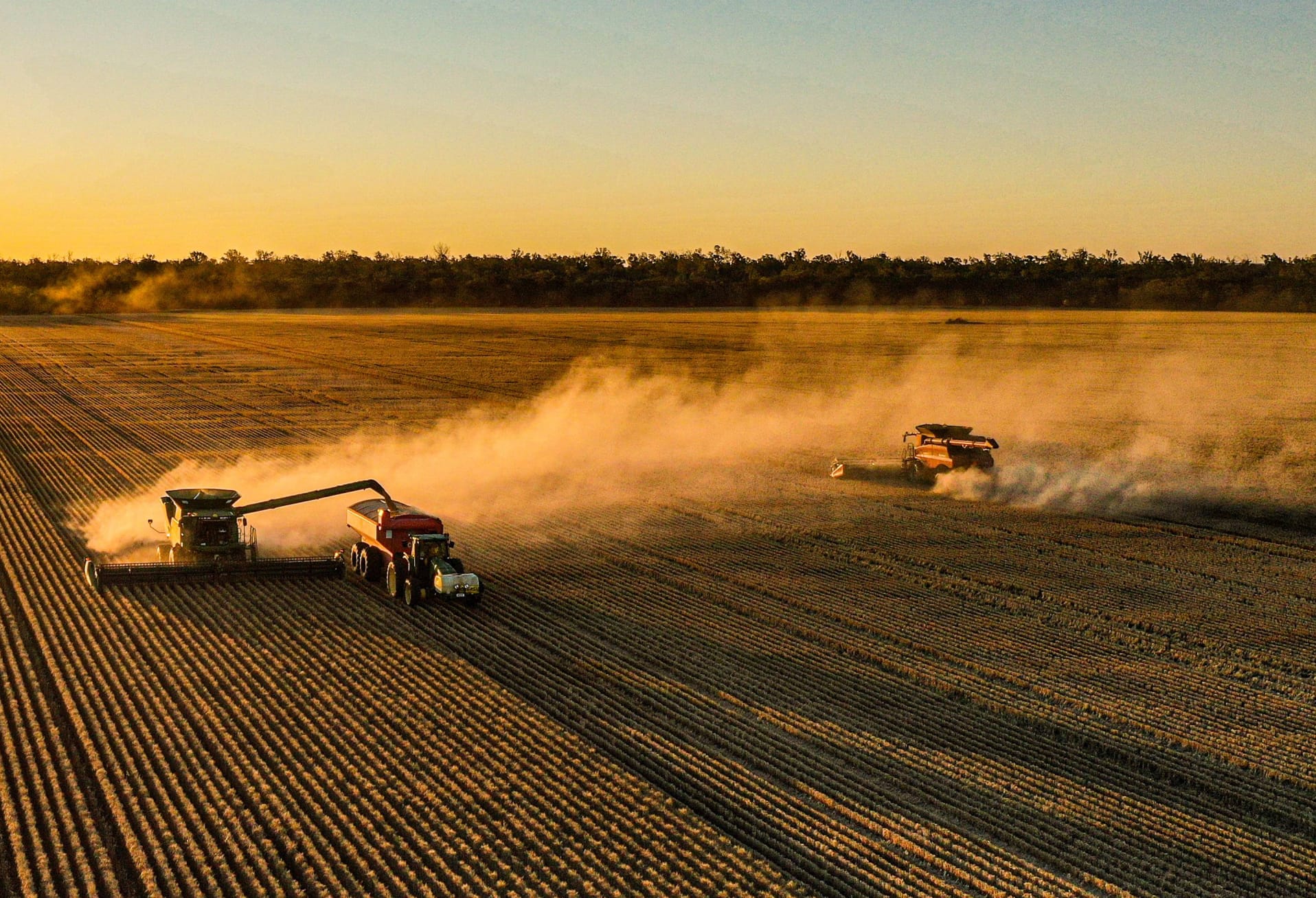
Headers getting serviced as we speak, the trucks have been serviced, so we are starting to get organised.
Drought is an inevitable aspect of the climate we farm in. How is your farm business preparing for future droughts, or potential financial shocks within the business?
I don’t. I don’t like to think negatively or expect drought. I don’t worry about things I don’t have control over.
The El Niño forecast made things interesting this year. I didn’t put out as much urea as I potentially could have without that forecast. But that’s farming, you never really know what is going to happen or how the season will unfold.
The crops are looking fantastic but I don’t want to get too ahead of myself, I still remember the worst frost I have ever seen on the 21st of October quite a few years back, it’s not over yet.
Why do they call you Waffle?
When I was at school, everyone in my class had a nickname. I mean everyone. I was probably eating polly waffles or something, I’m not sure!
This project was supported by the Australian Government’s Future Drought Fund.

The Victoria Drought Resilience Adoption and Innovation Hub is a state-wide collaboration of 10 organisations.
Led by the University of Melbourne and with headquarters at UM’s Dookie Campus, the Vic Hub is a Partnership between five farming organisations (Birchip Cropping Group, Food & Fibre Gippsland, Mallee Regional Innovation Centre, Riverine Plains and Southern Farming Systems), four universities (UM, Deakin, Federation and La Trobe), and the State Government (through Agriculture Victoria).
One of eight hubs established nationally under the Australian Government’s Future Drought Fund (FDF), the Vic Hub works to enhance the drought preparedness and resilience of Victoria’s agricultural industries, the environment and regional communities, encompassing broader agricultural innovation. Engaging with a range of industry and community stakeholders, the Vic Hub links research with community needs for sustainable outcomes.