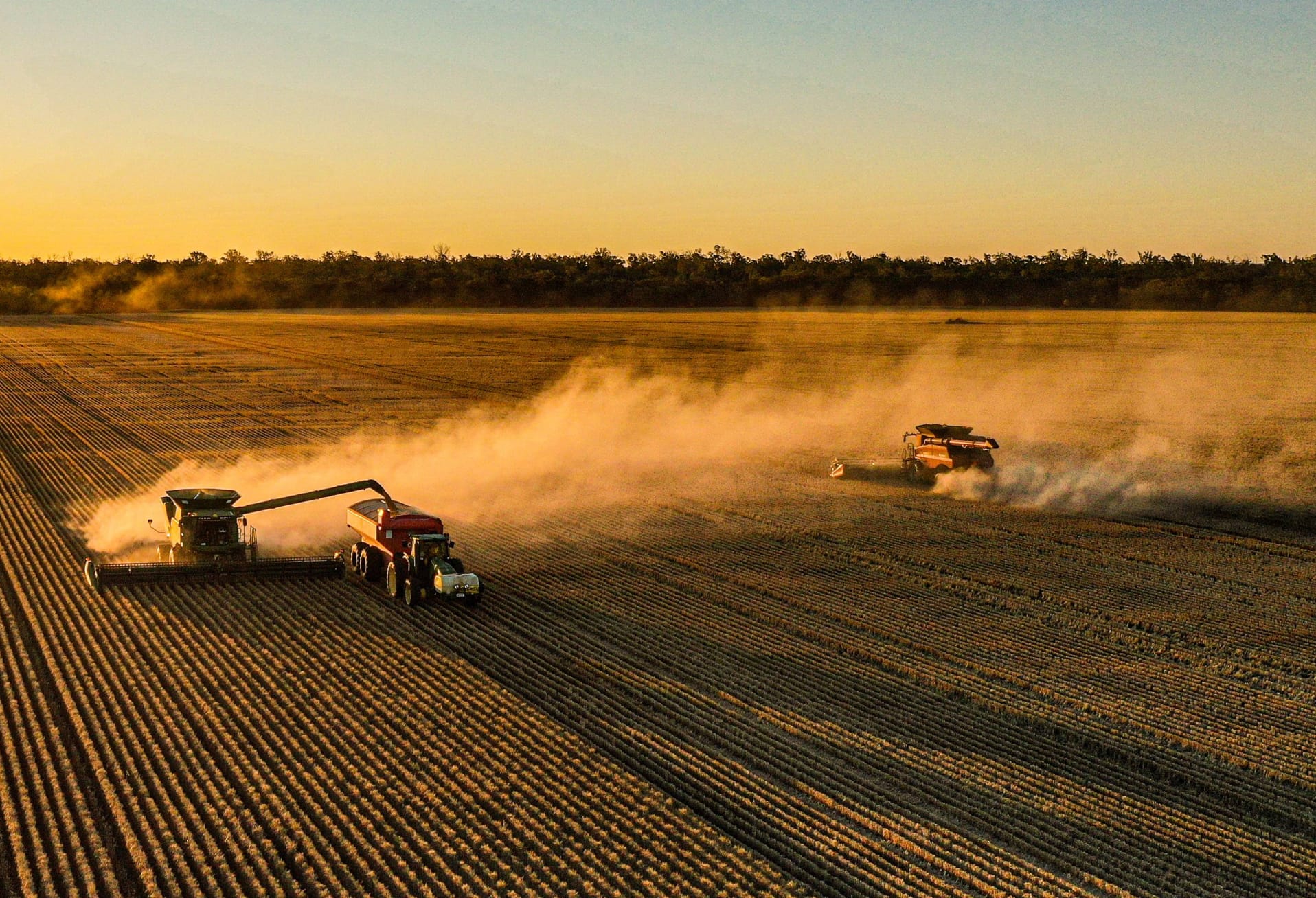
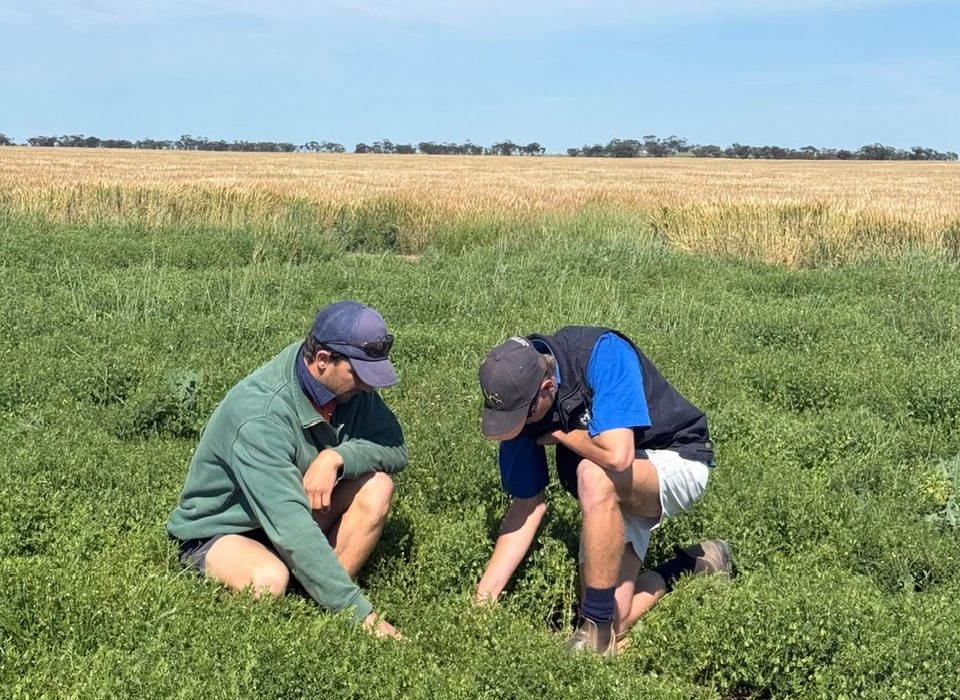
BCG caught up with Curyo farmer Dale Hinkley to see how he is preparing for harvest and how the season has shaped up on his farm.
What is your role on the farm and what does your farm operation look like?
I work alongside my father Ken as an owner/operator. Our farm is approximately 11,000-hectare of continuous broadacre cropping, consisting of wheat, barley, canola, lentils, vetch and oats (hay). At full capacity we have roughly 22,000 tonne on farm storage and run a small sheep program for prime lamb production.
What are you currently doing to prepare for harvest?
With the mild start to spring we have been focusing on getting the hay, silos/sheds all cleaned up and ready.
What are your plans when farm storage is full?
We will begin to move feed grains in the early new year to our long term sheep, cattle and dairy clients when required and as for the rest we will monitor the balance of the grain stored once we get it in the bin.
What infrastructure are you currently implementing on farm and what is involved?
This season we have expanded storage capacity in the yard and the paddock. We have added handful more of the medium upright silos for more segregation as well as a larger grain shed and flat bottom silo for more bulk segs. In the paddock we have additionally added a second mother bin which should help manage the trucking logistics and keep the headers moving. With the increase in storage, we undertook some fumigation training with ProTrain to upskill around safe practice when fumigating. It involved some theory over a few days followed by a practical.
What’s your current grain marketing strategy and how will it change with extra volume?
With extra volume and the softer finish we expect grains to be maybe lower in protein in some cereals depending on soil history therefore we will likely store most of the cereals harvested with some canola and lentils to move into the system off the header.
How is disease pressure on your farm at the moment?
The disease pressure was quite high in wheat earlier than previous wet years like 2022 requiring 4 applications of different fungicides over an 9-12 week period. The timing of when the fungicides were applied seemed to be critical particularly when dealing with rust and powdery mildew on some of the earlier maturing wheat blocks. Other crops weren’t as bad requiring maybe one extra fungicide application of 2-3 passes across most of the barley and lentils planted respectively.
Are there any practices or equipment that have made a difference to productivity or cost control on your farm?
Maybe the addition of the mother bin at harvest time should be a huge help in seasons like this but also may the headers worst enemy in probably more of our average seasons.
What’s been the biggest learning so far in this season?
Probably with the increased in input costs this year made us more cautious with fuel consumption across all machines within the operation. The higher fuel costs coupled with the increased fertiliser has made decision making challenging at times throughout the year.
This Farmer in Focus was supported by the Australian Government’s Future Drought Fund.

The Victoria Drought Resilience Adoption and Innovation Hub is a state-wide collaboration of 10 organisations.
Led by the University of Melbourne and with headquarters at UM’s Dookie Campus, the Vic Hub is a Partnership between five farming organisations (Birchip Cropping Group, Food & Fibre Gippsland, Mallee Regional Innovation Centre, Riverine Plains and Southern Farming Systems), four universities (UM, Deakin, Federation and La Trobe), and the State Government (through Agriculture Victoria).
One of eight hubs established nationally under the Australian Government’s Future Drought Fund (FDF), the Vic Hub works to enhance the drought preparedness and resilience of Victoria’s agricultural industries, the environment and regional communities, encompassing broader agricultural innovation. Engaging with a range of industry and community stakeholders, the Vic Hub links research with community needs for sustainable outcomes.