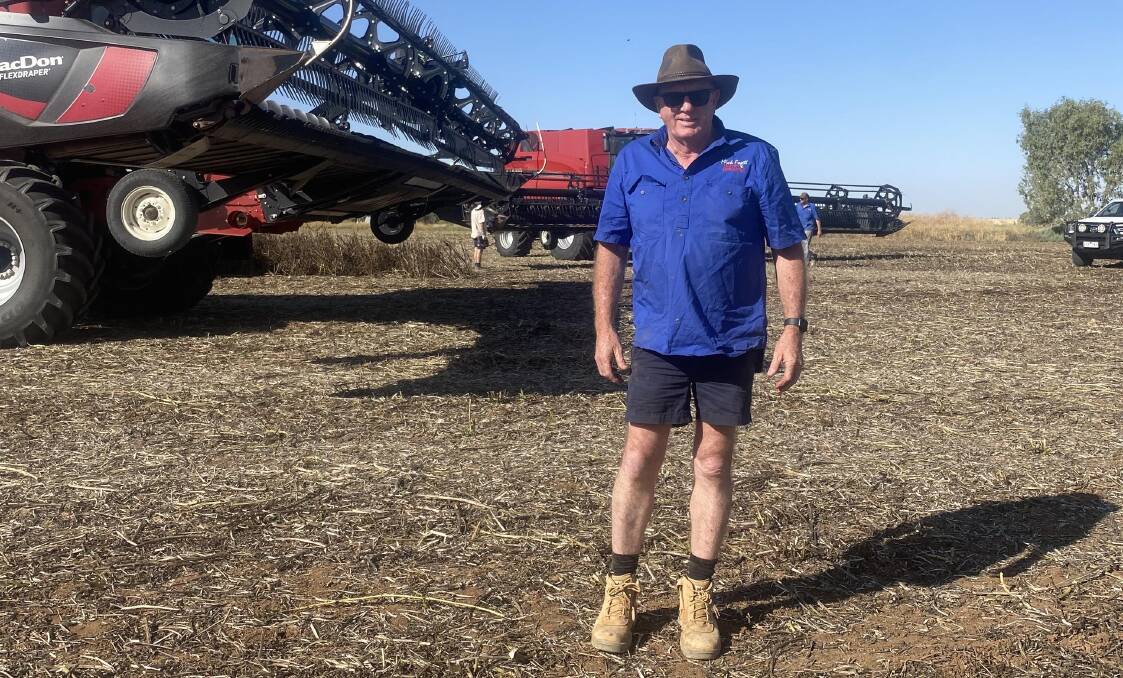

BCG caught up with Birchip farmer Mick Foott to see how the season is shaping up on his farm. It was great to revisit Mick and compare how things have progressed since our last catch up during the BCG Sowing Series. We spoke about streamlining harvest logistics, managing a multi-faceted family business, and navigating the highs and lows of the current season.
What is your role on the farm, and what does your operational footprint look like?
My son Lachy and I run a mixed cropping and livestock enterprise alongside a bulk haulage business. On the cropping side, we grow wheat, barley, canola, and lentils.
Right now, I’m actually moving sheep into the feedlot. With all the recent rain, harvesting has been at a complete standstill, so I’m pivoting to the livestock. We didn’t bring in any lambs this year because the prices just weren’t there.
On the cropping front, we have windrowed canola and just waiting for this rain to clear up. To be completely honest, it’s been heartbreaking recently, over the weekend, 50% of one of our blocks got destroyed by hail. When you’re that close and just want to get the headers into it, it’s incredibly disappointing.
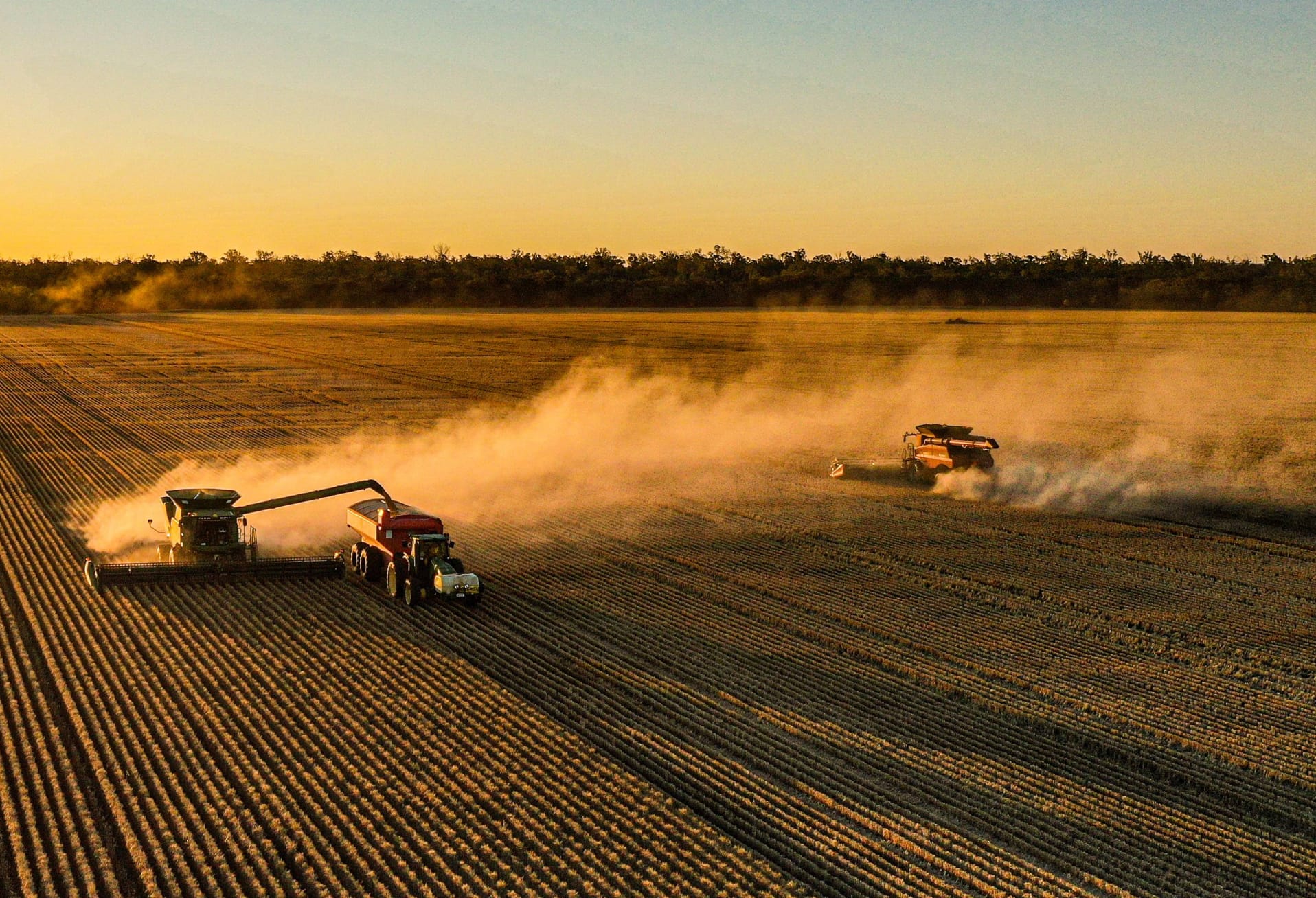
When harvest is actually moving, Lachy spends most of his time on the header, and I’ll be operating the truck. We are lucky to have a brilliant work crew this year, and extremely supportive partners who take care of the cooking and make everything run smoothly while we are harvesting.
How do you balance the cropping, the haulage business, and the livestock operation all at once?
Well, that’s probably why I have no hair left, to be honest!
In reality, it’s a massive team effort. Lachy concentrates heavily on the day-to-day cropping tasks like the spraying and chemical applications, but we are both all over every topic. It isn’t a rigid setup where one person only does one job. We probably talk to each other on the phone about two hundred times a day just to ensure we don’t miss anything. Having the mix of livestock, grain, and transport keeps things interesting though, it definitely changes the day up.
How have you prepared for harvest this year? Are there any specific practices or equipment investments that have made a difference to your productivity or cost control?
Our big focus has been on farm storage and handling efficiency. We have purchased a few flat bottom silos, and we’re putting some bunkers for this harvest. The goal is to store everything on farm.
One piece of gear that has been fantastic for us is a drive over hopper. Because we run the road trains, the drivers can just pull right over it without having to unhook anything. It’s fantastic.
We also integrated our program directly with the weighbridge via Agrichain. It tracks the paddock data, takes a photo of the truck registration on the weighbridge, logs the exact tonnage, and records which specific silo the grain is going into. It makes the logistics for the truck drivers so much easier and completely cuts down on mistakes!
What is your current grain marketing strategy, and how will it change with the extra volume expected this season?
I haven’t contracted anything this year. Our strategy heading into next year is simple: hold onto it in our on-farm storage and wait for the market to move.
What has been your biggest learning or takeaway from this season so far?
This year has proven that old saying true, you’ve just never got it until it’s sitting in the chaser bin.
Between the crop potential, the constant worry about frost, prices going up and now the rain and hail, this has honestly been one of the most stressful years I’ve ever had. We are nearly there, and you just have to hold on.
Having a good team around you makes a big difference. Having the family involved is great, and the backpackers we’ve hired are next level. At the end of the day, you have to stay positive in this job, or you’ll end up going mad.
Photo credit: Stock and Land
This Farmer in Focus was supported by the Australian Government’s Future Drought Fund.

The Victoria Drought Resilience Adoption and Innovation Hub is a state-wide collaboration of 10 organisations.
Led by the University of Melbourne and with headquarters at UM’s Dookie Campus, the Vic Hub is a Partnership between five farming organisations (Birchip Cropping Group, Food & Fibre Gippsland, Mallee Regional Innovation Centre, Riverine Plains and Southern Farming Systems), four universities (UM, Deakin, Federation and La Trobe), and the State Government (through Agriculture Victoria).
One of eight hubs established nationally under the Australian Government’s Future Drought Fund (FDF), the Vic Hub works to enhance the drought preparedness and resilience of Victoria’s agricultural industries, the environment and regional communities, encompassing broader agricultural innovation. Engaging with a range of industry and community stakeholders, the Vic Hub links research with community needs for sustainable outcomes.