
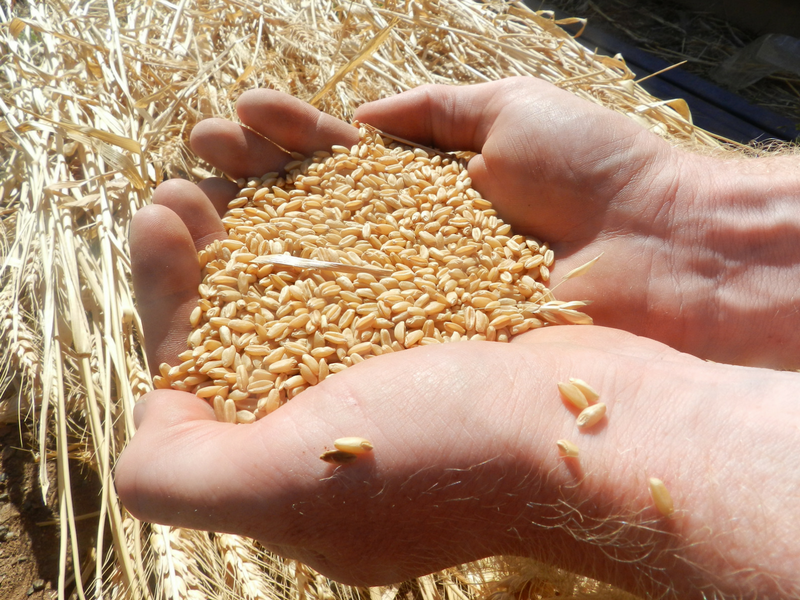

When it comes to maximising profits, timing your grain sale is almost as crucial as the harvest yield itself. Given this year’s promising outlook, storing grain at local harvest facilities is a popular strategy for many growers. BCG encourages growers to have a look at their figures and ensure they are getting the best value.
To compare current pricing of different facilities, view BCG’s price matrix here.
Example scenario:
A grower needs to sell or store 1,000 tonnes of barley this harvest. Is it more profitable to cash in immediately or store the grain and hope for a better price later on?
The following comparison looks at the current barley price against the price needed after 6 months of storage to cover storage costs and match the return from selling immediately.
Assumptions: These examples include 6 months of paid storage, with no free storage allowance. They assume the listed handling fees are additional costs of holding grain and would not be incurred when selling immediately. Actual charges depend on the provider and sale arrangements.
Barley
Current BAR1 barley price, according to The Weekly Times (4 October 2026) is $305 per tonne.
Cash in immediately
Selling immediately means the grower avoids storage costs if the grain is sold within the free storage period (usually six months).
$305 x 1,000 tonnes = $305,000 (sale proceeds)
Grain storage facility – example 1
Assume the grower stores 1,000 tonnes of barley for 6 months and incurs the following costs:
- Receival & Outturn fee: $15 per tonne x 1,000 tonnes = $15,000
- Monthly storage fee: $1 per tonne x 6 months x 1,000 tonnes = $6000
Total storage costs for 6 month period: $ 21,000
To match the $319,000 return from selling immediately, the grower would need to sell their barley for:
($305,000 + $21,000) ÷ 1,000 tonnes = $326 per tonne
The barley price would therefore need to increase from $305 to $326 per tonne, a rise of $21 per tonne to cover storage costs and match the immediate sale return.
Grain storage facility – example 2
Assume the grower stores 1,000 tonnes of barley for 6 months and incurs the following costs after the free storage period:
- Receival fee for Feed Barley: $15.90 ($15.90 x 1000 = $15,900)
- Outturn (rail/road): $7.96 ($7.96 x 1000 = $7,960)
- Monthly storage fee: $2.30 per tonne ($2.30 x 1000 = 2,300 x 6 months = $13,800)
Total storage costs for a 6 month period: $37,660
To match the $305,000 return from selling immediately, the grower would need to sell their barley for:
($305,000 + $37,660) ÷ 1,000 tonnes = ~$343 per tonne
The barley price would therefore need to increase from $305 to $343 per tonne, a rise of $38 per tonne, just to cover storage costs and match the immediate sale return.
Lentils
Current Hallmark lentil price, according to The Weekly Times (29 September 2026): $600 per tonne.
Cash in immediately
$600 x 500 tonnes = $300,000 (sale proceeds)
Grain storage facility – example
Assume the grower stores 500 tonnes of lentils for 6 months and incurs the following costs after the free storage period:
- Receival fee for pulses: $21.74 ($21.74 x 500 = $10,870)
- Outturn fee (rail/road): $7.96 ($7.96 x 500 = $3,865)
- Monthly storage fee: $2.30 ($2.30 x 500 = $1,150 x 6 months = $6,900)
Total storage costs for 6 month period: $21,635
To match the $300,000 return from selling immediately, the grower would need to sell their lentils for:
($300,000 + $21, 635) ÷ 500 tonnes = ~$643 per tonne
The lentil price would therefore need to increase from $600 to $643 per tonne in 12 months, a rise of $643 per tonne, just to cover storage costs and match the immediate sale return.
The key message for growers: a higher sale price does not necessarily mean a better result. The increase must cover the additional costs of holding grain, including the cost of waiting for payment.
What else needs to be considered?
These figures show the price rise required to cover the specified storage and handling charges. They are not a full financial break even calculation. Selling immediately makes funds available to pay expenses, reduce borrowings or earn interest. Holding grain delays that payment, so financing or opportunity costs also need to be considered, alongside any additional insurance, transport, quality losses or other charges.
Growers should check the applicable free storage period, when monthly fees begin, and which handling charges apply under each selling option. Prices should also be compared on the same grade, location and delivery basis. If you would like to compare storage facility prices, click here.
Holding grain may deliver a better result, but only if the eventual price increase covers the additional costs. Knowing that threshold gives growers a clearer target when weighing up whether to sell or store.