

BCG has featured among leading researchers and scientists from across the globe who presented at the 13th International symposium on pre-harvest sprouting in cereals held in Perth on September 19 and 20.
The conference is quite unique. It has been running since 1975 and has been delivered from various locations around the world. This year’s event was the second time the conference has been held in Australia.
During the two-day event grain scientists and industry professionals focused on the effect of pre-harvest sprouting (PHS) and late maturing alpha-amylase (LMA) with presentations on genetics, germplasm, methodology, grain physiology, agronomy and breeding.
Attendee delegates came from a wide range of disciplines including seed dormancy, plant breeding, molecular genetics, biotechnology, agronomy, seed physiology, seed germination quality and malting, baking quality and end-use products.
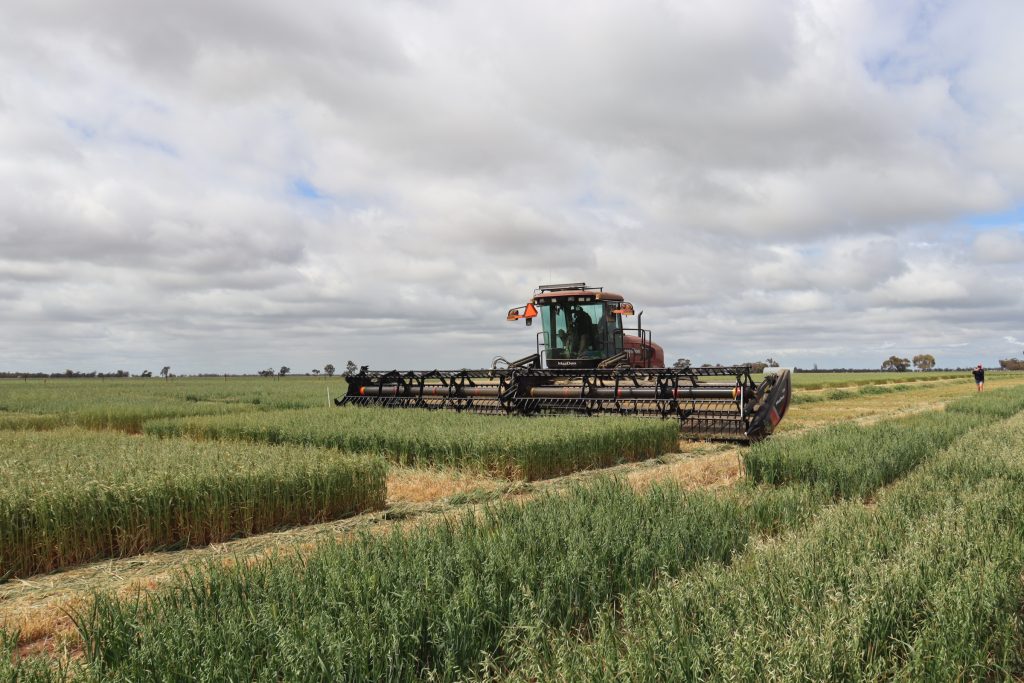
BCG researcher Linda Walters was invited to present on the trials she has managed investigating pre-harvest sprouting tolerance in wheat and barley in the Victorian Mallee. These trials were conducted at Wemen, Victoria in 2014 and 2015 under overhead irrigation sprinklers, which were used to simulate wet weather at harvest. The trials were funded by BCG members and the GRDC through its barley agronomy for the southern region initiative (project no. DAN00173).
Some key messages that came out of the conference relevant to farm gate, were:
- Plant, architecture (ie head length, awn length, glume beak length and proportion of glumes open) can play a small part in making a variety more susceptible to sprouting, however, dormancy of the seed has the greatest influence.
- Seed dormancy is a mechanism to prevent the seed from germinating under unfavourable environmental conditions. It is measured by the germination index which involves collecting heads at physiological maturity and testing the speed at which an individual grain sprouts in a controlled environment (temperature, humidity, water applied). Environmental conditions before flowering can also affect dormancy, not only rainfall at harvest.
- There is a fine line for breeders developing new varieties. In wheat, a key trait is to develop white wheats (grown in Australia) that have a strong dormancy. In barley, malting varieties must germinate rapidly in the malt house, but not be too susceptible in the paddock.
- It is very hard to breed for the high dormancy trait in wheat, as it involves a lot of different genes. Scientists also recognized the need to not concentrate on just one trait when breeding, (such as dormancy), but to keep in mind a varieties whole agronomic package to make it suitable for growers.
Until recently Australian wheat varieties were lacking in PHS tolerance, however Dow Agrosciences have just released two new varieties.
DS Faraday, which is an APH variety, provides excellent protection against PHS for the northern wheat growing region of Australia.
DS Pascal is also another newly released variety with tolerance to PHS and is also suited to higher rainfall zones or irrigation.
A large portion of wheat varieties currently on the market will begin to sprout when subjected to the right environmental conditions.
In terms of barley varieties for growers, Scope CL has been the most tolerant to sprouting in BCG trials, with Spartacus CL, La Trobe, Hindmarsh and Commander incurring lower falling numbers in a favourable year.
There is also new technology coming through in relation to testing falling numbers. Chopin technologies have developed a new falling numbers machine that has added features (no water bath, unbreakable test tube with removable bottom) to ensure greater efficiency. It also has a testogram setting that will record the consistency during 90 seconds of constant shaking and determines if there is sprout damage in the sample.
Perten has also developed a new model that is capable of running the standard falling numbers test and a rapid version. These new developments will help to aid in the time pressures at grain receivable sites.
The conference was the first time that BCG had presented or attended, so it was great to put BCG on the map and be able to bring some informative field based research to delegates from around the world and from many different disciplines.
Did you attend the barley varieties presentation at the 2016 Main Field Day?
If so, what did you learn?
To help to ensure BCG is delivering, and can continue to deliver, relevant barley research in your region please fill out this survey.