

Trials located at the Warmur main site for 2016 are nearing growth stage 30, with some even more advanced. The recent burst of relatively good rain and increasing daylight hours has seen crop growth is ramp up – a far contrast to the beginning of the month when the cold weather slowed crop growth. This was particularly evident at the Agritech Rural/BCG trial site at Kalkee.
The operations team are currently busy top-dressing urea at our various trial sites. As BCG covers a large area of ground in the Wimmera and Mallee, top-dressing rates are adjusted accordance to the soil nitrogen status, soil type and rainfall at the specific trial site.
Yield Prophet is used to determine how much urea is required for top dressing, the aim being to match inputs to yield potential. Rates at our research sites range from 40kg/ha to 70kg/ha (with initial urea application rates ranging from 80kg/ha to 150kg/ha), aiming to achieve a 3.5-5.3 tonne crop at harvest in the Mallee and Wimmera respectively.
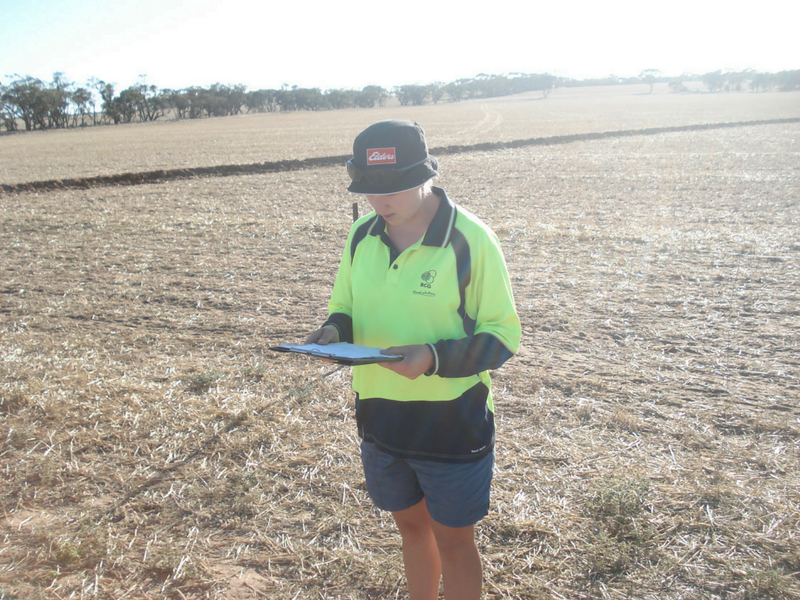
The main assessments being undertaken at the moment include NDVI (Normalized Difference Vegetation Index) measurements which determine crop “greenness”. A handheld GreenSeeker is used to measure NDVI on all plots. This data will reveal any varietal differences, treatment differences and time of sowing differences, to name a few.
A canola phenology trial at Longerenong, which BCG is conducting on behalf of NSW DPI, has begun to flower. Early maturing varieties such as Diamond, ATR Stingray and Hyola 575CL, IH30 RR and 44T89 CL that were sown early (April 1), are already at 50 per cent flowering.
One of the questions that this trial is seeking to answer is whether there could be opportunities for early sown canola if there is adequate rain before the traditional sowing break. To answer this, BCG is collecting flowering biomass. These samples, along with biomass samples collected when the crop is mature, will help to determine the amount of biomass produced over the life of a canola plant.
With crops advancing more now in combination with a moist canopy and more rainfall predicted disease will become more apparent. BCG is spraying pre-cautionary fungicides. With the wetter than average forecast, fungicides application should be in occurring now, or at the very least, plans should be in place for application before disease has a chance to have a negative influence on growth and potential yield.
Compared to this time last year our trial sites are healthier due to the additional rain, but so are the weeds. The main weeds which we are chasing this year are dead nettle, marshmallow, fumitory, milk thistle, volunteers, rye grass and brome grass to name a few.