

By Madelyne McGrath, La Trobe University Agricultural Sciences student on industry placement at BCG.
Controlling emerging weeds after a rainfall event in the Wimmera and Mallee region has exponential benefits to the grower.
After the first significant rain event for 2015 occurring over the weekend, Wimmera and Mallee grain growers should be looking to take early action against emerging of weeds.
BCG research, conducted over a five year period by research manager Claire Browne concluded that conserving summer fallow moisture can increase the yield and profit margin of a crop by $155/ha with appropriate weed control (BCG 2012 Season Research Results). This information is substantiated by the 48kg/ha increase in mineral nitrogen stored in the soil of standing stubble with appropriate weed control.
“Standing stubble with controlled weeds had a gross margin of $259/ha in comparison with standing stubble and summer weeds which produced a gross margin of just $104/ha,” she said.
“Mineral nitrogen in March 2012 in standing stubble reached 145kg/ha in contrast with standing stubble and summer weeds which had a mineral nitrogen content of just 97kg/ha.”
The above figures clearly show the benefits of reducing weed burden during the summer fallow period as it decreases the amount of nitrogen and stored water wasted on weed establishment.
Capturing, storing and making use of summer rainfall events considerably increases crop yield.
According to Dr James Hunt (CSIRO), with the early control of weeds there is a direct link to crop water use efficiency (WUE).
“Controlling summer weeds results in an average 60 per cent increase in seasonal WUE (harvest-to-harvest rain) and an average of $5.57 return on investment for every dollar invested in weed control,” he said.
Summer weeds have the potential to draw stored summer rainfall and nitrogen out of the soil if they are not controlled in the early stages of emergence. When early action is taken to eradicate weeds it decreases the amount of herbicide needed to appropriately control the pest plant as well as increasing the efficacy (kill rate) of the herbicide.
Common weeds within the Wimmera and Mallee to look out for after considerable rain events include: melons, bindii, marshmallow, summer grasses and volunteer crops.
Taking into consideration the amount of summer rain received in some regions, another way to control weed numbers could be to sow a crop of sorghum or millet for livestock grazing. Another option could be to graze the weed population, depending on the species, to make use of the weeds which are depleting nitrogen and water stores within the soil before spraying.
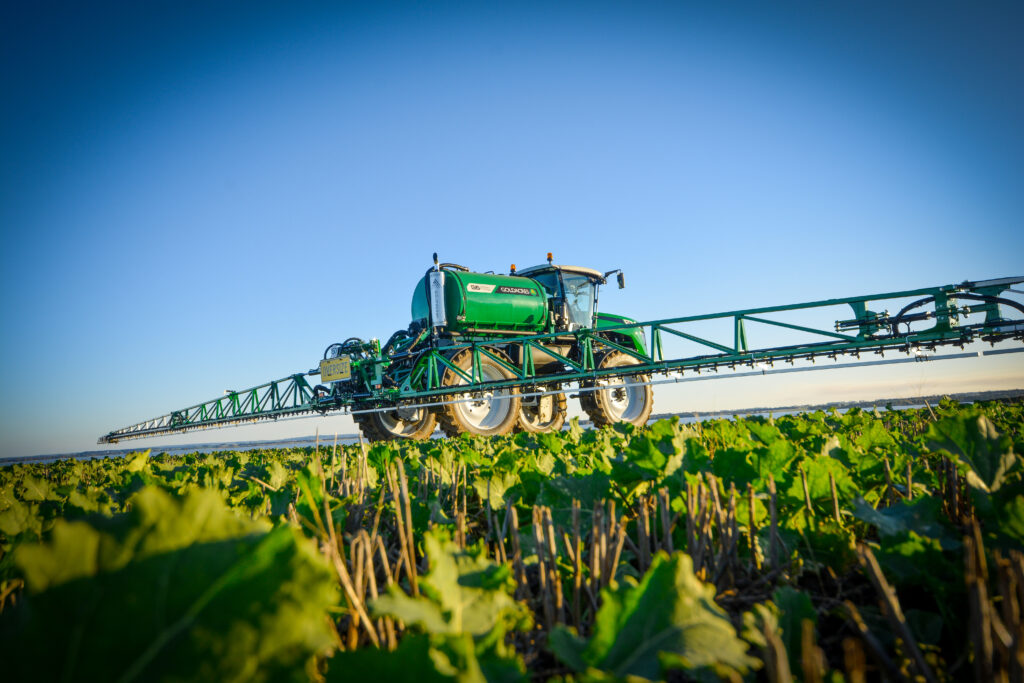
Given that summer rain has already fallen it would be of advantage to the grower to have all spraying machinery serviced, calibrated and ready for action. This includes choosing the correct herbicide and main constituent ensuring a good rotation of chemical groups to avoid resistance. Choose the appropriate application rate and the coarsest spray quality to increase the efficacy of the herbicide.
For more information on the economic and agronomic benefits of controlling summer weeds visit the BCG website and view the BCG Season Research Results handbook from 2009-2012.