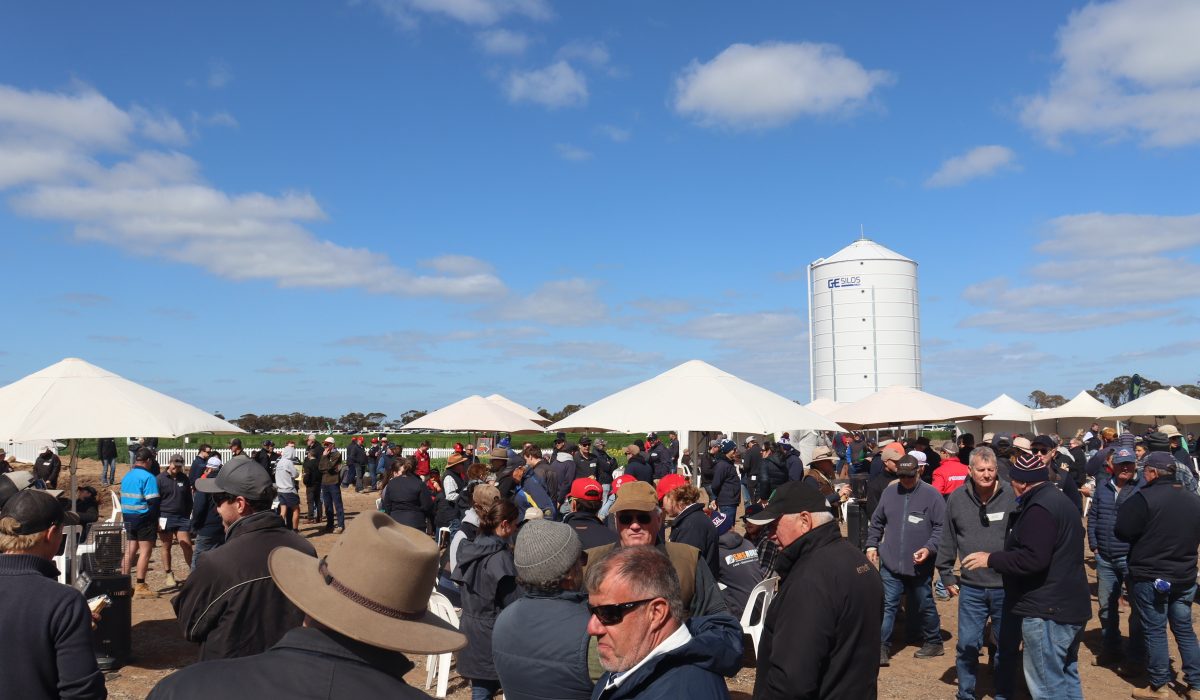

More than 500 farmers attended BCG’s Main Field Day at Curyo on September 9, where an unusually wet season provided a valuable opportunity to consider how cropping decisions hold up when conditions change.
With soil profiles full and crops carrying strong yield potential, much of the discussion centred on making the most of this season. But the questions extended well beyond harvest: which varieties and sowing strategies offer flexibility, how can growers use available moisture efficiently, and what can a good year teach them about preparing for a dry one?
Meteorologist Jane Bunn opened the day by unpacking the weather and climate patterns shaping 2026. She explored the gap between forecasts and what growers had experienced in their paddocks, then looked ahead to the risks that could still affect the season’s finish, including frost, heat and a possible turn to drier conditions.
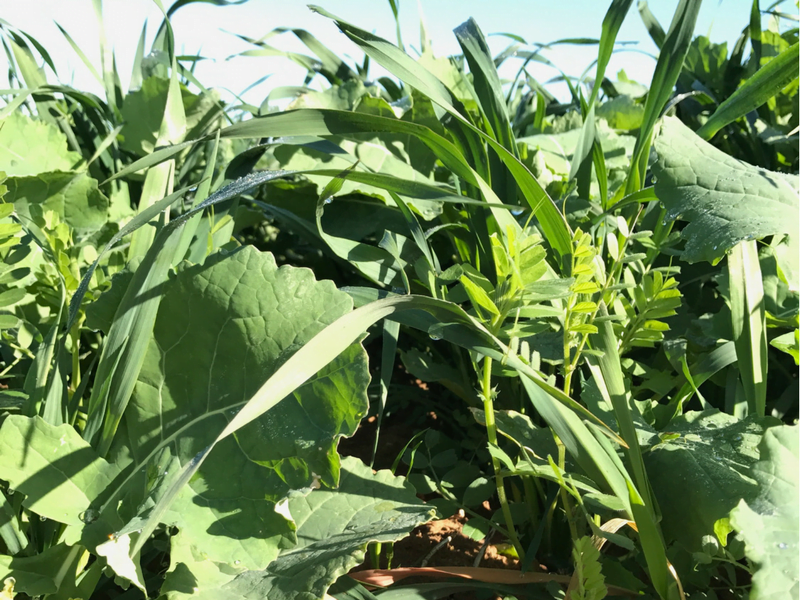
Those themes carried into the paddock. Across 28 trials, growers and researchers examined crop varieties, soils, nutrition, weed control, yield potential and farming systems. Soil pit sessions gave attendees a closer look at the soil profile beneath this year’s crops and prompted discussion about the role of soil resources in managing seasonal variability.
Cereal sessions explored how variety choice and sowing time influence flowering. Crops that flower too early can face greater frost risk, while those that flower too late may encounter heat and moisture stress. Understanding that balance helps growers make decisions before they know whether a season will be wet, dry or somewhere in between.
“The main research site looked spectacular,” BCG CEO Fiona Best said. “With some variety trials up to our hips in height, reflecting significant yield potential, the mood was one of optimism which added to the great discussion throughout the day.”
Ms Best said the strong season gave growers a chance to examine both opportunity and risk.
“A year like this shows what our farming systems can achieve when moisture is available. It also gives us a chance to ask what we can learn from the trials now that will help growers make sound decisions when rainfall is less reliable,” she said.
The annual field day brought farmers, researchers and industry together to compare local research with experience from their own paddocks. That exchange is central to drought preparedness: building knowledge and options before difficult seasonal decisions have to be made.
BCG’s Main Field Day was funded through the Victoria Drought Resilience Adoption and Innovation Hub, supported by the Australian Government’s Future Drought Fund. The event helped bring locally relevant research to growers and strengthen the connections that support farming communities through changing seasons.