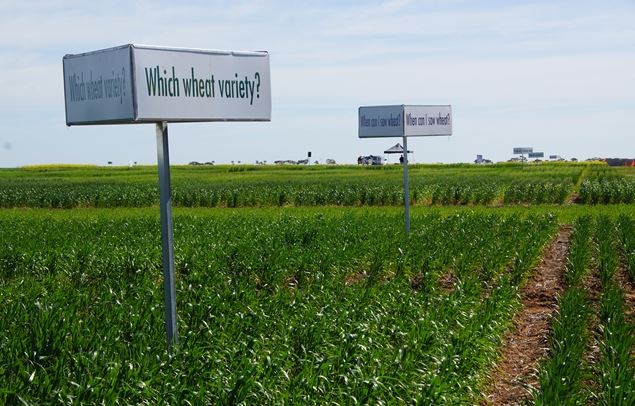


An early sown Wedgetail wheat crop at Normanville has recovered well after five weeks of grazing by sheep.
Attempting to increase on-farm water use efficiency by making better use of late summer rainfall, Normanville farmer’s Geoff and Brownyn planted the long-season winter wheat crop after 55mm of rain fell on March 2.
A 10.5ha area, which had just undergone two years of grass control (canola 2012, chickpeas 2013) was selected for the Wedgetail crop. It was subsequently sown on March 9 on 20cm (8 inch) row spacing and established at 54 plants/m2.
On May 8, a mob of 154 pregnant and lambing ewes were let in to graze the crop. At the time most plants had achieved 15-24 tillers, which is typical of Wedgetail.
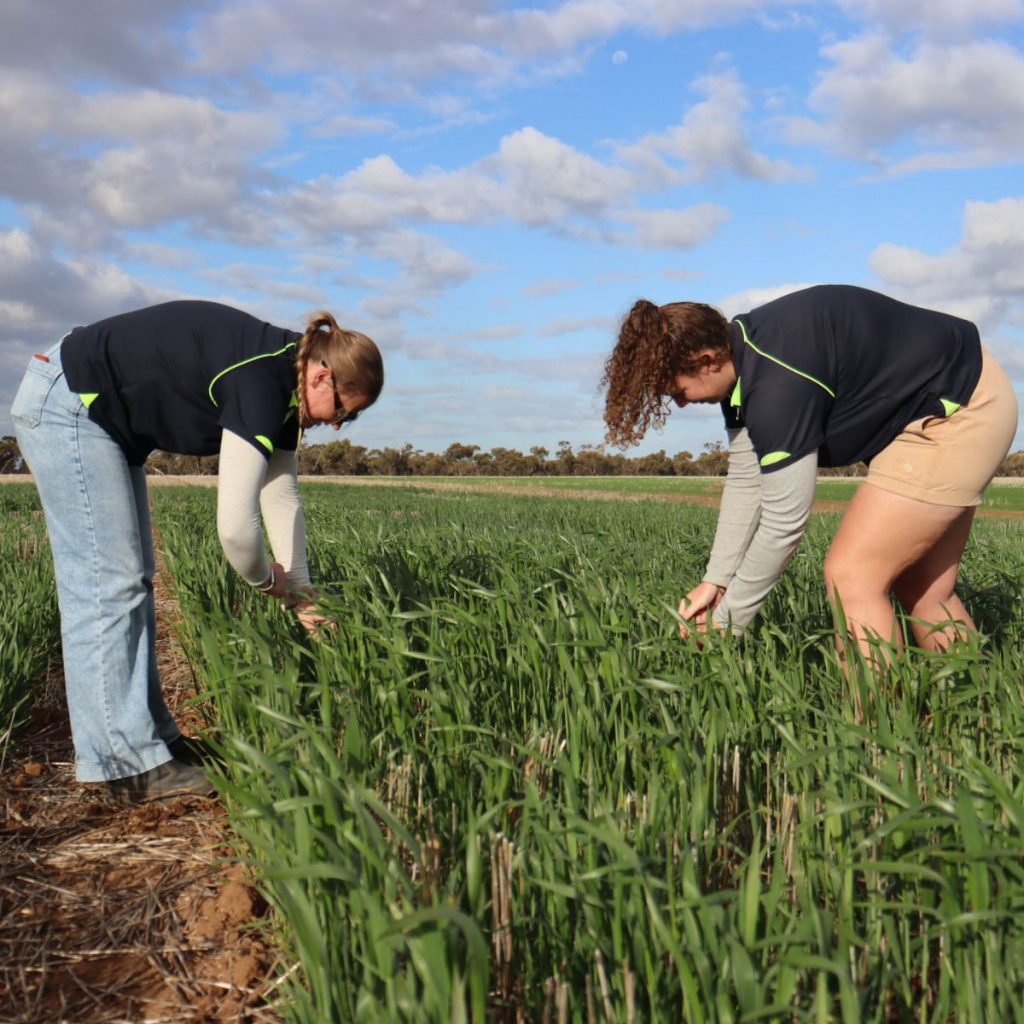
As part of the Grain & Graze project, monitoring commenced at this time with several exclusion cages erected to protect some crop from grazing.
The feed value was also measured and revealed that the crop offered adequate nutrient levels for the sheep class: 1.6t of dry matter per hectare (DM/ha); crude protein – 17%; neutral detergent fibre (NDF) – 40.4%; and metabolic energy (ME) – 11.9 MJ/kg DM.
The sheep happily grazed the crop for 35 days (990 DSE grazing days), and were removed on June 12. There was still approximately one to two weeks of grazing left on the paddock but the warmer weather had pushed the Wedgetail through its growth stages sooner than expected, and plants were reaching GS31. This is when the stem elongates and the developing head moves up the stem, and can potentially be eaten off.
During the grazing period the crop became nitrogen depleted and plant growth appeared to slow down, with some yellowing of older leaves. As soon as the sheep were removed, 40kg of nitrogen (as UAN) was applied.
The ungrazed Wedgetail is now at early booting, but there is the odd head out. By comparison, the grazed wheat is at about flag leaf-two or three (GS32). Given the recent frosts, this delayed maturity may end up being beneficial for such an early sown crop.
Grain & Graze monitoring will continue, particularly looking to measure the impact grazing has on the crop’s biomass production at flowering and its grain yield and quality.
The effects the time of grazing (plant maturity) and the extent of grazing (how much dry matter is removed) has on feed value, crop recovery and final crop performance is also being investigated through a replicated research trial at BCG’s Quambatook research site. The results of this trial will be published in BCG’s 2014 Season Research Results compendium.