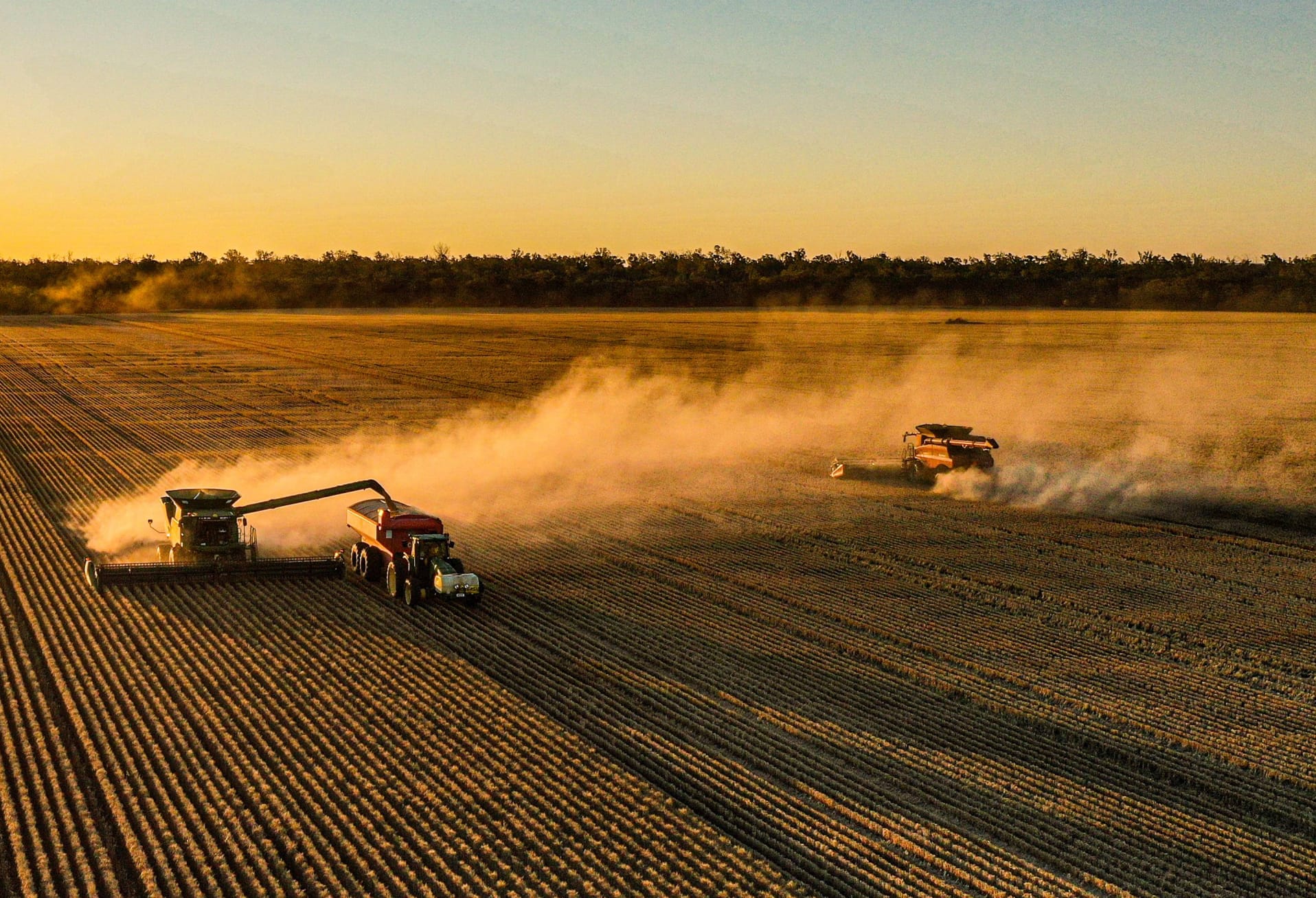
The BCG Farming Systems trial at Jil Jil is the longest running of its kind in Australia. It was established in 1999 to compare the profitability and sustainability of four farming systems common to the southern Mallee:
• Fuel Burner: mainly cereals; regular use of tilled fallow commenced prior to harvest; low intensity livestock, mainly for prime lambs; full disturbance tillage at sowing.
• Hungry Sheep: intensive cropping (mainly cereals) and intensive grazing; winter lambing, with stocking rate decided in May and feeding to fill the feed gap; sheep grazing over summer to take advantage of stubbles and control weeds; early sown cereal/pasture forage for feed; generally full disturbance tillage at sowing.
• No-Till: minimum soil disturbance seeding, with knife points and press wheels on 30.5cm spacing; no livestock; initial high-use break crops; now many cereals and some chemical fallow (commenced in late winter).
• Reduced-Till: flexible approach; can be tillage/full disturbance sowing but has mainly used chemical weed control and same seeding system as no-till; mix of cereals, canola and lower value break crops and in earlier years some livestock over summer.
A system’s success and longevity is reliant not only on profitability; it is also imperative that it be sustainable. Over the life of the trial, the sustainability of each system has been evaluated by assessing a range of indicators including soil chemical, biological and disease analyses. These assessments were conducted at the beginning of the trial in 2000, repeated in 2005 and again repeated in 2012. At the time of the 2005 assessment, minimal differences between the four systems were measured. The limited difference between systems could most probably be attributed to the well below average rainfall received between 2000 and 2005. Soil microbes, weeds and soil-borne diseases, like any organism or crop, flourish under moist conditions. The poor growing conditions for these organisms are likely to have prevented their establishment or build-up in any one system.
In the period between 2005 and 2012, rainfall was substantially higher. This gave these organisms a chance to express themselves, providing an opportunity to truly compare the systems for their long-term sustainability.
Aim
To assess the Farming Systems trial for changes in the soil properties/health that may have occurred between each of the four systems since 2000.
Take Home Messages
• The farming systems trial has expressed some significant differences in soil health between each of the systems from 2000 to 2012. If these are not managed in the long-term, the sustainability of the affected systems may be reduced.
• The Fuel Burner system had significantly lower organic carbon in the soil compared with the other farming systems, reflective of the regular cultivation.
Method
When the trial was established, it consisted of 32 plots, 1 to 1.4 hectares in size, with each of the systems replicated five times. An additional 12 ‘Standard’ (control) plots were included in the plot design to determine whether there were any spatial variation in yield across the site. The standard plots have a set rotation of fallow, wheat, field peas, canola, with each phase of the rotation represented each year and plots replicated three times.
Soil samples (0-10cm) were collected from between the crop rows prior to sowing in 2012 and sent away for analysis. This method was consistent with sampling procedure conducted in 2000 and 2005.
The soil indicators used for comparison are:
Soil nutrition
• Organic carbon
• Phosphorus (Colwell)
• Nitrogen
Soil microbial activity
• organisms which transfer nutrients into plant available form
– Nitrate oxidising bacteria1
– Ammonia oxidising bacteria2
– Phosphorus solubilising bacteria3
• organisms that decompose crop residues
– Cellulolytic bacteria4
– Cellulolytic fungi5
• organisms which add nutrients to the soil
– Free living or non-symbiotic nitrogen fixing bacteria6
Soil diseases (Predicta B)
• Cereal Cyst Nematode (CCN) (Heterodera avenae)
• Take-all (Gaeumannomyces gramininis)
• Root Lesion Nematode (Pratylenchus) (Pratylenchus neglectus, teres and thornei)
• Rhizoctonia (Rhizoctonia solani)
• Crown Rot (Fusarium)
Results and interpretation
At the time of the 2005 assessment there were no significant differences between the four systems in their long-term sustainability indicators. With only very small non-significant differences between systems at the 2005 assessment it may be assumed that any significant differences in the 2012 assessment have occurred between 2005 and 2012 i.e. all systems were starting from the same base.
It should be noted that the sampling for soil health has consistently been conducted prior to sowing for each of the 2000, 2005 and 2012 assessments. The author recognises that this does not allow for fluctuations within season to be understood and may favour one or more of the systems in that they may have better soil health than the other systems at that time of the year. The cost associated with conducting this analysis is very high and prohibits this level of assessment.
Soil nutrition sustainability
Of the soil nutrition soil health indicators, the organic carbon percentage (OC%) yielded the only significant result. The Fuel Burner system had significantly lower OC% than the Hungry Sheep, No-Till and Reduced-Till systems. This is not surprising, given the regular use of cultivation, which speeds up the breakdown of the organic material. Though the Hungry Sheep and Reduced-Till systems still utilize some targeted cultivation, it appears that these levels are sufficiently infrequent to allow a build-up of organic carbon. The OC% analysis conducted in 2005 expressed a very small difference between systems (Figure 1). It is also apparent that the increased rainfall over the 2005 to 2012 period allowed the Hungry Sheep, No-Till and Reduced-Till systems to build up OC%, where the regular cultivation has meant that the Fuel Burner systems has maintained, rather than increased it.

It is evident that the different systems have produced some significant results in soil microbial activity (Table 2). While the CV values in Table 2 are very high, it should be noted that when conducting soil analyses, it is normal for the CV percentages to be higher than would normally be acceptable for other types of analyses. This is particularly relevant when the analysis involves the assessment of thousands or millions of organisms in one gram of soil. Very small changes in the dilutions used in the lab analysis can have significant effects on the resulting number of organisms measured.
The Hungry Sheep system has a significantly lower number of phosphorus solubilising bacteria (PSB) than the other three systems. The role of these bacteria in the soil is to solubilise bound phosphorus in the soil to plant-available forms (i.e. to convert phosphorus in the soil in an unavailable form to a plant available form). This result is somewhat consistent with the results in Table 1. While not significant, the Hungry Sheep system had smaller amounts of phosphorous in the soil than the other systems. The major difference between the Hungry Sheep system and the other systems is the intensity of grazing. It is evident that there is an interaction between grazing and the survival and reproduction of PSB. The Hungry Sheep system may remove more P from the soil than the other systems, particularly as the pastures in the Hungry Sheep system have not been sown with P fertiliser.
Primefacts 921 (NSW DPI, June 2009) states that “increase in soil P status and P cycling depends on the amount of P being added to the soil … and its ability to promote pasture growth. It is the production of more pasture that most effectively increases the size of the organic P pool. This in turn raises the level of soil micro-organisms and hence the level of P in the plant-available inorganic P pool.” The grazing utilised in the Hungry Sheep system as part of this trial is very intensive and the pastures are very much depleted by the end of the season. It appears as if the heavy grazing is preventing the pasture production from increasing the size of the organic P pool and hindering the development of the PSB. This is supported by the fact that the No-Till system and the standard plots, with no grazing, have the highest and second highest number of PSB in the soil respectively. Assuming the systems produce the same amount of grain, it is apparent that farming systems which utilise heavy grazing will need to apply more P fertiliser than other non-livestock systems in order to maintain P fertility in the soil.
The results in Table 2 show that Standard and Reduced-Till systems had a significantly higher number of cellulolytic fungi (CF) than the Hungry Sheep system. The role of CF in soils is to decompose cellulose in crop residues. Again it appears as if the heavy grazing in the Hungry Sheep system is having an effect on the number of CF in the soil. One hypothesis is that the livestock remove a large portion of the stubble in those plots, potentially preventing the CF from having an opportunity to consume the material. It is apparent that the Reduced Till and Standard plots, which have little or no grazing plus some stubble incorporation, may allow the CF to have greater access to the stubble material and enhance their survival in the soil.
Expressed in the results is a significantly higher number of free living or non-symbiotic nitrogen fixing bacteria (N-fixing bacteria) in the Reduced-Till system compared with the remaining systems (Table 2). In addition, the Hungry Sheep and Standard systems have a significantly higher number of N-fixing bacteria than the No-Till system. The role of the N-fixing bacteria is to fix atmospheric nitrogen without the need for symbiotic plants such as legumes. The reasons for these results are unclear. However, the lowest number of N fixing bacteria in the No-Till system is consistent with the lowest nitrogen levels (not significant) recorded in the soil nutrition results shown in Table 1.
It could be argued that the low N values may be the result of the rotational stage of that system or the size of the crop harvested from that system relative to other systems. The rotational effect is somewhat mitigated by replicating each system five times: with each plot representing a different phase of the rotation, averaging each system allows for a fair comparison.

In reference to the size of the crop in the previous year, the No-Till system was not the most productive cereal producer in 2011. This being the case, that argument is also somewhat undermined. While the reason for the difference is unclear to the author, there is a characteristic of the No-Till system that is not conducive to the survival and reproduction of N-fixing bacteria. This may have the effect of reducing N mineralisation throughout the year. While it is likely that N fixing bacteria contribute only a small percentage of N, proponents of this system may need to put more N into the soil through other means such as fertiliser or the inclusion of more leguminous crops in the rotation.
Only one soil disease health indicator yielded a significant difference between the systems. The No-Till system had a significantly higher amount of crown rot DNA in the soil compared with the other systems (Table 3). This system had an average risk level of medium compared with the other systems, which were all classified low risk for crown rot. The stubble retention employed in the No-Till system enables the fungus to survive. Other systems which remove or incorporate the stubble are less likely to experience yield loss associated with crown rot. The Root Diseases Risk Management Resources Manual (McKay et al, 2008) states that low-risk systems paddocks are susceptible to 0-5% yield loss as compared with the medium risk category which is susceptible to 5-30% yield loss. It is apparent from these results that growers employing a No-Till system are more likely to experience yield loss from crown rot than those using other systems. A number of management factors can be employed to reduce the amount of crown rot inoculum and reduce yield loss. Growers who suspect that they are affected by crown rot should consult with their agronomist or publications such as The Root Diseases Risk Management Resources Manual (McKay et al, 2008) to address this issue.
Commercial practice
The analysis conducted on the farming system trial since 2000 has demonstrated that no one system is more profitable than any other (see previous BCG Season Research Results articles and/or trials cross reference, pp. 193 for more information). It has highlighted that it doesn’t matter which system you employ provided you manage that system well. The analysis conducted as part of this paper has revealed some changes in the soil health properties between each of the farming systems between 2000 and 2012. While none of these properties are having an effect on short-term profitability, if they are not managed in the long-term then the sustainability of the system may be reduced.
Results from this trial show that systems which employ heavy grazing reduce the number of PSB from the soil when compared with other systems. Thus systems with heavy grazing will need to apply more P fertiliser compared to other systems to ensure that long term soil P fertility is maintained. This trial has also shown that No-Till systems are not conducive to the survival and reproduction of N fixing bacteria in the soil. This may have the effect of reducing N mineralisation throughout the year. While it is likely that N fixing bacteria only contribute a small amount of N, proponents of this system may need to put more N in the system through other means such as fertiliser or more leguminous crops in the rotation.
It is apparent from these results that growers employing a No-Till system are more likely to experience yield loss from crown rot compared to other systems. There are a number of management factors that can be employed to reduce the amount of crown rot inoculum and reduce yield loss. Growers who suspect that they are affected by crown rot should consult with their agronomist or publication such as The Root Diseases Risk Management Resources Manual (McKay et al, 2008) to address this issue.
References
1. Schmidt, E.L. and L.W. Belser, 1982. Nitrifying bacteria. In, Methods of Soil Analysis, part 2. Chemical and Microbiological Properties. Agronomy Monograph No. 9.
2. ibid.
3. Vikram, R. A.R. Alagawathi, H. Hamzehzarghani and P.U. Krihnaray. 2007. Factors related to the occurrence of Phosphate Solubilizing bacteria and their isolation in vertisols. International Journal of Agricultural Research. 2: 571-580.
4. Hendricks, C.W., J.D. Doyle, and B. Hugley. 1995. A New Medium for Enumerating Cellulose-Utilizing Bacteria in Soil. Appl. And Environ. Microbiol.
5. ibid.
6. Clark, F.E. 1965. 105. Azotobacter. In, Methods of Soil Analysis. Part 2. Chemical and Microbiological Properties. Ed. C.A. Black et al, ASA, Madison, Wisconsin, pp. 1493-1497.
Acknowledgments
This project was supported by the Mallee Catchment Management Authority, through funding from the Victorian Investment Framework.